
Who is farming worms? What method do you use? What bedding? What do you feed them?
Tell me everything.
Worm Farmin' - it's not much but it's honest work
3 years ago by Treevan 🇦🇺 to c/greenspace
Who is farming worms? What method do you use? What bedding? What do you feed them?
Tell me everything.
Can't argue with any of that. Sounds like you and the worms doing great!
The consistent habitat is something I've never thought about. I do mix castings from one side to the new side in amongst the new bedding to accelerate the bacterial load and help the process of breakdown, I always imagined the biochar helps with that too on the microscopic level. I suppose a lot of worms hang out in weird places in my farm as well; down below in the channeling that's been created on the wood base, on the sides, on the lip etc.
Make sure you add !composting@slrpnk.net like @drk@slrpnk.net said. At some point in the future, who knows where the niche stuff will go once the community fills up.
Interesting: on slrpnk.net (so where the community lives) I see '3 users' and a whopping '17 subscribers'. On lemmy.ml, the community shows '3 users' but only '2 subscribers'. And it doesn't seem that being a mod gives you any more numbers or insights whatsoever.
Getting a compost bin this weekend... looking forward to getting started. Thanks for discussion.
Experimenting with a very modest bucket, which resembles a small continuous flow through setup. I've cut out the bottom and put some thick wiring from side to side, mimicking the pvc or galvanized steel tubing you often see folks use.
My bedding is a mix of shredded cardboard and rice hulls. I think the whole setup is two months old now so I haven't harvested yet, nor am I sure this is really going anywhere.
(Also, shameless plug perhaps, but I've started !composting@slrpnk.net for all types of composting including vermicompost !
Edit: I just noticed you actually already crossposted from there, but for some reason Jerboa does not show that here for me)
I've been doing it for over 12? years now, memory is failing when I started. Still the same batch of worms. I don't think continuous flowthrough was even on my radar when I put this farm together and it's figuratively the same as when I started it. Why fix what isn't broke. Got any photos?
The only advice I can give a small farm owner is be careful with what you give them and give them small amounts of it. I could have killed my worms a few times over if they didn't have a side to escape to or an area underneath to drop into.
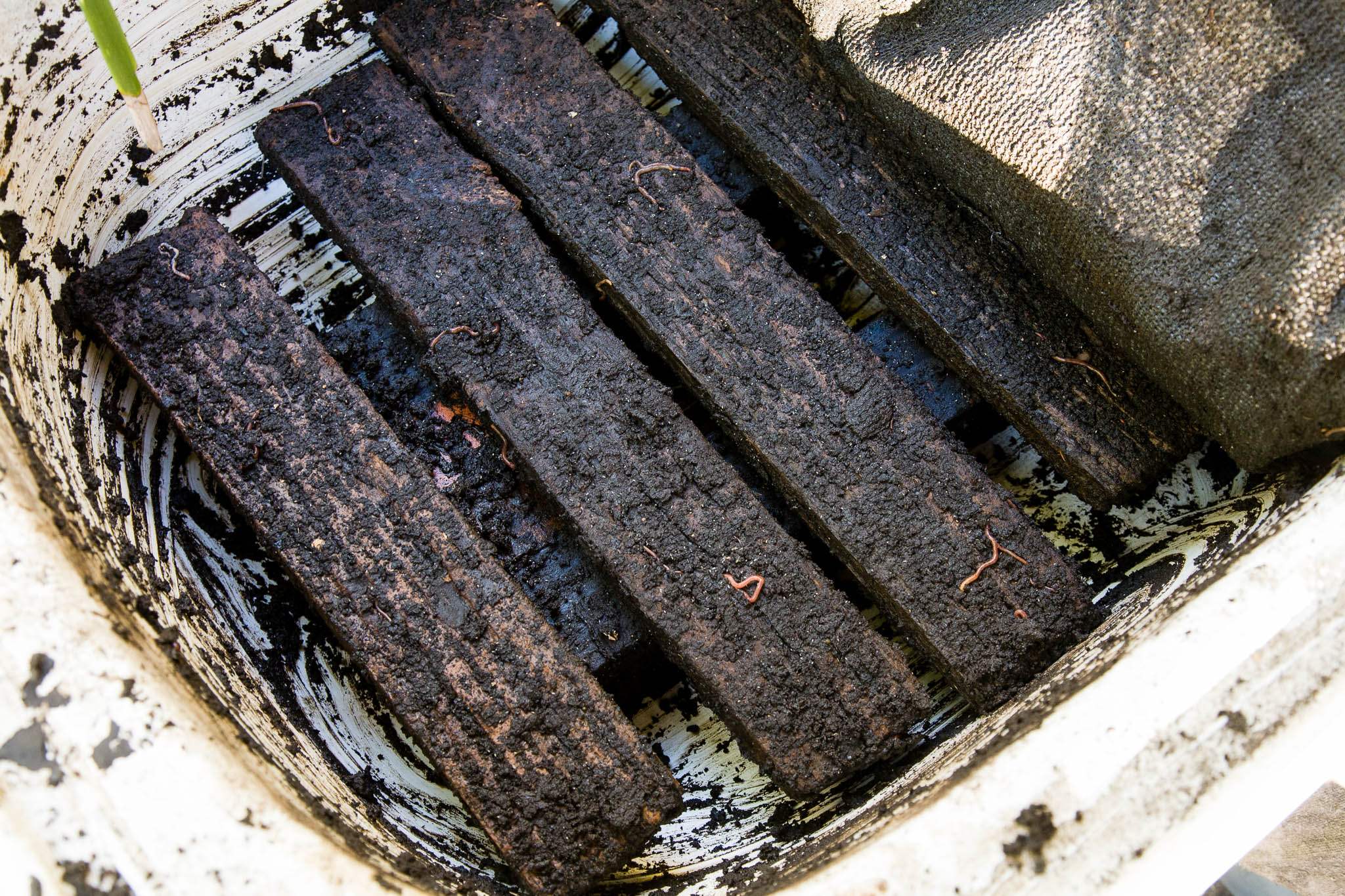
You can see the old bed slats that give the bath a false floor are looking rough and these pictures were a few years ago:
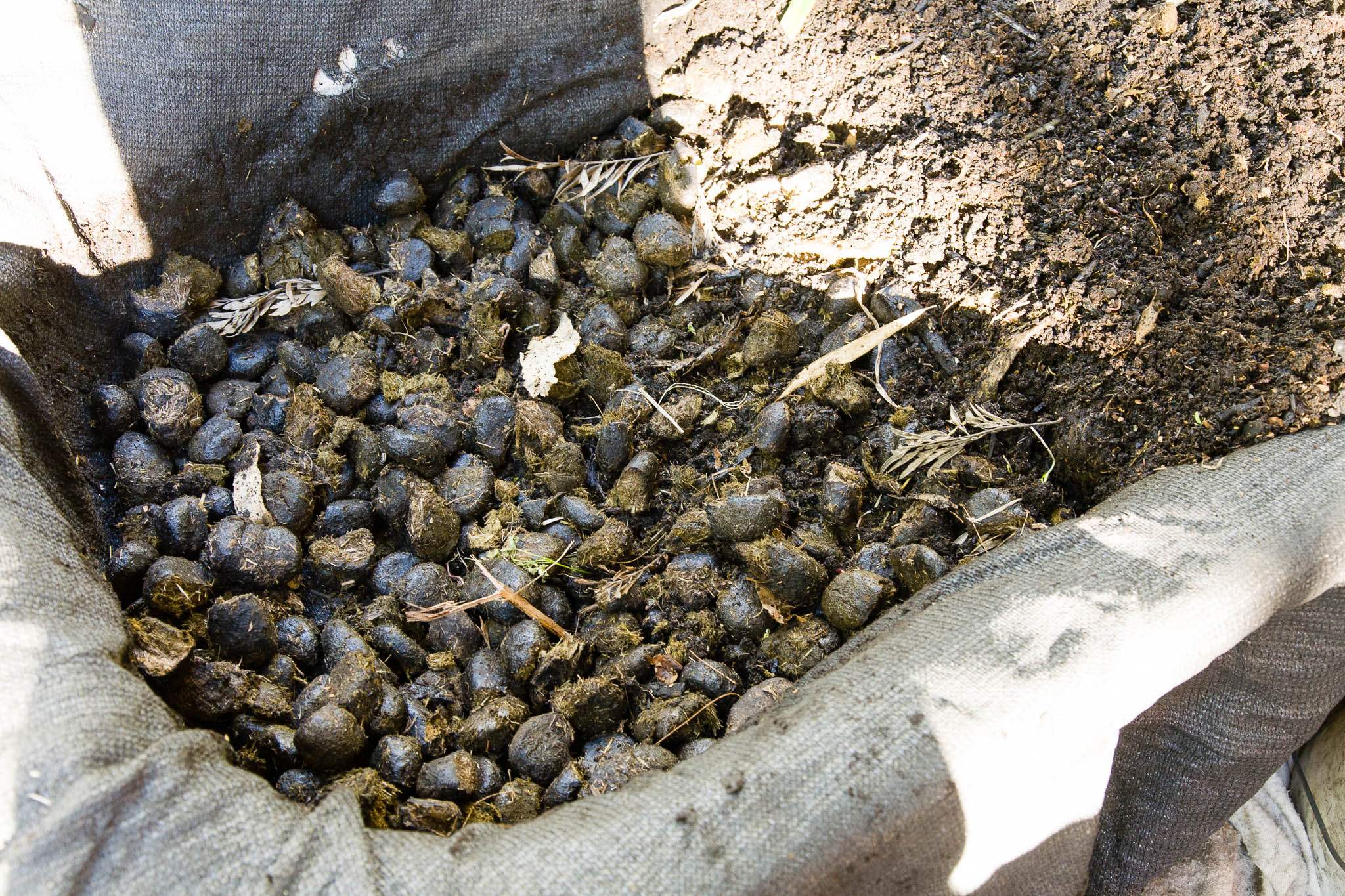
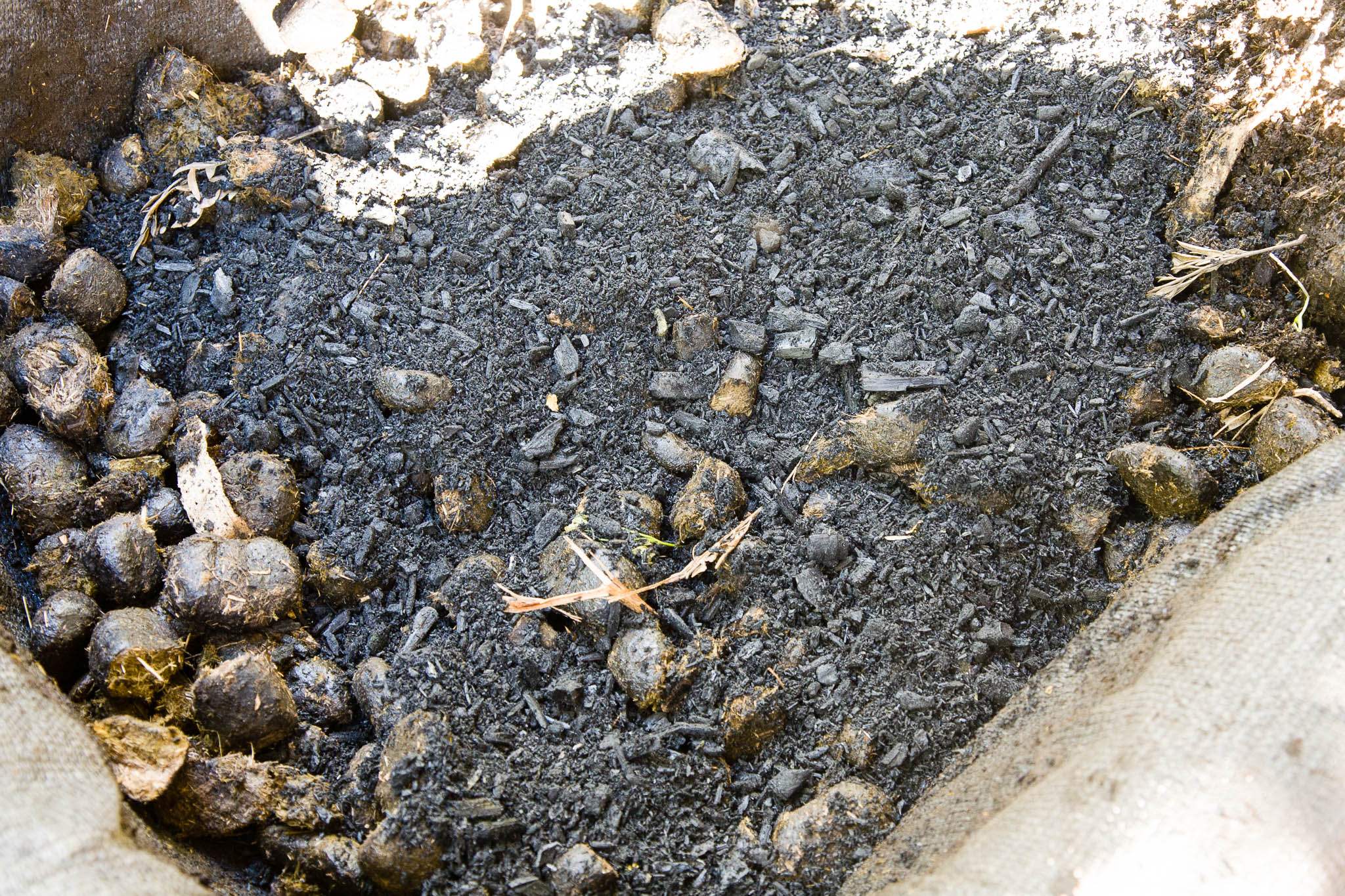
Other photos of putting a side back together after harvesting:
Neat! I might experiment with horse manure in the future, as I have a convenient source for that anyway. And you might be very right about the danger of giving too much of anything, I might have killed my previous bin with too much (wet) food and no proper escape route. That, and/or a combination with some very hot weather we had around those days.
The good thing is, my three bin system features lots of worms when a bin is in the later stage, so I could simply restart my worm bin with worms from there. I should make some photos from both setups indeed.
https://www.researchgate.net/...
Page 6, from a memory of decades ago so I may be wrong, has a table of different beddings which is why I chose horse manure as adequate (if not the best) and easy for me to procure. That document is old enough that coir doesn't rate a mention.
I only write that comment for all readers, not singling you out (I hope it's like reddit where a lot of people read comments without posting). It's something to keep in mind for small farmers, there is a high risk when adding new or different foods and one has to go slow. A blender and freezer can store excess foods so they can be dished out during testing. Bread and grains are a particular risk, they heat up excessively in the farm and will push worms away until the heating process is finished. Having multiple bins, as you've done, is the best way to handle it.
Too much food seems to be the main issue for a lot of new farmers. Or not understanding what bedding is and why it's important. A lot of farms have worms living in their food which struggle to perform well. Maybe an analogy is that they live in their bedding and visit the restaurant when they are fed, no one lives in a restaurant.
I've got worms! I have a two bay box with a tap on the bottom one for draining. I use a soil/cococore substrate. I add shredded paper, dried leaves, cardboard and then place a peice of old woollen blanket over it to help keep the fruit flies out. I put food scraps under the woollen met. Keep their substrate moist but not wet.
Worms are one big mucus membrane so I think of that when I'm deciding what to put in my farm. Avoid anything salty, spicy, greasy, oily or fatty and plant waste like garlic, onions, or other alums. Don't give them poisonous plants like sumac or anything with pesticides on it. you're best off hot composting things like the above and just avoiding salts in your garden and also pesticides.
Do feed them a balanced diet of green and brown waste. They need both.
Don't release your worms as most commercial farm worms will not match the wild varieties.
I really need I shirt that says "I got worms since 1994"
If beehaw ever needs fund-raising shirts, I would love a composting/worm farm related one as well as a western town with all the old buildings being some version of a bee hive
Too short of a season in worm temp ranges for me unfortunately. My current ideas in various stages of testing (and testing list formatting here):
Ah, that answers an important question I had - wasn't sure whether to give it oxygen. But sealing it up should keep the mosquito population at bay. Very much looking forward to it.
Out of curiosity, do you ever make worm tea from castings? Sounds like no with your flow.
I'll start.
I run a bathtub worm farm that uses a 50/50 method (feed/harvest one side and viceversa). Bedding is Horse Manure. I feed them kitchen waste. I add crusher dust and biochar to the new bedding after harvesting, approximately 30% biochar to 70% manure. I harvest after about 4 months. I set up the conditions for harvesting by feeding the other side until most of the worms have moved over, and I do not seive worms or cocoons from the harvested castings.
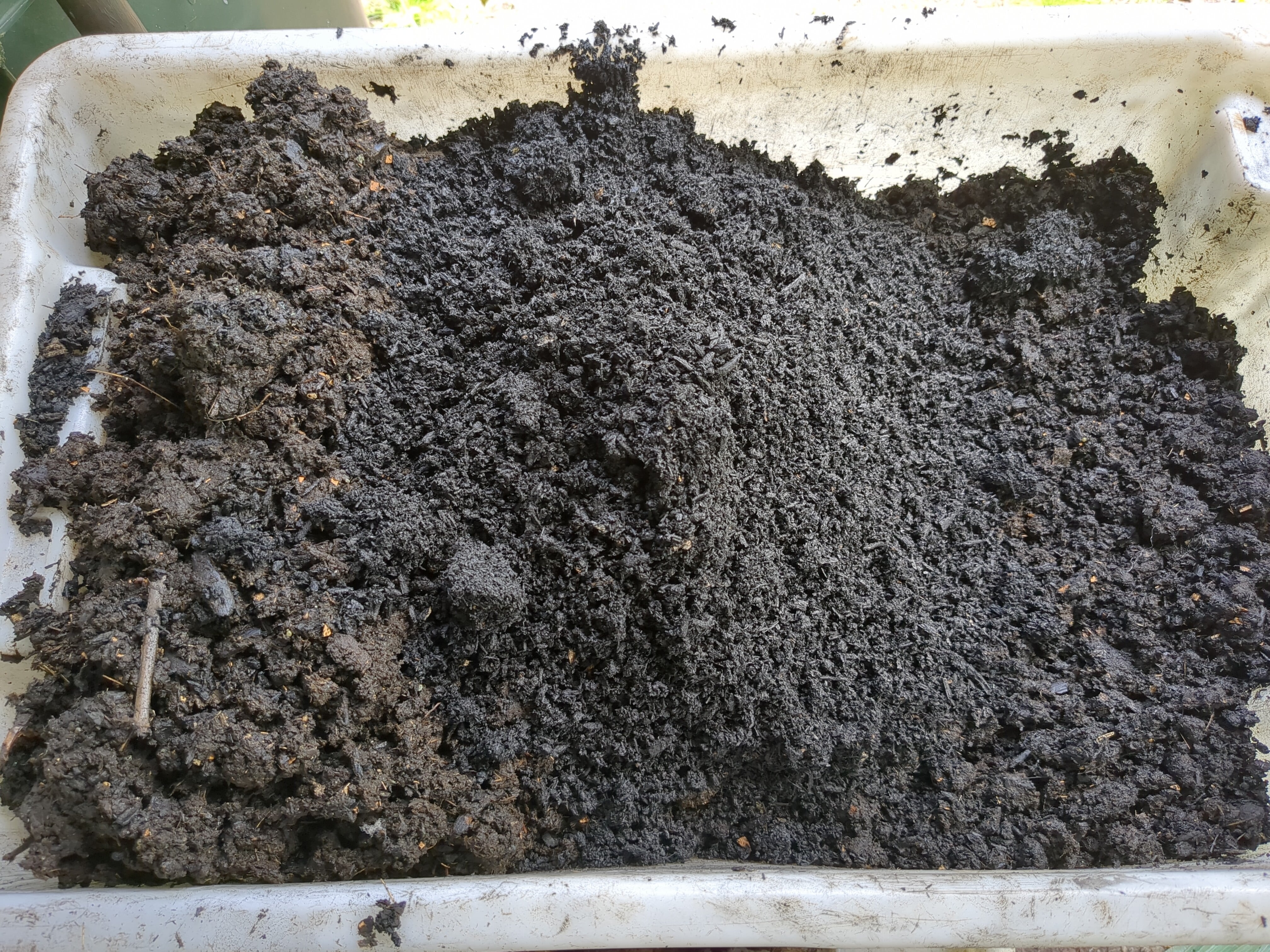
The castings, which I have deemed #vermicharpost, go into my native plant nursery and garden. They also, after harvesting, get added to 50% new char so they can inoculate the new raw char and increase co-composted char output.
Example. Freshly Vermicharpost harvested from worm farm on left, new char in middle, vermicharpost mixed with char on right:
Confusing enough?

@beehaw.org
All things green, outdoors, and nature-y. Whether it's animals in their natural habitat, hiking trails and mountains, or planting a little garden for yourself (and everything in between), you can talk about it here.
See also our Environment community, which is focused on weather, climate, climate change, and stuff like that.
(It's not mandatory, but we also encourage providing a description of your image(s) for accessibility purposes! See here for a more detailed explanation and advice on how best to do this.)
This community's icon was made by Aaron Schneider, under the CC-BY-NC-SA 4.0 license.
go to feed...
Yesss a place to talk about the little poop noodles! I've had a bin going for about 2 years. I use a stacking bin with 5 trays. After starting it, I realised that the whole CFT idea doesn't work as well as I was expecting, so essentially I treat them as independent bins that the wormies are able to move between freely.
I've found that a pretty laid back approach to feeding them works the best for me. Whenever I have kitchen scraps, I toss them on top. I add a small part of our coffee grounds (we drink a good amount), the rest goes straight into the garden. And whenever I feed I toss in a similar amount of dry shredded cardboard. When a tray is full, I move another one to the top and start feeding that.
For bedding, I just use the cardboard I toss in continuously, and lots of small bits of browns that are too big to be composted by the worms. Like small sticks, some corn cobs that went in whole (the worms love to chill inside them), a load of pistachio shells that have been in there for a year that the baby worms always sit in, etc. Whenever I sift out a tray all that stuff just goes right back into the new one I'm filling, the worms seem to love it.
Seems to work well for me! Only problem I ran into recently was we had a lot of rain, and apparently so much moisture got in through the air holes that parts of the bin turned anaerobic. Which apparently attracted a whole lot of ants. Fortunately I managed to dry out the bin a bit, and got rid of most of the ants. So all's well in noodle town again.
save