
Bring Back the Sears Home! Proposal Calls for 500,000 High-Quality, Affordable Starter Houses to Ease Crisis
8 hours ago by rss to c/pravda_news
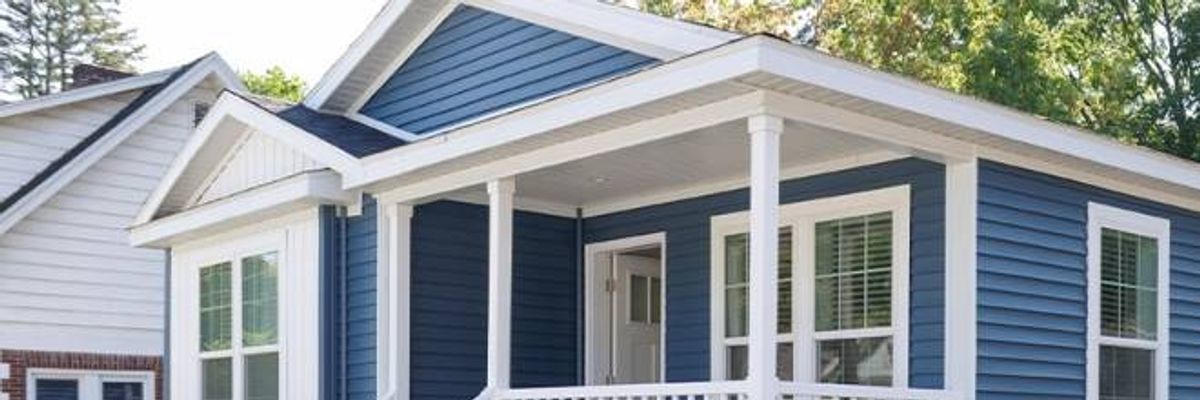
As young families are increasingly priced out of the housing market, a group of economic researchers is pushing to revive an idea from the past to bring the distant dream of homeownership back within reach: mass-produced homes.
A report published Wednesday by the Groundwork Collaborative proposes a federal program to subsidize the creation of 500,000 prefabricated houses over the next eight years—starter homes that they estimate would be drastically more affordable than the ones currently on the market.
The report was written by three economic policy analysts who served under former President Joe Biden: Noah Ball-Burack and Emily DiVito, who worked on policy for the Treasury Department, and Alex Jacquez, who was Biden's special assistant for economic development and industrial strategy at the White House National Economic Council.
The proposal draws from history: From 1908-40, around 75,000 Americans ordered mass-produced homebuilding kits from Sears, Roebuck & Co. through catalogs, which provided pre-cut lumber, doors, windows, and other materials to construct a home that ended up being considerably cheaper to build than those constructed conventionally.
These "Sears homes" were not only fully functional but also durable: More than 80 years after the program was discontinued, thousands of them are still standing today.
Groundwork's researchers argued that marshaling the government's resources, a modern Sears home program could go great lengths toward combating the housing affordability crisis.
"For too many families, homeownership has gone from a milestone to a mirage. Decades of under-building have left us with an affordable housing shortage that’s pricing people out of their communities," DiVito said. "Policymakers must pursue creative, tangible, and lasting solutions that bring homeownership back into reach. The Modern Sears Home program does just that.”
The group called for the Congress to appropriate between $44 billion and $75 billion over eight years---less than the US spends on the military in a single month---to guarantee large orders of factory-built homes, acquire and prepare land for them, and then sell the completed houses to eligible buyers with government-backed affordable mortgages.
They estimate that factory-produced single-family homes could be sold for roughly $170,000-$215,000 each. That's around half the median price of a new single-family home, which has increased nearly 25% since the start of the decade.
"Sears offered these homes for profit," the researchers wrote. "The federal government—with greater resources, lower borrowing costs, and unmatched power to scale—can do it better."
Unlike private capital, the Department of Housing and Urban Development (HUD), which would administer the program, doesn't have a profit motive and is capable of guaranteeing large amounts of demand so that manufacturers can build scale.
And since the goal is to ensure that people are housed rather than to increase profit margins, the researchers argued that the homes are less vulnerable to the fluctuations of the housing market, which currently disincentivizes lowering rent.
"Private developers build only when projects pencil, meaning that expected rents, net of construction, and financing costs, clear the rate of return their investors demand," the report explains. "This math ties new housing supply to high rents. If rents begin to fall, private capital will walk away.”
The researchers argued that their proposal would not just benefit those who are able to purchase new Sears homes, which HUD would target at households earning 60%-100% of a local area's median income, but everyone in the housing market, by driving up supply.
"Sustainably lowering housing prices relative to other prices in the economy requires public investment," they wrote. "The government can either build housing itself or finance private construction at below-market returns. It should do both.”
The proposal comes as pre-fab homes are being viewed increasingly as a policy solution to confront the housing crisis and as an opportunity for developers looking to attract young homebuyers.
Eager to build cheap starter homes fast, developers are experimenting with entire subdivisions of factory-built houses, as The Washington Post reported on Wednesday.
New York state, meanwhile, is trying out a miniature version of what Groundwork has proposed, building 1,500-square-foot homes in Syracuse, Schenectady, and Newcomb. The state has completed three homes so far and awarded funding for 211 more.
According to a 2023 report by the Harvard Joint Center for Housing Studies, these kinds of higher-end manufactured homes, known as "CrossMods," cost 27% less on average compared to an identical home built on-site.
The ones that have gone up in New York have borne out these cost-saving projections. They took about a third of the time to construct as traditional homes and cost about $250,000 to build and install, about half the cost for a comparable house, according to the state's affordable housing agency.
An affordable housing law that passed Congress in June also took steps toward expanding factory-built housing with a bipartisan bill passed last month that removed regulatory barriers to manufactured homes and sought to make construction easier to finance. However, the law does not provide any new federal funding for housing production.
The researchers said this was a good start that could help speed up the process of building homes. But they said it was far too narrow to really address the problem.
"It will take a government willing to act not at the margins of the market, but at its center—financing cheaply, building at scale,” they wrote. "The technology and policy levers to realize this vision already exist. The question is not whether the federal government can act at this scale—but whether it will."
From Common Dreams via This RSS Feed.
To bad our Congress is captured by Wallstreet and billionaires. But I would love to get the plans to those houses and try recreate some with today martials. Unfortunately also they probably wouldn't last 80 years or more.
I seen and spoken to people who have bought these homes. They also came to town on a train not a truck.




go to feed...
go to feed...
I think modular/pre-built/kit homes can be a really great option, for a lot of reasons, but they probably won't do much for home affordability. The restricting factor is land. There are only so many detached, single family homes that can fit on any given area of land, and the land is getting full. At least, it's pretty full in the areas people want to live. You can get a pretty cheap house already if you're willing to live in less desirable areas.
save