13
159
bsergay
@discuss.online
bsergay 34 points 2 years ago
First of all, thank you for this! This effort is very much appreciated and will definitely make it easier to parse through Linux; especially for beginners.
Having said that, some personal nitpicks of mine:
- I absolutely love Fedora. But if it's named first on your list of beginner distros (presumably due to alphabetical ordering), then it better be easy as hell and work as expected OOTB. Unfortunately, that ain't the case. Hence, at least mentioning the Howto page of RPM Fusion would have been sensible to combat issues users might experience otherwise.
- I'm fine with the inclusion of openSUSE Aeon, but openSUSE Kalpa is literally in Alpha. Therefore, it's too early to be recommended.
- I'm personally not very bothered with Fedora Workstation on the list of distros geared towards beginners, while Debian is found on the list of power-user distros that beginners should avoid instead. (I'm a die hard Fedora fanboy anyways.) However, I am curious to your reasoning/justification.
- Alpine Linux was originally envisioned as an embedded-first distribution. Therefore, most of its design choices revolve around that; small, secure, simple et cetera. The way that you describe/depict Alpine Linux, is more in line with how I would for (what I'd refer to as) demonstrative distros like Artix and Devuan.
bsergay 20 points 2 years ago
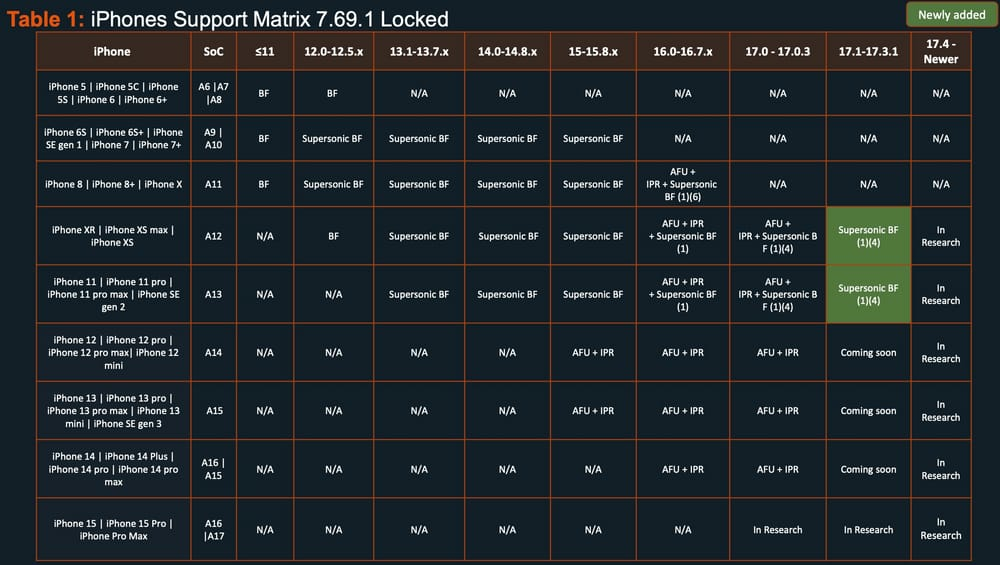
Thread in which more images from the leaked documents can be found.
bsergay 19 points 2 years ago
Nix, the package manager, is distro-agnostic. Add Home Manager on top of it and you're good to go; both packages and dotfiles are dealt with.
bsergay 16 points 2 years ago
Read this for the most complete and comprehensive answer on the matter.
TL;DR: Like Fedora Atomic, it utilizes OCI images for its immutability. However, while Fedora Atomic combines this with libostree/OSTree for git-like management of your system, Vanilla OS (instead) keeps it relatively simple with just A/B partioning; which indeed is somewhat reminiscent to what's found on Android.
bsergay 14 points 2 years ago
May as well contribute my own 😜.
I'm an absolute sucker for exquisitely hardened distros. Hence, distros like Qubes OS and Kicksecure have rightfully caught my interest. However, the former's hardware requirements are too harsh on the devices I currently own. While the latter relies on backports for security updates; which I'm not a fan of. Thankfully, there is also secureblue.
Contrary to the others, secureblue is built on top of an 'immutable' and/or atomic base distro; namely Fedora Atomic. By which:
- It's protected against certain attacks.
- Enables it to benefit from more recent advancements and developments that benefit security without foregoing robustness.
If security is your top priority, Qubes OS is the gold standard. However, secureblue is a decent (albeit inferior) alternative if you prefer current and/or 'immutable'/atomic distros.
bsergay 14 points 2 years ago
Unsurprisingly, usage numbers for distros are hard to get due to lack of telemetry and what not.
However, some measurements do exist; like data from ProtonDB. These are used by Boiling Steam for their excellent reports in which some representation regarding usage across distros can be found. Their most recent report can be found here.
Note, however, that the following, as has been excellently touched upon by Boiling Steam, applies:
COMMON MISCONCEPTIONS
Since we hear some of the following comments EVERY SINGLE TIME, let’s address them here and now:
- “Duh, it’s not representative of Linux usage in general!”: And nowhere does it claim to be. As often as possible we make it clear this is Linux usage in a gaming context. The usage of Debian and Ubuntu on servers is safe for now, no need to panic.
bsergay 12 points 2 years ago
/etc can’t be edited on immutable distros
False on at least Fedora Atomic^[1]^, NixOS^[2]^ and openSUSE Aeon^[3]^..
Which 'immutable' distros are you referring to?
- On Fedora Atomic, changing
/etcis literally identical to how it goes any other distro; or at least 1-to-1 as on traditional Fedora. The bonus is that a pristine copy of the original/etcis kept inside a sub-directory of/usr. Furthermore, all changes compared to the pristine copy are kept track of. - On NixOS, changes have to be applied through
configuration.nix. Though, regardless, it's effectively possible to edit and populate/etclike it is on other distros. - It's explicitly mentioned that
/etcdoes not belong to the immutable base.
bsergay 11 points 2 years ago
I daily drive secureblue; or, to be more precise, its bluefin-main-userns-hardened image.
"Why?", you ask. Because security is my number one priority.
I dismiss other often mentioned hardened systems for the following reasons:
- Qubes OS; my laptop doesn't satisfy its hardware requirements. Otherwise, this would have been my daily driver.
- Kicksecure; primary reason would be how it's dependent on backports for security updates.
- Tails; while excellent for protection against forensics, its security model is far from impressive otherwise. It's not really meant as a daily driver for general use anyways.
- Spectrum OS; heavily inspired by Qubes OS and NixOS, which is a big W. Unfortunately, it's not ready yet.
bsergay 9 points 2 years ago
How do the 'offspring' of Mandrake/Mandriva compare to one another? IIRC, there's ALT, Mageia, OpenMandriva, PCLinuxOS and ROSA.
I've also come to the understanding that what set Mandrake apart from its peers was its polish and user-friendliness. Which, harbored a great community back in the days. Currently, however, this role is fulfilled by distros like Linux Mint. Furthermore, most distros are relatively straightforward anyways. So, my other questions would be:
- Could the argument be made that Linux Mint is the actual spiritual successor to Mandrake?
- Are the Mandrake-offspring's most compelling raison d'être that they're Mandrake's offspring?
bsergay 8 points 2 years ago
Am upgrading from thinkpad to framework 16 with amd. Looking for distro reccommendations.
I would start looking at what's supported to begin with.
I did the whole distro chooser quiz but didnt help much.
FYI, it isn't as helpful as you would hope and hasn't been updated in quite a while. Don't be too much bothered with the result. But thanks for sharing some tidbits from the quiz as it helps the community to better help you!
avoid systemd
Are you sure you want this?
stable
Does this refer to unchanging (for long periods of time except for security updates)? Or, instead, for being less inclined to break after an update?
Is testing/unstable got wayland?
I don't recommend going for (Debian's/Devuan's) testing (branch) as it targets a peculiar niche that I fail to understand; e.g. it doesn't receive the security backports like Stable does nor does it receive them as soon as Unstable/Sid does. Unstable/Sid could work, but I would definitely setup (GRUB-)Btrfs + Timeshift/Snapper to retain my sanity.
are they reliable enough?
Depends on how reliable you want them to be. OOTB, their reliability definitely ain't great, though.
If so what do I go with.
Consider answering all questions found in this comment and we'll be better equipped to help you out with this.
Also hows the hardware comparability with framework i assume it wont be too bad to get set up.
Overall, it's pretty good; epecially so on the supported distros.
Btw, you strike me as a (relatively) new user that doesn't seem to have a good understanding on Linux yet. Is this correct?
bsergay 8 points 2 years ago
It just had its first Stable release (as Vanilla OS 2). Therefore, consider to wait it out a bit until it has been well-tested at large. Until then, please feel free to choose something else that is to your liking. Like, what is it that attracted you to this one in the first place?
bsergay 7 points 2 years ago
I would normally 100% agree with you. But if it's an underrated distro, then I tend to be more lean on this. However, I agree that OP should have done a better job at 'advertising' openSUSE. For example; not mentioning YaST is just criminal.
thanks for using Leebra!
go to feed...