Father, Hacker (Information Security Professional), Open Source Software Developer, Inventor, and 3D printing enthusiast.

5
60
riskable
@kbin.social
riskable 72 points 3 years ago
I may be just a pie-in-the-sky optimist but I think the duplicate communities thing will die down eventually. Natural selection will do it's thing and we'll all eventually settle in specific communities on specific instances.
Based on the nature of life itself all living things become specialized over time. This includes creatures, jobs, products, communities, etc. So what's likely to happen is some communities will die out or be abandoned while others will thrive and yet others will simply become more specialized.
Hypothetical example: /m/gifs on Kbin might become the place to find perfect loops and high quality/serious stuff while /m/gifs on some other instance might become the place for animated silliness.
riskable 28 points 3 years ago
Can you do us all a favor and blog about your experience setting this up and running it somewhere? I'll follow you 👍
I was thinking about making my own Federated kbin-like server (writing the code from scratch) as an academic exercise. I'm a full stack developer and it's the perfect thing to hone my non-embedded (full std) Rust skills and freshen my JavaScript skills.
I have several side projects going on at the moment (that I've been working on constantly for almost three years straight) and I need a mental break from that. I'd love to learn what's a pain in the ass VS what's good from a semi-layman's perspective so I can make something better.
riskable 25 points 3 years ago
I am with you on rural America getting the short end of the Internet stick! It's just that historically we've given ISPs over $400 billion dollars and they didn't hold up their end of the bargain:
Giving them more money isn't going to solve the problem. We're at that phase of the game where we need to stop letting them scam us and just do it ourselves. We already build our own roads which is vastly more complicated and requires much more money than laying fiber. If we can make interstates we can lay down fiber optic cable.
We can charge ISPs for the privilege to use it and make different ISPs compete on the same physical network. That's how it works in many countries and it's a perfectly legitimate way to make ISPs incredibly angry which I think we can all agree would be an ideal outcome. If they don't like it we can set up a time next week between 10AM and 4PM to wait for us to show up to discuss. When we don't show up we will make them call to reschedule 👍
riskable 24 points 3 years ago
I'm not having any problems at all with my dopamine fix. The Fediverse has reached that critical threshold where there's no shortage of typos to make fun of with snarky replies and people willingly walking into dad jokes.
So yeah, I'm good 👍
riskable 24 points 3 years ago
OMG great question! I want:
- Laser range finder/"tape" measure
- Thermal camera
- Air quality sensor
- Radiation detector/Geiger counter
- Multimeter capabilities
- IR LED (so I can use it as a remote)
- Ultrasound capabilities
- Peltier so I can put a drink on my phone to chill it down 👍
An unlocked bootloader and a normal Linux distribution where I have root!
riskable 12 points 3 years ago
I don't think Google cares if the Fediverse succeeds or not. All they care about is that it can be indexed and people will be able to show Google ads on their instances.
Google doesn't have a Reddit equivalent or even any other social network competitor (anymore; they killed them all). They explicitly chose to exit that entire concept of products.
The only reason XMPP mattered to Google at the time was they were trying to compete with Apple for messaging on mobile devices. XMPP meant that Android devices using Google Hangouts/Chat/Gmail could chat with users on other platforms/services while Apple's chat app could only do SMS.
I guess what I'm saying is that Google is mostly irrelevant from the perspective of the Fediverse other than the fact that it can index and maybe give priority to discussions of certain products/topics like it does with Reddit currently.
riskable 10 points 3 years ago
I second this. I haven't got a certification in like decades but an accessibility certification sounds fantastic.
There hasn't been an IT certification I've seen in forever where I was like, "yeah I can't just go and learn that on my own" but one that's all about accessibility does sound like something I couldn't just learn on my own... since I'm not disabled/blind and don't know anyone who is.
What I really want is to learn about accessibility testing. Oh man that'd be like having a superpower! With a skill like that I'd be useful to literally any and every FOSS team that exists!
Aside: I am blind in one eye so I'm one accident away from actually being blind some day. I should learn this stuff now just in case!
riskable 8 points 3 years ago
Oh this is no big deal at all (because your code is already open source)! I've dealt with similar situations at businesses before and it's just a matter of including the correct licenses and annotating the code where appropriate.
Let's say you used some AGPLv3 (strongest copyleft license) licensed code and you're not distributing your code under that same license. How do you use the AGPLv3 code in your code even though you're using say, Apache 2.0 license? The simplest way is to move that AGPLv3 licensed code into it's own folder/file(s) and put that license in there along with it. Also make sure you add a note about this in your LICENSE file and indicate that if someone includes that specific code in their own implementation they'll need to adhere to the AGPLv3.
Some FOSS licenses are incompatible with each other but I don't think you have that issue. For stuff like the Zip license, Apache license, MIT, and similar licenses where you must "give credit" just add comments surrounding that code saying where it came from, what license it uses, and also include references to it in the LICENSE file.
Loads of FOSS repos have complex stuff like this! It's a bit tedious for sure but it's not rocket science. You just have to do your homework and basically, "write everything down" (giving everyone credit and paying close attention to special cases like the AGPLv3).
riskable 8 points 3 years ago
In 2002 I was working for an Internet company (Genuity), had a cell phone in my pocket at all times (this one: https://mobile-review.com/...), and had cable broadband (1.5MBs) at home. When I bought my first house (condo) at the time I specifically selected a location that had high speed Internet because being without it would be unbearable! I remember telling the real estate agent that I would only buy a house that had high speed Internet and she looked at me like I was crazy! I'm sure she was thinking, "Like that's important. What a weirdo!"
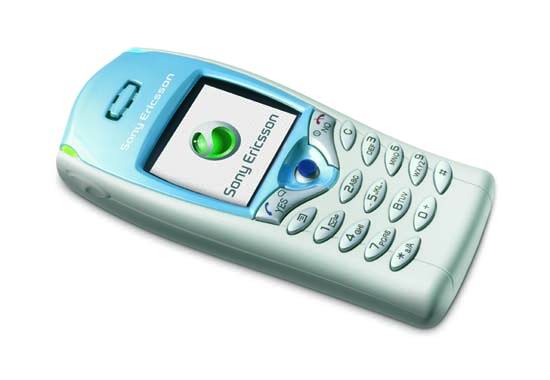
I guess what I'm saying here is that the people mentioned in the article were out-of-touch scrubs! It wasn't as bad as they described. My friends and I would all chat with each other online to coordinate and we'd show up at various events/locations (people's houses, concerts, theaters, etc) with tickets already paid for (usually over the phone though because not every venue had it but TicketMaster let you buy tickets over the phone since like the 1980s).
It definitely did feel like a VIP experience a lot of the time showing up with your group of friends (all in our early 20s)--bypassing the often enormous ticket line--then proceeding to walk up to the bouncer/ticket people and just giving them our names which they would verify by checking a printed list that was attached to a clipboard with a white sheet of blank paper over it to hide the names (so people couldn't just glance at it and say, "that's me!"). A few years after 2002 such tickets finally started getting bar codes and it became a bit less, "VIP" hehe.
What I'm saying was that all these things and more were available to the people in the article and they weren't expensive "luxury" features that only the rich could afford. They were available and advertised extensively for everyone to use. It's just that these folks in the article were just like soooooo many people at the time and just refused to explore or try things out on the Internet. They saw URLs (and AOL keywords, LOL) in ads and it probably didn't even register in their brains. They were probably also afraid to buy things online (a very, very common attitude back then).
These people were the early Gen Xers that would be dumbfounded when you'd ask them for their address to get to their party/event/whatever and you'd have to interrupt them when they'd start rambling off complicated landmark-based directions, "No... I just need the address." (because you were going to just print out directions using MapQuest). Then you'd be the only person to show up to the party on time because you were the only one that didn't have to navigate via landmarks ("Go three stoplights and make a right after the Sunoco station...").
Edit: I just remembered that in 2002 I was subscribed to Netflix's 3-DVD plan. DVD players were not luxury items by then. My girlfriend and I had watched so many movies thanks to Netflix we were had long since run out of good things to watch and ended up getting DVDs like, "Jack Frost" LOL!
riskable 7 points 3 years ago
Building online communities takes time. Migrating from one site to another takes a little less time but it's still a long-term thing.
It's not so different from moving a retail location. Your store is moving from address A to address B down the road. You put up a sign at the old storefront telling customers, "it's just down the road!" with instructions to get there and yet businesses that do this see massive sales drops. It's not uncommon to lose half or three quarters of your customer traffic in the first three months after changing locations. It usually takes a year or more to stabilize to a new normal.
I see no reason why the migration of communities from Reddit to the Fediverse will be different since this type of migration is based on basic human behavior. We need to view it as a new location getting a great big lucky bonus surge because of people angry at our competitor and not some on/off switch.
The key is to maintain quality at the new location so the "customers" start to realize they're getting a better experience here than they did over at Reddit.
thanks for using Leebra!
go to feed...