
Perhaps this is a cultural thing, but doublespeak seems to be prevalent even in casual conversation
u202307011927 9 points 3 years ago
Which country? Orwell?
Edit: NewZealand apparently
DarkDarkHouse 13 points 3 years ago
Just going to leave this here…
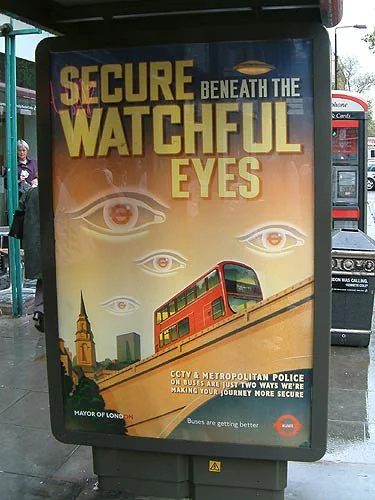
VonReposti 6 points 3 years ago
Denmark actually. It's a couple of years ago he said it.
SharkEatingBreakfast 42 points 3 years ago
I wouldn't know. I take most things that people say at face-value.
I don't have the time or energy to interpret double-meanings. Say what you mean & mean what you say.
SharkEatingBreakfast 22 points 3 years ago
Yeah, they might get mad, but that's on them. If they said what they actually meant, things would go a lot smoother.
Communicate clearly instead of expecting me to do codebreaking.
socsa 10 points 3 years ago
Once you achieve a certain level of not giving a fuck, just repeat their statement back to then in plain language and they will usually either storm off, freeing you from the conversation, or they will get the point, freeing you from at least the tedious part of the conversation.
slurpeesoforion 2 points 3 years ago
How do you feel about people who communicate through movie quotes?
SharkEatingBreakfast 2 points 3 years ago
It only works if the other party clearly understands the reference.
Know your audience.
cheese_greater 28 points 3 years ago
Any examples in particular?
cheese_greater 42 points 3 years ago
That was more for you to provide an example so we know exactly what you are looking for?
cheese_greater 11 points 3 years ago
/post [mic drop]
Its going to get funnier the longer he avoids answering lol. In my mind, he could be referring to anything from double speak (doublethink), double entendres, puns, double meanings, etc. He needs to show some of his thinking so we can answer intelligently
cheese_greater 0 points 3 years ago path: 0 3310917 3311128 3311199 3311658 3312760, hotness: undefined, score: 0, children: 0
u202307011927 2 points 3 years ago path: 0 3310917 3311128 3321510, hotness: undefined, score: 2, children: 1
redballooon 20 points 3 years ago
Then, what do you mean with double speak
u202307011927 4 points 3 years ago
Maybe it's when you speak so fast that it sounds like you're saying two words at once? 😄
lvxferre 20 points 3 years ago
All the time. Discourse analysis ruined my life.
In special, the sort of doublespeak where someone lists something as a bonus of whatever the person defends, but as a malus for what he doesn't like. Often through different and partially overlapping words, such as one program being "traditional and tested" and another "archaic and outdated". Or one politician being "in sync with the voters" and another being "a demagogue".
However on the internet I feel like doublespeak is becoming less and less of a concern, because willingful stupidity is often more efficient, as it capitalises on Brandolini's Law.
CanadaPlus 5 points 3 years ago
In special, the sort of doublespeak where someone lists something as a bonus of whatever the person defends, but as a malus for what he doesn’t like. Often through different and partially overlapping words, such as one program being “traditional and tested” and another “archaic and outdated”. Or one politician being “in sync with the voters” and another being “a demagogue”.
Oh yeah, I hate that. I find it sad that there's a market for that kind of content. It's not the only way, you could just say the program is 15 years old, or the politician appeals to a much larger fraction of voters than whatever specific naive measure would suggest they should.
lvxferre 5 points 3 years ago
It’s not the only way, you could just say the program is 15 years old, or the politician appeals to a much larger fraction of voters than whatever specific naive measure would suggest they should.
That requires us* to focus on the objective matters. We can't do that. We need to wallow in all that precious, oh so precious, subjectivity. But we can't show it, because then we can't claim "it's facts", and we're opening room for disagreement.
In other words this kind of doublespeak is backed by another type of doublespeak: disguising the subjective as objective. You see the same underlying phenomenon behind the usage of the word "toxic".
*by "we" I mean "people in general", not necessarily you and me.
CanadaPlus 1 point 3 years ago
I suspect a lot of people make the mistake of seeking out analysis, but not stopping to consider if they actually understand more after reading it, as well. They figure because they spent half an hour reading they must now be smarter, when that's not necessarily the case, and from a writer's perspective that gives an opportunity to make money by producing giant quantities of boilerplate text. Or at least did, before GPT and friends showed up.
In other words this kind of doublespeak is backed by another type of doublespeak: disguising the subjective as objective. You see the same underlying phenomenon behind the usage of the word “toxic”.
Can you give an example? The first thing that comes to mind is "toxic masculinity", which is more of a "set expression", and then "toxicity" in online spaces which in context refers to an abundance of hostility or negative emotional content.
lvxferre 2 points 3 years ago
I suspect a lot of people make the mistake of seeking out analysis, but not stopping to consider if they actually understand more after reading it, as well.
Yup. Or stopping to analyse the analysis, it isn't just because someone analysed it that it'll be necessarily worth a damn.
from a writer’s perspective that gives an opportunity to make money by producing giant quantities of boilerplate text.
Similarities with "self-help" are not a mere coincidence.
Can you give an example?
Sure. Made up and a bit forced, but it should be typical enough to highlight what I mean:
- [Alice] Bob, I think that you should cut your hair.
- [Bob] Alice, this is toxic. I didn't ask your opinion!
Bob clearly doesn't like uncalled advice. That's fine for me, I don't like it either, and it would be also fine if Bob said "hey Alice, I don't like this, stahp". But that's still someone (a subject) not liking something - in other words a subjective matter. It's an opinion and it should be treated as such.
And, yet by labelling the behaviour "toxic", Bob makes it look like it's something about the object (the behaviour) thus objective, something intrinsically true, shielded against the criticism that an opinion would get. But it's still an opinion, so you can't even criticise it as a true/false statement - you can't "prove" an opinion.
Note that even the description that you've provided hints this duplicity: hostility is objective, but "negative emotional" is subjective.
(I didn't include "toxic masculinity" because I didn't really think about it. Plus as you said it's a fixed expression, those tend to vary in meaning too much from the component words. )
MyDogLovesMe 19 points 3 years ago
What’s that “Kids Online Safety Bill” thing in the USA right now?
SgtSilverLining 12 points 3 years ago
Where I live we call it "Minnesota nice". As a transplant I can't speak it well, so I have no idea what anyone thinks of me. It's pretty frustrating.
cheese_greater 3 points 3 years ago
William Lutz is an American linguist who specializes in the use of plain language and the avoidance of doublespeak (deceptive language). He wrote a famous essay “The World of Doublespeak” on this subject as well as the book Doublespeak, which described the four different types of doublespeak (euphemism, jargon, gobbledygook, and inflated language) and the social dangers of doublespeak.
cheese_greater 1 point 3 years ago
My understanding was it was a conceptually-poor language that artificially constrained one's cognitive faculties through the nexus of a limited language/vocabulary emphasizing economy of expression. Sort of like a programming language with very few keywords and only ones that were absolutely necessary to receive and nominally participate in a minimal discourse.
Edit: I think this is actually Newspeak I'm contemplating as opposed to doublespeak. Doublespeak seems to refer to intentionally ambiguous language that obfuscates meaning and emotional content and usually for a political purpose. Like calling unintentional war victims "collateral damage" to reduce the bad publicity from one's war efforts. The wrongfully-dead victims are hidden behind what sounds like oblique accounting or financial jargon.
cubedsteaks 4 points 3 years ago
All the time at work lol

asklemmy
@lemmy.ml
55310
8657
3060
A loosely moderated place to ask open-ended questions
If your post meets the following criteria, it's welcome here!
- Open-ended question
- Not offensive: at this point, we do not have the bandwidth to moderate overtly political discussions. Assume best intent and be excellent to each other.
- Not regarding using or support for Lemmy: context, see the list of support communities and tools for finding communities below
- Not ad nauseam inducing: please make sure it is a question that would be new to most members
- An actual topic of discussion
Looking for support?
Looking for a community?
- Lemmyverse: community search
- sub.rehab: maps old subreddits to fediverse options, marks official as such
- !lemmy411@lemmy.ca: a community for finding communities
Icon by @Double_A@discuss.tchncs.de
go to feed...
asklemmy
@lemmy.ml
55310
8657
3060
A loosely moderated place to ask open-ended questions
If your post meets the following criteria, it's welcome here!
- Open-ended question
- Not offensive: at this point, we do not have the bandwidth to moderate overtly political discussions. Assume best intent and be excellent to each other.
- Not regarding using or support for Lemmy: context, see the list of support communities and tools for finding communities below
- Not ad nauseam inducing: please make sure it is a question that would be new to most members
- An actual topic of discussion
Looking for support?
Looking for a community?
- Lemmyverse: community search
- sub.rehab: maps old subreddits to fediverse options, marks official as such
- !lemmy411@lemmy.ca: a community for finding communities
Icon by @Double_A@discuss.tchncs.de
go to feed...
Every time I turn to politics. Our ex justice minister once said:
I'm not kidding. Word for word, that's what he said.
save