
🤣
jaypatelani 6 points 2 years ago
Thanks to BSDs we have sane alternatives :)
PseudoSpock 6 points 2 years ago
Oh it's no longer POSIX, he's seen to that!
spikederailed 2 points 2 years ago
ProgrammersAreHumanToo, great stuff.
Olap 116 points 2 years ago
When does systemd stop? Linux without it is increasingly looking unlikely in the future. Are we not worried about it being a single point of failure and attack vector?
This isn't a moan about the unix philosophy btw, but a genuine curiosity about how we split responsibilities in todays linux environment.
NateNate60 165 points 2 years ago
SystemD will consume the entirety of Linux, bit by bit.
- In 2032, SystemD announces they're going to be introducing a new way to manage software on Linux
- In 2035, SystemD will announce they're making a display system to replace the ageing Wayland
- In 2038, the SystemD team announces they're making their own desktop environment
- In 2039 SystemD's codebase has grown to sixteen times its size in the 2020s. SystemD's announces they're going to release replacements for most other packages and ship their own vanilla distro.
- In 2045 SystemD's distro has become the standard Linux distribution. Most other distros have quietly faded away.
- In 2047, SystemD announces they're going to incorporate most of GNU into SystemD. Outrage ensues from the Free Software Foundation, which vehemently opposes this move.
- In 2048, Richard Stallman dies of a heart attack after attempting to clone SystemD's git repo. SystemD engages in a hostile takeover and all resistance within the FSF crumbles
- In 2050, SystemD buys the struggling RedHat from IBM for $61 million.
- In 2053, most world governments have been pressured into using SystemD.
- In 2054, Linus Torvalds, fearing for his life, begins negotiations to merge kernel development into SystemD
- In 2056, the final message on the Linux kernel development mailing list is sent.
- In 2058, Torvalds dies under suspicious circumstances after his brand-new laptop battery explodes.
- In 2060, SystemD agents assassinate the CEO of Microsoft.
- In 2063, after immense pressure from SystemD-controlled human rights organisations, Arch developers discontinue development.
- In 2064, the remaining living Debian developers release the next stable version of their clandestine and highly illegal distro.
NateNate60 -9 points 2 years ago
Yes, because it's easier to take care of octogenarians than people who might actually put up a fight to having their laptop batteries replaced with a pipe bomb.
TheGrandNagus 17 points 2 years ago
Debian in many ways isn't as slow-moving as people think.
For example, they moved to Wayland by default (for Gnome anyway) in 2019. A number of well-known distros likely won't have that until 2025/2026 or beyond.
lemmyreader 11 points 2 years ago
Thanks for that write up. Made my day! 😄
BaroqueInMind -7 points 2 years ago
That comment was brought to you by an AI LLM. No one actually took the time to write that.
NateNate60 5 points 2 years ago
🥴
Certainity45 9 points 2 years ago
This is a script of Simpsons episode and Torvalds will actually die in 2058.
NekkoDroid -1 points 2 years ago
One way to notice a person has "systemd derangement syndrome" is by looking at how they write systemd: if they write it SystemD they are already in late stages of SDS and it isn't curable anymore.
mogoh 38 points 2 years ago
By this logic the Linux kernel is also a single point of failure and attack vector.
sudo isn't going away, so does doas. run0 is just another alternative to use or not.
There are still distribution out there without systemd and if there ever won't be any systemd-free distributions left and systemd would become a critical part of the Linux ecosystem, then it would get the same treatment as the Linux kernel with many professional maintainers.
cole 1 point 2 years ago
plus, it isn't like this isn't exactly like adding another "door" to the "systemd building". It's a modular component of systemd, so more akin to replacing the sudo building with a new, but still separate, systemd sudo building
cooleech 10 points 2 years ago
@Olap
I agree. As someone who uses systemd on daily basis (I use Arch, BTW 😄) I really like it, but I am a bit worried about it being a single point of attack. Maybe just push doas as default instead? I never used doas but I watched few videos about it, so I guess it's fine and probably better than sudo (less bloated).
Just my few cents.
taladar 14 points 2 years ago
I don't see how something would be inherently easier to attack if it is called systemd-foo instead of just foo. Attack surface and vectors do not depend on which project develops a particular tool.
SqueakyBeaver 1 point 2 years ago
I'd be willing to bet it's people fearing another xz-like situation
lemmyreader 7 points 2 years ago
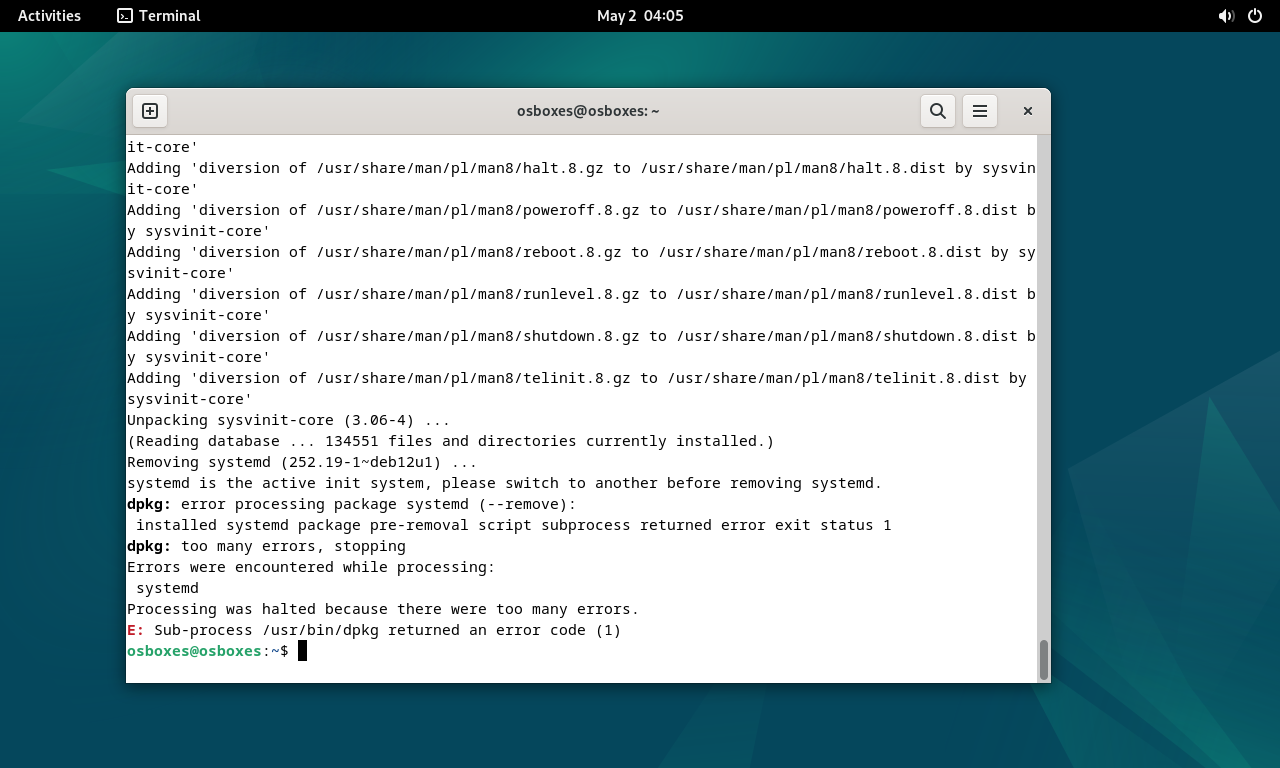
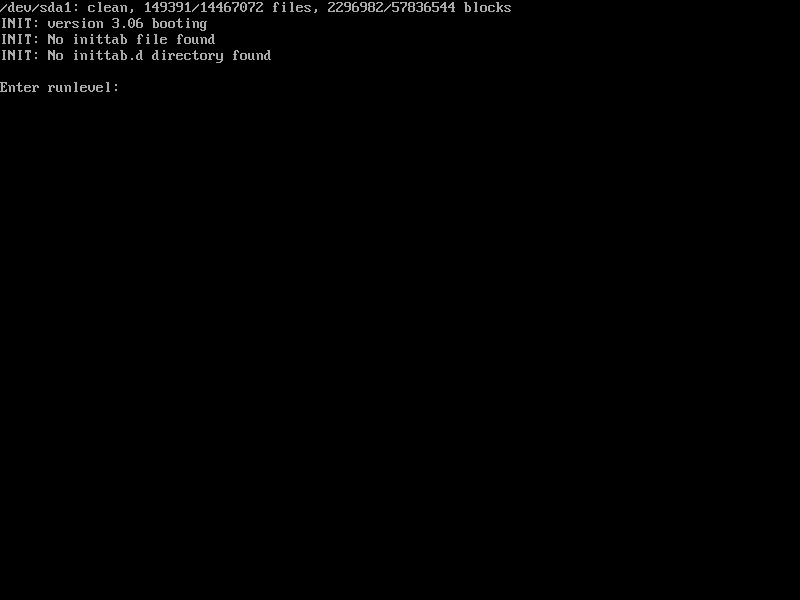
Gentoo, Slackware and Devuan can be used without svchost for linux.
https://nosystemd.org has a list for more choice for readers.
drwankingstein 0 points 2 years ago
Systemd is a bit of a hassle to be rid off, but thankfully it's not actually that hard, the hardest part I found was converting systemd services to whatever init system I use.
notabot 4 points 2 years ago
Probably not much time, a lot of packages come with init scripts anyway, and they're pretty trivial to write if not.
You can certainly argue it's a philosophical choice, I'd say it's more down to recognising the many poor architectural choices in systemd, rubbing agaist its many pain points and misfeatures and being alarmed at the size of the attack surface it exposes. I understand there is an effort underway to reduce the size and complexity of the main shared library to help address the last point, but just the fact that is necessary shows the scope of the problem.
drwankingstein 1 point 2 years ago
took me about an hour to get started with artix originally, and maybe a couple more to really familiarize myself with the init. As for practicallity, it's been a large improvement for me.
Emma_Gold_Man 47 points 2 years ago
Nah. Replacing the kernel is probably planned for the next point release - it'll just be GNU/systemd
TheGrandNagus 25 points 2 years ago
I mean it should kind of already be something like GNU/SystemD/X11/PipeWire/Linux, I guess.
It's not like the GNU utils are the only massive integral part of the OS. I think GNU/Linux caught on squarely because many people follow Stallman, and that's how he wants people to refer to it.
fruitycoder 1 point 2 years ago
It definitely made way more sense at early on. I mean GNU made most of UX of using Linux at some point. Systemd, and the browser now make a much bigger portion than before, and the world is more than GNOME now too.
topperharlie 18 points 2 years ago
hard disagree. life with plain text logs and daemon init scripts was so easy and nice. But we can't have nice things...
atzanteol 32 points 2 years ago
Those hacked together system-specific bash scripts were shit. Having a standard way of creating, starting, ensuring restarts,and logging services is so much better.
You can still get all the plain text logs you like.
baru 6 points 2 years ago
Those hacked together system-specific bash scripts were shit.
With a different feature set per script as well. The systemd service files have often been pushed upstream.
Pretty sure people liking those scripts never really tried dealing with them across distributions. Though this just rehashes things that were said when distributions decided if to switch to systemd. Still the same strange claim that those scripts are somehow easier. It wasn't, it is also way easier to package a systemd file from upstream than to maintain that stuff within a distribution.
TimeSquirrel 19 points 2 years ago
You know what's nice? Being able to sit down at any Linux distro and being able to set up and configure services without Googling how to use that particular distro's init system.
NekkoDroid 3 points 2 years ago
I don’t understand how this is any improvement over pkexec
That has the same problem as sudo: the SUID bit is set for it.
The fact that run0 uses polkit is more of a byproduct that this kinda authentication is already done with polkit all over the place in systemd. You can have individual subcommand accessible to different users (for example everyone can systemctl status, but systemctl reboot needs to be in the wheel group) which is why its generally used within systemd already. And it wouldn't surprise me if again you can do it with this as well, limiting what commands can unconditionally run, need prompt or are completely blocked.
KISSmyOSFeddit 71 points 2 years ago
It's still missing core functionality for an init system, like a display server protocol, compositor, desktop environment and web browser smh.
smileyhead 28 points 2 years ago
systemd-chromiumd
baru 12 points 2 years ago
Systemd isn't just an init system. It is a project with low level building blocks for a distribution. Most of the complaints are that it isn't just an init system, while it's not meant to be just an init system.
d3Xt3r 20 points 2 years ago
Agreed, this is a nice inclusion. I also hate sudoers with a passion - I already use doas but it's not standard (in the Linux world anyway), but with systemd providing an alternative means that it'll become a standard which most distros would adopt, and I hope this means we can finally ditch the convoluted sudoers file once and for all.
skullgiver 15 points 2 years ago path: 0 9752959 9753322 9753463, hotness: undefined, score: 15, children: 3
NekkoDroid 9 points 2 years ago
The thing with this is: its just a symlink to the systemd-run binary, which talks to PID1 to spawn new processes (in separate cgroups IIRC). Its one of the most fundamental parts of systemd. Even the debian systemd package includes systemd-run.
I guess the other question is if some tools the distro provides might switch to supporting it by default. For example on Arch there is makepkg that should never be executed as root, but does internally call some things with elevated privileges (mostly pacman to install and remove packages). Currently it checks for sudo and if not falls back to su, but maybe it might be worth considering changing su for run0 if its guaranteed to be there.
skullgiver 3 points 2 years ago path: 0 9752959 9753322 9753463 9754237 9754977, hotness: undefined, score: 3, children: 1
dependencyinjection 15 points 2 years ago
How does doas differ from sudo?
Never heard of the former until now.
d3Xt3r 30 points 2 years ago
doas is quite popular in the BSD world, and was ported to Linux a few years ago (via the OpenDoas project).
For starters, it's is a lot smaller than sudo - under 2k lines of code vs sudo's 132k - this makes it lot more easier to audit and maintain, and technically less likely to have vulnerabilities.
Another security advantage is that doas doesn't pass on the environment variables by default (you'd have to explicitly declare the ones you want to pass, which you can do so in the config).
The config is also a lot simpler, and doesn't force you to use visudo - which never made sense to me, visudo should've just generated the actual config, instead of checking it after the fact. Kinda like how grubby or grub2-mkconfig works. But no need for that complexity with doas.
Eg, the most basic doas config could just have one line in the file: permit: wheel. Maybe have another line for programs you want to run without a password, like permit nopass dexter cmd pacman.
dependencyinjection 3 points 2 years ago
Awesome. Thanks for the insight.
Regalia 9 points 2 years ago
Essentially functionally stripped sudo, smaller in size than sudo. See also Pottering's thoughts about the ecosystem
UID_Zero 2 points 2 years ago
I admit, I’m not a big fan of putting more functionality into systemd (or just of systemd in general), but that is a well-reasoned argument for having sudo live in the init system.
million 7 points 2 years ago
I read the original mastodon post by the developer of run0 and I am still don’t understand what the problem with SUID is.
Whats an example of an attack that would work with sudo and doas (which also uses SUID) and not on run0?
skullgiver 13 points 2 years ago path: 0 9752959 9762073 9762688, hotness: undefined, score: 13, children: 1
ZeDoTelhado 2 points 2 years ago
Thanks for taking the time to explain. I was trying to get my head around on how this works but could not understand much of it. A lot of people here are very much against systemd in all senses, but this sounds like a better approach. Even if it not done as systemd, makes more sense than checking files and getting elevated privileges for a scope and use guardrails everywhere
dotslashme 55 points 2 years ago
Not that I'm opposed to a better sudo alternatives, but I find it rather ironic that one of the reason stated is the large attack surface, considering systemd is a massive attack surface already.
NekkoDroid 19 points 2 years ago
This isn't exactly a "new" attack surface, so removing the attack surface that sudo (and alternatives) is, is probably a net positive.
NekkoDroid 3 points 2 years ago
- The attack surface is there either way, this is just functionality repackaged that existed already before (
systemd-run, which is calling into PID1) - all compression libraries (actually most libraries at this point) are
dlopened on demand (which was planned even before the attack, which is speculated that the attack was accelerated in timeline because he was on a timer before the change was released)
PseudoSpock 0 points 2 years ago
As Microsoft and Poettering intended.
vsis 44 points 2 years ago
Oh, it's gonna use polkit. Sudo bloat is a grain of sand compared to polkit.
Why people want to replace sudo with polkit? Visudo is no near as obscure as configuring polkit.
I hope distro maintainers don't follow this.
PseudoSpock 1 point 2 years ago
They can't help themselves. They gorge themselves on his phallic offerings.
caseyweederman 0 points 2 years ago
Hey uh can I get your IP address real quick? I have a strong suspicion your philosophy extends to your network ports.
nyan 44 points 2 years ago
sudo is already an optional component (yes, really—I don't have it installed). Don't want its attack surface? You can stick with su and its attack surface instead. Either is going to be smaller than systemd's.
systemd's feature creep is only surpassed by that of emacs.
mfigueiredo 12 points 2 years ago
And after that: emacs wants to include a systemd replacement
:wq
PseudoSpock 6 points 2 years ago
I'd take that over systemd.
ichbinjasokreativ 17 points 2 years ago
But systemd is modular. They make an offer and distro maintainers and admins get to choose which parts to use
nyan 0 points 2 years ago
The problem is that those modules are packaged by the developers as opt-out rather than opt-in. It's a variation on Microsoft's old embrace-extend-extinguish playbook, only the "extinguish" part hasn't worked so well because there are some stubborn distros whose needs don't align with what systemd provides and have maintainers that go out of their way to provide alternatives.
(By contrast, although we may joke about emacs, it's the myriad of third-party extensions that cause it to just about be its own operating system—it doesn't all ship with the core.)
fruitycoder 2 points 2 years ago
I'm not a fan of having root be able to actually login.
Even more so in a true multiuser env where I would rather have privilege escalation be more granular (certain user/groups can esculate certain actions but not others, maybe even limit options of a cmd).
nyan 2 points 2 years ago
Granted, in a true multiuser environment with an admin who's carefully tailoring /etc/sudoers to make sure everyone has the least possible privileges that will allow them to still do what they need, sudo is more secure. There's no doubt of that.
On a machine that has only one human user who's also the admin, and retains the default sudo-with-user-passwords configuration, su vs sudo is pretty much a wash, security-wise. su requires a second password to get root access, but sudo times out and requires the password to be re-entered while a shell created by su can stay open indefinitely. Which is more easily broken will depend on other details of your situation.
(If you're running an incorrectly configured ssh server that allows direct root login with only password authentification, having a root password could contribute to problems, but the correct fix there is to reconfigure the ssh server not to do something so stupid. I hope there's no distro that still ships that way out of the box.)
onlinepersona 44 points 2 years ago
There's a rewrite of sudo happening in rust, but he wants to throw out the SUID idea altogether?
when invoked under the “run0” name (via a symlink) it behaves a lot like a sudo clone. But with one key difference: it’s not in fact SUID. Instead it just asks the service manager to invoke a command or shell under the target user’s UID. It allocates a new PTY for that, and then shovels data back and forth from the originating TTY and this PTY.
That sounds like opening up the door to what windows is doing UAC and the wonderful vulnerability that the GOG Launcher had for privilege escalation.
I'm not a security researcher, but giving arbitrary users the ability to tel PID 1 to run a binary of the user's choosing is... probably not what Pottering is suggesting, but opens up to such vulnerabilities. And if it's written in C/C++ my trust is further reduced.
barsoap 6 points 2 years ago
Giving users access to PID1 running binaries, giving users access to the kernel running binaries as root, I don't see much difference. SUID was notorious in the past for being leaky, it only ended when distros got serious about fencing use of it in, giving it only to programs actually needing it, making sure that they drop privilege properly, etc.
If anything I'm in the PID1 camp because it's more microkernely. But in any case broader userspace shouldn't really care about the mechanism, only have an API to do it and that API being a bit in the file permissions is soooo 1960s.
SuperSpruce 43 points 2 years ago
I'm no Linux expert, but I've never had any problems with sudo, it just works. Shouldn't systemd have higher priorities on their mind? This feels like change for the sake of change. And if this does happen, I sincerely hope that it just works, like sudo.
Kwdg 38 points 2 years ago
I think the article (or more Lennart Poertting post) explains it quite nicely. The problem with sudo is that the sudo binary itself has the ability to gane elevated privileges which is a potential attack surface
TimeSquirrel 4 points 2 years ago path: 0 9758013 9760396 9761748, hotness: undefined, score: 4, children: 0
vanderbilt 38 points 2 years ago
A lot (and I mean a lot) of criticism can be leveled at systemD. One of the upsides of it becoming popular is the standardization of much of things from the developers' perspective. It's easier to target multiple distros when you can rely on systemD's single implementation of the feature. Over the next decade, I forsee systemD eating more and more of the userspace, until you are only left with managing the differences between DEs and which display server they are using. We're already headed towards immutable base systems with apps shipping with their own dependencies, which we reduce the differences between distros even further.
caseyweederman 14 points 2 years ago
systemde
TheGrandNagus 14 points 2 years ago
SystemDE
vanderbilt 13 points 2 years ago
Don't give them ideas 😂
If Canonical and RedHat weren't backing different horses (Snap vs Flatpak), I could see the app containerization system coming under systemD as well fairly soon. The Cosmic DE project uses functionality from systemD to overlay changes onto the system that are reversible, so that alpha versions of Cosmic can be tested without permanently changing the base system. Imagine apps shipping on whatever container runtime, and dynamically overlaying system-level changes as needed for things that tap into the host system via systemd-sysext.
PseudoSpock -1 points 2 years ago
gross!
nifoc 37 points 2 years ago
This is great. Not having the attack surface of sudo (and not even being a SUID binary) certainly are great additions.
And I hope people realize that systemd is not one large thing, but a (large) collection of tools.
SpaceCadet 27 points 2 years ago
The attack surface will be a systemd daemon running with UID=0 instead, because how else are you going to hand out root privileges?
So it doesn't really change anything to the attack surface, it just moves it to a different location.
SpaceCadet 5 points 2 years ago
Not really, because you're now going to make it do more, i.e. incorporate the functionality of sudo and expose it to user input. So unless you can prove that the newly written code is somehow inherently more secure than sudo's existing code, the attack surface is exactly the same.
MonkderDritte 17 points 2 years ago
that
systemdis not one large thing, but a (large) collection of tools.
Who don't work without Systemd. And Systemd can't coexist with tools in the same repo doing the same job in a portable way.
I think Chimera was it (?) which tried to have Systemd and Runit and others in the same repo. With lots of wrappers and shims. Not because of Runit & co.
MonkderDritte 4 points 2 years ago
But gnu utils work on BSD and others, while Systemd is Linux only.
lemmyreader 4 points 2 years ago
Right. That reminds of the time I was visiting a friend who had broken his Linux computer (No, not "apt-get remove --purge systemd" but they did something slightly similar). When I booted from a live Linux, used chroot and wanted to use configure networking : FAIL because systemd was ... not running. As he had no Internet because of his broken machine this caused some delays in fixing this but we got the job done eventually.
lengau 2 points 2 years ago
Kinda feels like writing a script that implements the sudo CLI but calls pkexec would be an easier way to do it. Given that so many systems already come with both sudo and pkexec, do we really need yet another option?
lemmyreader 2 points 2 years ago
This is great. Not having the attack surface of sudo (and not even being a SUID binary) certainly are great additions.
And I hope people realize that systemd is not one large thing, but a (large) collection of tools.
XZ-utils rings a bell ? It was among others Debian wanting to pull in part of a systemd tool into openssh and that almost turned into a world wide disaster :(
boredsquirrel 13 points 2 years ago
I didnt understand that sentence. Is that what you meant?
Among other things, Debian wanted to integrate a part of the systemd tools into openssh, which almost led to a worldwide catastrophe
xz is not part of systemd or openssh afaik.
lemmyreader 10 points 2 years ago
You didn't follow the XZ-utils story ? The malicious actor worked for years on that XZ backdoor that targeted the fact that some Linux distributions were modifying their openssh package to enable systemd notifications.
boredsquirrel 0 points 2 years ago
Ok true, it was a systemd dependent issue. But it only makes sense to have those notifications. The problem is dependency on small hardly maintained products, which systemd will improve by centralizing it.
gandalf_der_12te 35 points 2 years ago
I honestly started out not liking systemd at all, mostly due to the reports that it did waaay to much, but nowadays, I like the concept.
It is basically officially moving daemon management from a script-based approach to a table/database-based approach. That improves static analyzability, therefore increasing clarity, and probably even performance.
I agree that we should abandon scripts and move towards declarative software management, and abandoning sudo for a more declarative system seems like a good step to me.
jeremias 34 points 2 years ago
So I don't even use systemd myself I run OpenRC. Yet honestly I find the idea quite intriguing, having the service manager (PID 1) invoke the command seems like a cool idea to me.
It's not really a sudo alternative as much as it is another way of doing something similar.
chameleon 7 points 2 years ago
Looking at the implementation, it doesn't really implement sudoers or tools like sudoedit in any way. systemd-run has already been an existing tool for quite some time and this is really just a different CLI for it. That tool asks systemd to make a temporary new service and immediately run it. That, in turn, requires blanket yes/no approval for org.freedesktop.systemd1.manage-units via polkit.
So with run0, you can either do everything or you can do nothing. In-betweens are just not a thing at the moment. There's very little new backend code running as root.
run0 bash should behave very similar to something like systemd-run --uid=0 --gid=0 --wait --same-dir --send-sighup --pty --pipe --collect bash and the majority of those options have been available for quite a while.
corsicanguppy -4 points 2 years ago
Systemd has always been about "don't ask questions or well call you obstructionist and old".
LemmyHead 7 points 2 years ago
Actually no. The thing is just that systemd handles so many things that makes the lives both developers/distro maintainers and users easier, but most of it happens in the background. You can forget about having to learning complexer tools, just do it all via systemd
PseudoSpock 2 points 2 years ago
That's what somethin' somethin' said lastnight, Trebek! ;)
independantiste 3 points 2 years ago
The comments are here now, you can come check again 😅
henfredemars 2 points 2 years ago
Gentleman and scholar
vox 30 points 2 years ago
systemd is more of a set of products and software components branded under a single name rather than a single thing.
systemd itself is rather simple, as most other pieces systemd-* software, like systemd-boot, systemd-networkd and systemd-resolvd. these are usually more stable and less bloated than more popular alternatives
exanime 4 points 2 years ago
As long as they can work independently, yes. If they are modular and a distro admin (or just a computer admin) can choose to install and use systemd-x but not install or use systemd-y, we are in good business
Now if you have to take a few you don't like or need to use so that the one component you do want works, then no
I honestly don't know enough of systemd to say either way
lastweakness 5 points 2 years ago
Most of systemd stuff is decoupled well. You don't need to use networkd to make use of resolved for example.
LemmyHead 2 points 2 years ago
I can understand that it makes it easier to add changes that would benefit systemd and distros in general. I read that they introduced run0 to solve long shortcomings of sudo (I'm not aware of which). That sounds logical.
August27th 0 points 2 years ago
Why have it do everything?
Isn't the guy behind systemd a (former?) Microsoft employee? I feel as though that might offer a clue as to why the trajectory towards bloat.
erwan 3 points 2 years ago
He's working for Microsoft now but it's very recent, he developed systemd while working at RedHat.
I don't even know of he's still working on it. There are a lot of things to be said about systemd and Lennart but the link to Microsoft is irrelevant.
PseudoSpock -35 points 2 years ago
It is. He is poisoning Linux, slowly, from the inside. Like the XZ attack, just smarter and much slower.
LemmyHead 3 points 2 years ago
Why do you consider it as poisoning? I've heard the argument about not doing things the traditional Linux way (binary logs for example). But if the alternative provides so many benefits, why is it an issue? Systemd is a piece of cake for all parties compared to sysvinit and alternatives, so why is it bad when it solves so many issued, and makes it super easy to use by just adding e.g. a new option to a Unit?
Another example: timers are more complex than cronjobs, but timers offer additional needed features like dependencies, persistence, easy and understandable syntax, and more. So although more complex, once you get the hang of them, they're a very welcomed feature imo
PseudoSpock 3 points 2 years ago
By itself, solely doing init, it would have been fine, however, binary logging (even if you eventually end up with a text log, that's wasting disk space on a binary format no one wants or needs), and it didn't stop there. He keeps replacing Linux subsystem after subsystem, and many of those replacements are not progress, just duplication of effort and creates more ways for configuration drift.
corsicanguppy 20 points 2 years ago
AlwaysHasBeen.jpg
TCB13 24 points 2 years ago
Well... Poettering will eventually work his way up to browser engines and then we'll get something efficient... Here's the announcement:
"There's a new component in systemd, called "engined". Or actually, it's not a new component, it's actually the long existing "WebKit" engine now done properly. The engine is also a lot more fun to use than "WebKit" or "Blink" because you can finally have hundreds of tabs open in your browser without running out of RAM.
Coming soon in Coming for systemd 981.
MonkderDritte 21 points 2 years ago
I'm not surprised. Not surprised at all. (scope creep)
theshatterstone54 16 points 2 years ago
Even when that releases, it doesn't mean distros will switch to it. Just because it's systemd, doesn't always mean it's better. Just look at network manager vs systemd-networkd. Correct me if I'm wrong but afaik they are made to serve the same purpose and most distros prefer Network Manager over systemd-networkd.
corsicanguppy -15 points 2 years ago
Honestly, though, NM is useless on a server or VM. I don't know why they still have that kludge installed on 90% of machines.
Having said that. Lennart's Cancer is junk from junk process. It WILL be adopted by every distro but PCLinuxOS because no other distro is putting effort towards stability and reliability.
I'd hoped that moving to Microsoft would allow IBM to re-evaluate the shit shoveled into its declining enterprise product, but that's not looking likely given staffing and IBM's ancillary priorities. RHEL only needs to be Good Enough so it can sell certs and classes and AAP and other make-work.
theshatterstone54 1 point 2 years ago
If RHEL is as shit as you say, what do you recommend companies switch to?
independantiste 0 points 2 years ago
Idk for the network stack, but for homed, I think it's because it is up to the DEs to support it. As part of the Sovereign tech fund, GNOME is implementing support for it! I think this will be a great step forward for Linux desktop security when it lands
NekkoDroid 6 points 2 years ago
homed isn't exactly a home directory replacement, more of an extension. You can mix and match homed and normal home directories like you want (on a per-user basis at least, not within a single user). It does have some nice things, such as user-password based encryption of the home directory, so the password is required to unlock it (no admin access) or automatically using subvolumes on btrfs.
taladar 7 points 2 years ago
user-password based encryption of the home directory, so the password is required to unlock it (no admin access)
That seems like a very niche feature given that it is only relevant if the admin isn't the same person as the user but the admin would have to set it up and condemn themselves to hearing endless whining from users who lose their files when they forgot their password.
NekkoDroid 1 point 2 years ago
I don't know, unless I personally allow the admin to have that kinda access to my files I wouldn't really want it. And for that case you can enroll recovery keys (which would need to be manually stored, but still) or a fido token or whatever other supported mechanism there is, its LUKS2 backed encryption after all. Then there is also the possibility to just not encrypt the home directory at all.
allywilson 12 points 2 years ago
However, distributions like Fedora will definitely be in the lead, judging by previous experiences and stories of adapting new Linux technologies and Systemd components.
I wonder if this is still true, now that he no longer works for RedHat, but Microsoft.
baru 6 points 2 years ago
I wonder if this is still true, now that he no longer works for RedHat, but Microsoft.
Why wouldn't Fedora do that? Decisions are decided by multiple people, they are not forced through or just decided unilaterally by one person.
Enough people in Fedora try to improve the low level stuff. I'm looking forward to that homedir systemd stuff. Don't care about this sudo alternative.
jjlinux 1 point 2 years ago
Decisions are decided by multiple people, they are not forced through or just decided unilaterally by one person.
Unless you're talking about GrapheneOS, but that's an horror story for another night 🤣
Certainity45 10 points 2 years ago
In the old days, it was Emacs trying to do everything. Now, it's the SystemD.
lemmyreader 10 points 2 years ago
Glad to see PoetteringOS has still not infected the *BSD family members /s And I'll gladly use Doas on Linux if need be, thank you.
boredsquirrel 4 points 2 years ago
What version of doas though? Opendoas is hardly maintained.
possiblylinux127 5 points 2 years ago
Can't see how this could go wrong
doriancodes 4 points 2 years ago
Well I'm not a fan of systemd to begin with...
drwankingstein 4 points 2 years ago
This is why people don't like systemd...
d_k_bo 28 points 2 years ago
Wayland monolith
There seems to be misunderstanding about what Wayland is.
Wayland is set of protocols. They are implemented by wayland servers (compositors) and wayland clients (applications) themselves. There is no single "wayland binary" like in the X11 days. Servers or clients may choose to implement or not implement a specific protocol.
NekkoDroid 3 points 2 years ago
I think what they meant is that there are people that think: "Wayland is too fragmented, there should be 1 'Wayland Compositor' and the rest should be window managers"
Shareni 8 points 2 years ago
Nope, I meant that the wayland compositors are inflexible monoliths that are so tightly integrated into a DE that they can't be replaced. Xorg might be bloated, but it follows the UNIX philosophy closely enough that each part of the stack above xorg can be trivially replaced.
PseudoSpock 1 point 2 years ago
Wayland is set of protocols.
Oh my god! It's like hearing the same on hold greeting again and again. WE KNOW!
Shareni -1 points 2 years ago
Sure, but that doesn't change the fact that Wayland compositors are forced to be inflexible monoliths that need to be so tightly integrated into a DE that they can't be replaced.
Edit: I've just learned that it's not forced, but that every compositor used by popular DEs is an inflexible monolith by choice.
In xorg the server, wm, and compositor all do their own thing and can be replaced trivially. It took me like 5 minutes to replace xfwm4 with i3, and that included the research.
topperharlie 4 points 2 years ago
hey, many of us dislike both equally! (specially the push to become the only alternative)
PseudoSpock 4 points 2 years ago
Oh you had me going in the first half. Sly devil you. Wayland still doesn't work on the fleet of equipment we have.
drwankingstein 3 points 2 years ago
I think wayland has potential but in it's current state it's just half baked. Once more protocols get merged, maybe in a decades time Wayland should be quite flexible and robust.
PseudoSpock 2 points 2 years ago
It is ridiculous. Nothing like says f you to a large percentage of your user base like pushing out a solution that doesn't work for them.
PseudoSpock 0 points 2 years ago
More like over baked but still only half done.
drwankingstein 0 points 2 years ago
It does have potential. I think anyone denying that is simply wrong. the issue with wayland is purely how slowly it moves and the fragmentation. Now the fragmentation is actually in large part due to how slowly it moves. There are numerous WIP protocols that will greatly decrease fragmentation when all are merged.
I can't wait because it seems like it will happen in the short future of one or two decades xD
foremanguy92_ 1 point 2 years ago
Maybe that could be a good thing, but only if the distros do not include sudo by default, the fact to have one thing to update to update more things is good in the security side! If it's well implemented I'm okay with it

linux
@lemmy.ml
68121
9464
5479
From Wikipedia, the free encyclopedia
Linux is a family of open source Unix-like operating systems based on the Linux kernel, an operating system kernel first released on September 17, 1991 by Linus Torvalds. Linux is typically packaged in a Linux distribution (or distro for short).
Distributions include the Linux kernel and supporting system software and libraries, many of which are provided by the GNU Project. Many Linux distributions use the word "Linux" in their name, but the Free Software Foundation uses the name GNU/Linux to emphasize the importance of GNU software, causing some controversy.
Rules
- Posts must be relevant to operating systems running the Linux kernel. GNU/Linux or otherwise.
- No misinformation
- No NSFW content
- No hate speech, bigotry, etc
Related Communities
Community icon by Alpár-Etele Méder, licensed under CC BY 3.0
go to feed...
linux
@lemmy.ml
68121
9464
5479
From Wikipedia, the free encyclopedia
Linux is a family of open source Unix-like operating systems based on the Linux kernel, an operating system kernel first released on September 17, 1991 by Linus Torvalds. Linux is typically packaged in a Linux distribution (or distro for short).
Distributions include the Linux kernel and supporting system software and libraries, many of which are provided by the GNU Project. Many Linux distributions use the word "Linux" in their name, but the Free Software Foundation uses the name GNU/Linux to emphasize the importance of GNU software, causing some controversy.
Rules
- Posts must be relevant to operating systems running the Linux kernel. GNU/Linux or otherwise.
- No misinformation
- No NSFW content
- No hate speech, bigotry, etc
Related Communities
Community icon by Alpár-Etele Méder, licensed under CC BY 3.0
go to feed...
What you're refering to as Linux, is in fact, Systemd/Linux, or as I've recently taken to calling it, Systemd + Linux. Linux is not an operating system unto itself, but rather another free component of a fully functioning Systemd system made useful by the Systemd corelibs, shell utilities and vital system components comprising a full OS as defined by POSIX
save