
Dang it, was going to make this same joke lol
FabledAepitaph 42 points 2 years ago
Natanael 69 points 2 years ago
Opus! It's a merge of a codec designed for speech (from Skype!) with one designed for high quality audio by Xiph (same people who made OGG/Vorbis).
Although it needs some more work on latency, it prefers to work on bigger frames but default than Bluetooth packets likes, but I've seen there's work on standardizing a version that fits Bluetooth. Google even has it implemented now on Pixel devices.
Fully free codec!
Natanael 20 points 2 years ago
Nobody needs lossless over Bluetooth
Edit: plenty of downvotes by people who have never listened to ABX tests with high quality lossy compare versus lossless
At high bitrate lossy you literally can't distinguish it. There's math to prove it;
At 44 kHz 16 bit with over 192 Kbps with good encoders your ear literally can't physically discern the difference
gaylord_fartmaster 2 points 2 years ago
Nobody "needs" to listen to music over Bluetooth at all, but why not make it sound like it's supposed to?
desktop_user 1 point 2 years ago
for bluetooth to be a proper replacement for wired audio it needs to support 56kbps dial up.
Comment105 6 points 2 years ago
The world of audio would be more of a mess if Bluetooth was developed scrapped and replaced according to what seems to be your recommendations. I'm glad they did it the way they did.
It's not time for change. Just alternatives for snobs.
tabularasa 12 points 2 years ago
Can we name a more poorly implemented protocol? Probably. One used as much as Bluetooth? Probably not.
Glitterbomb 12 points 2 years ago
NAT
Onomatopoeia 7 points 2 years ago
Comes from being a compromise "standard". The name says it all, being named after a king that brought multiple tribes together.
circuitfarmer 3 points 2 years ago
Proprietary by Sony, but they did open source it
spazzman6156 4 points 2 years ago
Don't they make the encoder free, but license the decoder?
BlackEco 23 points 2 years ago
Wait, did Apple implement its own codec? I thought even the Airpods Max used AAC, which is lossy.
As for Qualcomm, only aptX Lossless is lossless and I'm not aware of many products supporting it (most supports aptX HD at most)
cogman 26 points 2 years ago
Yeah, the problem (imo) isn't lossy v lossless. It's that the supported codecs are part of the Bluetooth standard and they were developed in like the 90s.
There are far better codecs out there and we can't use them without incompatible extensions on Bluetooth.
Natanael 16 points 2 years ago
There's a push for Opus now, it's the perfect codec for Bluetooth because it's a singular codec that fits the whole spectrum from low bandwidth speech to high quality audio, and it's fully free
refurbishedrefurbisher 4 points 2 years ago
Opus is great, but there is no option to make it lossless, like what WavPack (also a free-as-in-freedom codec) provides for example.
KoalaUnknown 8 points 2 years ago
The newer H2 SoC AirPods support ALAC, Apple’s lossless codec; however, their phones don’t yet support it, so the only way to use it is with the Vision Pro.
zod000 5 points 2 years ago
AFAIK, ALAC will not be actually lossless over bluetooth for the sames reason LDAC can't be lossless; there simply isn't enough bandwidth. That doesn't mean that it won't sound great or perhaps work better than LDAC.
KoalaUnknown 4 points 2 years ago
It runs over a 5GHz connection, not a 2.4GHz connection like bluetooth.
thebigslime 13 points 2 years ago
Sony created LDAC
ZILtoid1991 3 points 2 years ago
Just use uncompressed 16bit/48khz! We're not bats that would need 96khz audio!
conicalscientist 0 points 2 years ago
Well bluetooth doesn't carry enough bitrate to accomplish this. Besides. Apple won't and doesn't need to because their AAC encoder is superior. There is no other bluetooth codec that comes even close. Every codec that claims to be the best one yet is more marketing than anything.
Vendors reframed the narrative for SBC to be dog shit so they can push their own as cutting edge new tech. In reality SBC isn't that bad. The vendor codecs aren't that good. And Apple has some kind of secret sauce in their AAC encoder that results in really good quality reproduction of audio.
As far as I've seen most of the gimmicky codecs are spins of existing old technology. AAC itself is old too but at least one vendor Apple has focused on making their implementation good. We don't need another standard+1. We just need a common standard done well. If only Apple would open theirs.
JohnEdwa 4 points 2 years ago
BT 5 has max bandwidth of 2Mbps, which would in theory be enough for "CD quality", i.e 44.1khz/16 bit raw uncompressed audio, as that's around 1.4Mbps. In real life conditions it isn't. AFAIK aptX lossless gets close by doing some compression.
But if you go full audiophile levels and start demanding lossless 192khz 24 bit audio, that's 10Mbps and not even remotely possible over BT no matter what you'd try.
palordrolap 76 points 2 years ago
Ah, misleading use of terminology that indicates one thing, but will win in court even if it actually means, or can later be said to mean, another.
I hope those involved in helping companies win these lawsuits choke on bones from food sold as boneless. Because that won a court case after "boneless" was redefined as a cooking method.
I don't want them to choke to death. Just a little lesson, you know?
glimse 16 points 2 years ago
I work in pro AV and so many companies do this. Wow, you say LOSSLESS video on a valens chip? Oh, you've never actually done a side-by-side conparison, have you..
Extron differentiates between lossless and "visually lossless" which I appreciate.
CosmicTurtle0 13 points 2 years ago
I remember when unlimited minutes plans for cell phones meant 300 minutes.
Or when Comcast had unlimited downloads which was capped at 2 TB.
These shitty companies know exactly what they are doing.
Onomatopoeia 4 points 2 years ago
I had an "unlimited" plan with a cell company - I took them at their word and downloaded gobs of stuff. Got shut down in a week.
circuitfarmer 47 points 2 years ago
As unfortunate as the naming misdirection is, I have to say: LDAC sounds significantly better (to me) than other Bluetooth codecs I have tried. It also works on Linux and android with no issues whatsoever. Open source is good.
I use it with a pair of Sony XM5's, which can also be used in wired mode, so you kind of get the best of both worlds.
sus 24 points 2 years ago
at high signal strength LDAC should default to 990kbps.. which is kind of ridiculous since it's so high it's higher than some lossless codecs, like uncompressed 16-bit 48kHz. (which is higher than standard CD quality)
circuitfarmer 11 points 2 years ago
The bitrate is manually enforceable on Linux, too
*specifically using PipeWire
ProgrammingSocks 8 points 2 years ago
Pipewire or the pulseaduo Bluetooth codec add-on. The pipewire implementation seems to be mimicking the old pulseaudio plugin.
SirEDCaLot 2 points 2 years ago
That's assuming raw PCM data, no compression (lossy or lossless) whatsoever.
LDAC can do lossless redbook audio (16 bit 44.1 KHz) at 990kbps. All other modes are lossy.
It's probably doing something much like FLAC- lossy encoder + residual corrections to ensure you get the original waveform back out, but with less bandwidth than raw PCM.
SaharaMaleikuhm 4 points 2 years ago
Are you using the Hifi Power Cable to? Very important to have
ThomasLadder_69 0 points 2 years ago
I highly doubt that. Do a proper ABx test (such as the one on digitalfeed.net) I have yet to meet someone who can pass the tests with a reasonable degree of accuracy.
circuitfarmer 5 points 2 years ago
You highly doubt my personal experience?
ThomasLadder_69 1 point 2 years ago
Yes, because I have been an audio engineer for over two decades now. Show me someone who can reliably pass the iTunes test. Science does not care about your subjective personal experience.
circuitfarmer -1 points 2 years ago
Ok boomer
TheOakTree 3 points 2 years ago
Do you mean abx.digitalfeed.net?
reminiscensdeus 41 points 2 years ago
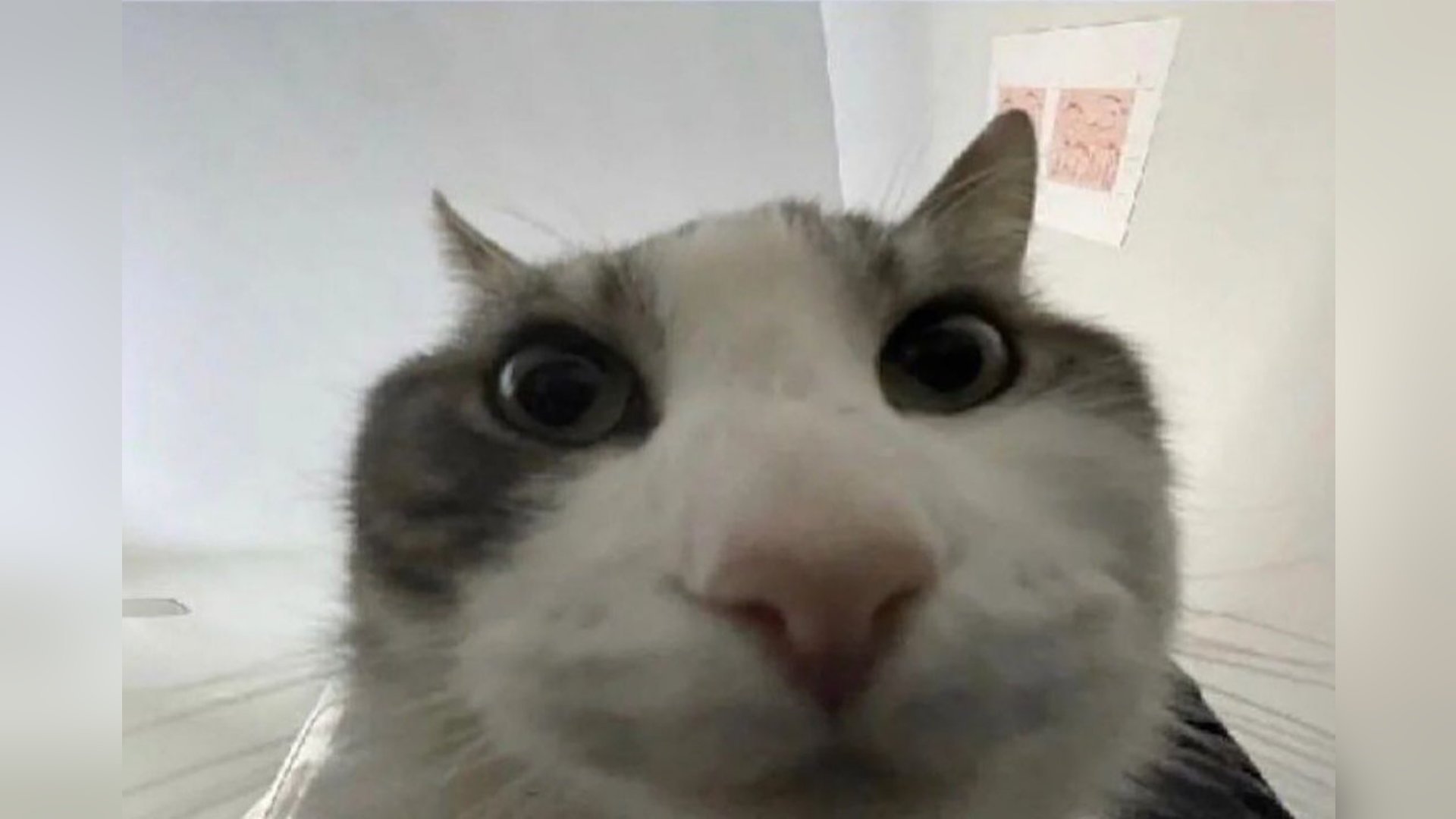
Does this meme format / cat have a name? I was trying to find the raw version the other day and could not.
sjmarf 61 points 2 years ago
“Cat looks inside”
Ironfacebuster 11 points 2 years ago
> knowyourmeme link
> look inside
> cat
reminiscensdeus 10 points 2 years ago
Thanks!
shifty 15 points 2 years ago
"On 17 September 2019, the Japan Audio Society (JAS) certified LDAC with their Hi-Res Audio Wireless certification."
Something something oxymoron. Bluetooth is trash, its why I still use wired whenever I can.
rishado 3 points 2 years ago
I don't understand what's funny. It's developed with no competition, it's open source, it's definitely better than the current options out there and doesn't cost money. Is it just audio snobs in here? I consider myself somewhat snobby re:audio but even I use wireless headphones. Some grade A snobbery in this thread. LDAC is great. You're not convincing anyone to go back to wired headphones for day to day use
frankenswine 4 points 2 years ago
it's as simple as
loss-less vs. lossy
within only a few words of the main description of the thing - no judgement on the tech whatsoever (at least from my side)
ElectroLisa 16 points 2 years ago
To my knowledge it's lossless in CD quality only, in high-res modes it becomes lossy
zod000 3 points 2 years ago
It's nearly lossess if you can connect and maintain a 990kbps connection, but it still doesn't have enough bandwidth to do it truly lossless. I think it would require 1411kpbs to be actually lossless. It is still better than any codec I know of for bluetooth as far as that does, but bluetooth just kinda sucks for that sort of application.
ElectroLisa 6 points 2 years ago
1411 kbps before compression. FLACs can go as low as 200 kbps based on the content of a file
Yerbouti 2 points 2 years ago
FLAC is a lossless compression format. It will reduce file size but keeps the audio quality. So-called "high-res" format on streaming platform like spotify (mandatory fuck spotify here) are usually mp3 320kbps so heavily compressed and lossy, indeed.
fouloleron 11 points 2 years ago
Ignorant of the subject matter, but I ripped a bunch of CDs to FLAC some time ago. Would that not work for this purpose?
kipo 21 points 2 years ago
The Sound Guys do a good job of breaking down LDAC, however the main point of criticism I have about the article is that they say that LDAC isn't great because most smartphones don't auto-choose the highest 990 bitrate. That doesn't seem like an LDAC problem, that seems like a phone problem. My phone is admittedly a Sony, but it always chooses the highest bitrate first. There's even a setting to force it to use 990.
The other criticism I have is that the sound guys kind of overlook the fact that, when your phone is in your pocket, it's close enough to the headphones that you'll almost always get the 990 bitrate. And the sound quality at 990 is fantastic. I cannot tell a difference between it and a wired connection for CD-quality FLACs. Even the 660 stepdown bitrate of the LDAC codec is really good.
user224 8 points 2 years ago
Bluetooth has fairly low bitrate which also helps save power. The throughput will also vary with signal quality. It needs to somehow adjust to worse conditions, otherwise it will just keep cutting out. Streaming CD quality FLAC could probably be done over Bluetooth 5 2M PHY, but 2Mbps is just the physical layer. There's also some overhead. Perhaps just enough would be left, but the bitrate will also vary with the content. Not everything can be compressed much, while some audio can be compressed quite a bit.
Probably would work, but the reliability is also a question.
Anyway, just guessing. Perhaps the 3Mbps EDR could be used just fine.
Oh, Bluetooth 3.0 + HS could do 24Mbps. Sort of. It used WiFi to do that.
floquant 0 points 2 years ago
Audio CDs contain 44.1kHz 16-bit PCM. If you got FLACs out you transcoded them, and transcoding from lossy to lossless is generally undesirable
EDIT: I stand corrected, I forgot that PCM is not a codec.
BakedCatboy 11 points 2 years ago
I'm pretty sure if you rip CDs directly to FLAC, it's a perfect copy assuming you're using good software. PCM isn't lossy or lossless because it's not a compressed format, it's an uncompressed bitstream. Think of it like the original data. If it was burned to a CD as digital MP3 data and then ripped that to FLAC, then yes you'd be going from lossy compressed to lossless, which would hide the fact that quality was lost when it went to MP3 in the first place.
Just as an example, you can rip a CD directly to FLAC (you should also find and use the correct sample offset for your CD drive), rip the cue sheet for track alignment, then burn the FLAC back to a new CD using the cuesheet (and the correct write offset configuration), and you'll get a CD with the exact bit for bit pattern of "pits" burned into the data layer.
You can then rip both CDs to a raw uncompressed wav file (wav is basically just a container for PCM data) and then you'll be able to MD5sum both wav files and see that they are identical.
This is how I test my FLAC rips to make sure I'm preserving everything. This is also how CD checksum databases (like CDDB) work - people across the globe can rip to wav or flac and because it's the same master of the CD, they'll get identical checksums, and even after converting the PCM/wav into a flac you are still able to checksum and verify it's identical bit for bit.
BakedCatboy 3 points 2 years ago
No problem! You can tell I went deep down the rabbithole a while back lol - I had to rip my dad's CD collection and assure him that what came out of the toslink to his DAC was identical coming from a FLAC as would come from a CD player with optical out.
Scoopta 7 points 2 years ago
But CDs are lossless to start? Raw PCM is raw digital audio data, it's completely uncompressed lossless audio so transcoding to flac is the most sensible thing to do. The flac will just be transcoded back to raw PCM for output anyway, as raw PCM is what audio hardware accepts for playback.
Ghoelian 3 points 2 years ago
I have had a few (I think only 2) CDs that actually included a few different formats in the filesystem, otoh ogg, flac, MP3, and wav. That was a nice surprise when I was preparing to rip them.
TheBrideWoreCrimson 3 points 2 years ago
Konqueror, IIRC, will show you "virtual" MP3s & FLACs, complete with file sizes and all, when you put in an audio CD. You can copy these files to your hard disk. They are created on the fly, though.
Scoopta 1 point 2 years ago
They were probably a variant of the unofficial format known as an MP3 CD. Basically CDs which contain computer audio files. CD Audio discs as specified by the redbook standard do not even have a filesystem and don't contain files.
user224 3 points 2 years ago
I am pretty sure they experienced some KDE Ingenuity.
Example:
You can see they can't be real files due to their total size:
Unfortunately, at least on Arch it seems a bit broken. The CD keeps spinning at low speed with audible random searches and the file transfer speed is abysmal. Copying out one 3.5MiB MP3 took it almost 2 minutes.
Yerbouti 2 points 2 years ago
PCM Wav is uncompressed (best quality) and FLAC is lossless compression. FLAC will keep the audio quality while significantly reducing size of the file so ripping a CD to FLAC is a good idea.
Scoopta 4 points 2 years ago
Fun fact, wav != PCM. Wav is a Microsoft developed format that while most often contains PCM data can actually contain a wide variety of different audio formats including MP3 data. Yes, while rare, you can put MP3 audio into the wav container and have a .wav that is compressed. CDs also do not use the wav container for their audio and there are other file formats in addition to wav which can contain PCM including aiff and au
Yerbouti 2 points 2 years ago
That's right, it's actually LPCM that isn't compressed. I don't think I've ever seen people using wav as a container for compressed audio but it's indeed possible, thanks for the clarification.
floquant 5 points 2 years ago
In the end, I found I don't really care that much, since lossy Bluetooth works well enough for earbuds on the go, and good old cables are still available for more serious listening.
Plus, the truth is that most people can't tell the difference between lossy and lossless without doing A/B testing, and some can't tell even with that
AnUnusualRelic 11 points 2 years ago
It's only the zeros, so you're not really missing anything.
Kayana 23 points 2 years ago
If you want the magic explained, here's a start: https://en.wikipedia.org/...
Natanael 1 point 2 years ago
Newer fractional arithmetic encoding can get crazy

programmer_humor
@programming.dev
33596
2558
7290
Welcome to Programmer Humor!
This is a place where you can post jokes, memes, humor, etc. related to programming!
For sharing awful code theres also Programming Horror.
Rules
- Keep content in english
- No advertisements
- Posts must be related to programming or programmer topics
- If the mod doesn't find it funny, you're banned. Ha-ha!... For real: do not use the community for "statements". There are other places for such content. Keep it chill and funny.
go to feed...
programmer_humor
@programming.dev
33596
2558
7290
Welcome to Programmer Humor!
This is a place where you can post jokes, memes, humor, etc. related to programming!
For sharing awful code theres also Programming Horror.
Rules
- Keep content in english
- No advertisements
- Posts must be related to programming or programmer topics
- If the mod doesn't find it funny, you're banned. Ha-ha!... For real: do not use the community for "statements". There are other places for such content. Keep it chill and funny.
go to feed...
It's loss-less, not loss-none
save