
Yeah fuck lawns too, they aren’t meant to exist
[meme] How would you rather see this land developed?
3 years ago by Fried_out_Kombi to c/fuckcars
samus12345 35 points 3 years ago
We can thank England for those damn things.
activ8r 30 points 3 years ago
We used to be a great nation... Invading... Murdering... Stealing... Imposing grass deserts... Now we have left the EU, are implementing government spyware and have no plans to make anything better...
I don't remember what my point was, but England is shit and I don't want to be here anymore.
CaptainAniki 4 points 3 years ago path: 0 3172350 3173415 3177614 3178205 3199861, hotness: undefined, score: 4, children: 0
ladam 4 points 3 years ago
path: 0 3172350 3173415 3173556, hotness: undefined, score: 4, children: 0
ladam 5 points 3 years ago
That might be true for you but the US uses 9 Billion gallons of water per day on residential irrigation. As of 2017 https://19january2017snapshot.epa.gov/...
jj4211 3 points 3 years ago
Of course you probably mow and trim. So still pretty unnatural. Natural Flora tends to look better even without obsessive maintenance. A robot mower was critical for me to actually not mind having to have a grass lawn.
Sucks for pollinators though....
Fried_out_Kombi 52 points 3 years ago
Yup, tons more parking and tons more road space per capita as well. Low-density sprawl just needs a lot more stuff per capita.
WhatAmLemmy 36 points 3 years ago
They should pay a significant land tax instead of leeching off the high-density dwellers.
Fried_out_Kombi 20 points 3 years ago
Funny you say that as I'm the creator and mod of !justtaxland@lemmy.world
For others curious about land value taxes:
A land value tax (LVT) is a levy on the value of land without regard to buildings, personal property and other improvements.[1] It is also known as a location value tax, a point valuation tax, a site valuation tax, split rate tax, or a site-value rating.
Land value taxes are generally favored by economists as they do not cause economic inefficiency, and reduce inequality.[2] A land value tax is a progressive tax, in that the tax burden falls on land owners, because land ownership is correlated with wealth and income.[3][4] The land value tax has been referred to as "the perfect tax" and the economic efficiency of a land value tax has been accepted since the eighteenth century.[1][5][6]
LVT's efficiency has been observed in practice.[18] Fred Foldvary stated that LVT discourages speculative land holding because the tax reflects changes in land value (up and down), encouraging landowners to develop or sell vacant/underused plots in high demand. Foldvary claimed that LVT increases investment in dilapidated inner city areas because improvements don't cause tax increases. This in turn reduces the incentive to build on remote sites and so reduces urban sprawl.[19] For example, Harrisburg, Pennsylvania's LVT has operated since 1975. This policy was credited by mayor Stephen R. Reed with reducing the number of vacant downtown structures from around 4,200 in 1982 to fewer than 500.[20]
LVT is arguably an ecotax because it discourages the waste of prime locations, which are a finite resource.[21][22][23] Many urban planners claim that LVT is an effective method to promote transit-oriented development.[24][25]
Further, it can't be passed on to tenants, both in economic theory and in observed practice, and even a milquetoast LVT -- such as in the Australian Capital Territory -- can have positive impacts:
It reveals that much of the anticipated future tax obligations appear to have been already capitalised into lower land prices. Additionally, the tax transition may have also deterred speculative buyers from the housing market, adding even further to the recent pattern of low and stable property prices in the Territory. Because of the price effect of the land tax, a typical new home buyer in the Territory will save between $1,000 and $2,200 per year on mortgage repayments.
whitecapstromgard 11 points 3 years ago
The one on the left has no communal space. The one on the right does.
rexxit 9 points 3 years ago
This is the insanity of people who advocate for densified housing, IMO. I loathe apartments and attached dwellings. It's like a dystopian future where you can't own anything or have private space. If I never have to share a wall or floor with someone again, it will be too soon.
Cryophilia 6 points 3 years ago
It’s like a dystopian future where you can’t own anything or have private space.
That's our dystopian, low-density present.
lemming934 5 points 3 years ago
In this case, the communal space is a forest far from housing. You can avoid people by walking alone through the forest.
I think that's a better experience than walking around your backyard
dojan 1 point 3 years ago
I suppose since my country is very low population but very large I don't really see the problem. Everyone could have a house here and we'd still have plenty of room to space.
Sweden has a population of 10.5 million, ish, and an area of 447k square kilometres. Germany by contrast, has a population of around 80 million, and an area of 357k square kliometres.
That said, I believe low density can work just fine. You don't need highrises to improve population storage efficiency. Simple two-three story buildings work just fine too.
You could also lower the population, something modern society is managing just fine right now anyway. I personally really don't believe overpopulation is going to be a significant problem in the long run.
IWantToFuckSpez 80 points 3 years ago
That’s only true if the apartment is a shitty American 5 over 1 stick building. In a modern concrete apartment with concrete internal walls you wouldn’t hear the neighbors.
ObviouslyNotBanana -5 points 3 years ago path: 0 3171819 3172604 3173078 3174918, hotness: undefined, score: -5, children: 0
Fried_out_Kombi 33 points 3 years ago
You don't even need concrete. I'm in a modern building made from mass timber construction, and it's dead quiet inside my apartment -- except for the hum of my AC and the sounds of my cat meowing whenever he wants attention.
WhatAmLemmy 36 points 3 years ago
Blame shitty government regulations and capitalism for shitty apartments.
The minimum standard we should expect is that you can pound a punching bag at 3am without your neighbours hearing anything.
Cryophilia 12 points 3 years ago
100% we need better regulation
theparadox 17 points 3 years ago
Well, I live in a America and can't wait to get out of apartments. I've moved a lot in my life and have a lower middle class income. I've never found an apartment or condo where I didn't have to deal with hearing neighbors yelling, stomping, talking outside my front door in the hallway, opening sliding doors, listening to music, etc. Only twice, when I lived with a friend in their house, did I feel like I had any peace or privacy.
Sure, there would be lawns mowed and all that, but I'd take that over the things I've heard and worried about my neighbors having heard.
If I could have real privacy in an apartment I could afford I'd continue to rent, assuming I don't get priced out of the market completely at this rate.
Cryophilia 16 points 3 years ago
This is the shit that exhausts me about NIMBYs. They have cause and effect totally reversed and I don't know how that myth got so ingrained.
theparadox 1 point 3 years ago
So what should I do in my current situation so that my choices about where to live help to improve the overall situation regarding housing and land use?
Note, my point isn't Apartments Bad. My point is that my only choice is overpriced shitty apartments.
TauriWarrior -1 points 3 years ago
We lived in a concrete apartment, couldn't hear the neighbors in their apartments but could in the hallways, and smell everything too, could hear the cars revving outside, and had to put up with the weekly (if not more often) fire alarm at 2am which meant evacuating the building. And no space for anything, no hobbies that might generate noise. Also have to deal with STRATA, hope you didnt want to put anything on your balcony cause they didn't want that, hope you can wait 12 months for the leaking ceiling to be fixed thats dripping and growing mould.
Also it cost a fortune to heat or cool the place, we're in a bigger place now that costs 1/2 as much to heat/cool
SolarNialamide 10 points 3 years ago
Take it from someone who is autistic, highly introverted and has only lived in apartments in my adult life: you do not ever need to see or interact with your neighbors. It's as optional as with a house. The most I see of my neighbors is that once every few weeks I might stand in the elevator with one of them for 15 seconds.
dual_sport_dork 39 points 3 years ago
Ownership. You will not own your apartment, it will be owned by your landlord and you will pay him whatever he demands. You will not own the forest, either. The state will, or some private entity will. No trespassing.
J4g2F 39 points 3 years ago
You can still own and buy appartements in most places in the world. Then there are many forms of social housing.
Rent to own is also a possibility but not seen in most countries.
Seems your problem is not ownership but landlords.
Some countries in Europe have the right to roam on any land. State owned and private owned. (Maybe more countries somewhere else have it to but I don't know)
It does not need to be so terrible. In some places it just is because of profits
Cryophilia 12 points 3 years ago
Since we're just talking hypotheticals anyway, let's say in the second image the land is actually owned by the owners of the apartments, like a co-op.
Cryophilia 15 points 3 years ago
But it should be, that's the point.
ObviouslyNotBanana 0 points 3 years ago path: 0 3171819 3173153 3174744 3174930, hotness: undefined, score: 0, children: 0
RaivoKulli 1 point 3 years ago
You can own and apartment. And there's right to roam.
dual_sport_dork 2 points 3 years ago
There is no such thing as universal right to roam in the US. Likewise, apartment ownership (we call them "condos" when you can own one rather than rent) exists here, but by far is the minority option in multi-family housing. You can claim you want to buy a condo or apartment as much as you want, but that doesn't do you any good when no one is selling. Units are built to be rented which is a recurring revenue stream, which big capital likes a lot more.
The significant problem is not that nobody is whacking out slabs of apartment housing fast enough. The issue is that our underlying capitalist system is fucked, and a simple anti-car attitude is not going to fix that.
captainlezbian 1 point 3 years ago
Yeah that’s my main concern. Also less space to store things like my bike.
Then there’s the upstairs neighbors. Like I get that the kids are loud. But also could the kids stop throwing stuff at my bird feeder. And their upstairs neighbors flooded the dang place
baseless_discourse 18 points 3 years ago
Uh yes, the suburban tranquility of non-stop leaf blowing, lawn mowing, and pickup humming.
Musics to my ears.
Fried_out_Kombi 40 points 3 years ago
I live in an apartment with actual good sound-proofing. It's almost dead silent inside except for the quiet hum of my AC. It's legitimately so much quieter than my gf's family's house, where you constantly hear the rush of cars driving by on the street. Not to mention leafblowers and lawnmowers.
Uranium3006 13 points 3 years ago
We should amend building codes to require sound insulation
GBU_28 3 points 3 years ago
You realize you are speaking from a very lucky position right? Everyone here agrees quiet apartments with clean facilities are pretty nice, but a large majority of apartment dwellers live in older, very noisy, very poorly managed facilities.
It's very fair to want the conversation on improving apartments, it is super important. But you.have to acknowledge that people's response about their apartment history is informed from lived experience.
biddy 2 points 3 years ago
It's not luck. Things are built for a reason, the regulations and structures of society are designed, and it artificially dictate s what is built. Perhaps they live in a place where the regulations mean that sensible livable apartments are fairly abundant. Perhaps you don't. That's not luck, those places were designed that way.
Cryophilia -1 points 3 years ago
I think the phrase "lived experience" should automatically disqualify someone from speaking about any topic. They're just anecdotes, usually in contradiction to actual data.
ElleChaise -5 points 3 years ago
You're speaking from a privileged minority viewpoint, most people don't report living that way in apartments. I've lived extensively in both apartments and suburban homes, suburbs have always provided more peace and quiet. For every day that's been too loud due to lawn machines (a lot of suburbs it's only once a month for context) I've had a dozen more with people partying, stomping, fighting, shouting, grudge starting, complaint making, roach infestation having, shitty corporate landlord owning ruined days in city apartments. And they all costed a lot more. I'm paying half what I would in a city apartment for my suburban townhome with a lawn, and a park, and pool, and walikg trails, conveniently nearby all amenities in my area.
That's the part y'all need to adopt to get people on your side by the way; assure people who like suburbs that your plan isn't to tear down their existing environments for new ones. We're scared shitless you're all gonna try to force us into boxes, many of us will fight violently to oppose such action. Make it clear you're talking only about NEW developments and I think most people will support your cause. I do in principle, but the selfish American in me isn't about to give up my already existing paradise for your apartment block, especially when you provide no answers to the corporate landlord landscape we're operating in. Those of us who have been alive long enough know these plans usually end in lost livelihoods and destroyed dreams, the true benefits only going to the upper echelon of the highest earning capitalists.
Cryophilia 11 points 3 years ago
Well that's a plain ridiculous fear, you think government thugs are going to go door to door through the suburbs rounding up homeowners and forcing them into apartments?
The idea is to build enough, at a high enough quality, and at a price point, where it's more appealing to new buyers.
kurosawaa 11 points 3 years ago
If they built more apartments, apartments with good sound proofing would be more common. I used to live in Taiwan, and every cheap apartment I lived in had excellent sound proofing.
Once there is more competition in the apartment/condo market, quality will go up.
blanketswithsmallpox 14 points 3 years ago
Rural neighbors. Even worse. Cowshit, ag runoff ruining our waterways, heavy machinery blocking streets, Trump flags inside every house and old boys racism everywhere the moment you're 'in' with them.
Instead of loud neighbors you have to deal with white trash family fights and drunk driving everywhere. Meanwhile everyone has a chip on their shoulder about city and suburban people ruining their world somehow yet they never participate in any of it lmfao.
Semi-Hemi-Demigod 3 points 3 years ago
You're still too close if you can hear all that.
And I rather like the smell of cow shit
rambaroo 1 point 3 years ago
I never hear my neighbors in a rural area. This community is so blatantly full of shit it's laughable. As if you don't deal with white trash or drunk drivers anywhere else. Instead in an apartment the white trash are banging each other with the windows open and getting arrested at 3 am with 8 cop cars flashing their lights in the parking lot.
No one listens to ideas from fuckcars-type people because they're gaslighting lies that no one except other niche weirdos sympathizes with. Please do keep trying to tell rural people how much worse their situation is than living in an apartment. You don't sound like a condescending jerk at all.
You could have just admitted there are pros and cons to both but instead you go on this gaslighting crusade to try prove someone else's lived experience wrong. Good luck with that approach, no one is listening to you except other weirdos.
baseless_discourse 6 points 3 years ago
Sure, I doubt there is anyone here against rural self-sustained living, it is probably one of the more eco-friendly and humane way of living.
But once frequent car trip and road maintainance cames into equation, it might not be the most eco-friendly way any more. I understand not everyone cares about their fellow human being, but this is the point this post is trying to make.
LanternEverywhere 12 points 3 years ago
iirc, the further away you live from a city then the worse you impact the environment. Unless you're literally a fully self-sustaining homesteader with no roads or utilities anywhere near you, then living in a city is basically always better for the environment.
Semi-Hemi-Demigod 10 points 3 years ago
Suburbs are the worst of both worlds. Gimme a cave on the top of the mountain miles from anywhere, thanks.
Uranium3006 7 points 3 years ago
All the fun of overbearing neighbors telling you what you can or can't do with all the inability to take the train anywhere
Fredsshilksirt 5 points 3 years ago
don't forget the dudebros driving around blasting bass every 20min. I hope they all go deaf. peacocking morons.
bustrpoindextr 10 points 3 years ago
Yes, that doesn't happen in cities at all.
baseless_discourse 1 point 3 years ago
I lived both in dense neighborhoods, rural neighborhoods, and suburbs. Trust me, the more things you give your neighbor to do, the more shenanigans they will make, especially in place where everyone is bored out of their mind.
BruceTwarzen 1 point 3 years ago
I can't hear shit when i clise my windows.
themeatbridge 6 points 3 years ago
This isn't a particularly convincing analogy. Islands have limited space. The suburbs where I live border tons of open space and parks. Meanwhile, our school district is already overwhelmed with children, so converting commercial spaces into apartments will merely add to congestion and sprawl. NIMBY's make a convincing argument against denser residential construction.
A better focus would be the ability to simplify public transit and walkability. Town centers and public spaces could be more accessible with denser residential construction, and the additional green space can be closer to where you live without everyone needing their own half-acre yard to mow and water.
themeatbridge 2 points 3 years ago
You're right, I meant to reply to the OP. I agree with you. Still figuring out Lemmy, sorry.
Cryophilia 3 points 3 years ago
The suburbs where I live border tons of open space and parks.
Yeah but then they build more houses and destroy more of those open spaces to make room for more suburban sprawl
themeatbridge 1 point 3 years ago
Yep, Toll Bros buys a horse farm and makes half acre mcmansions. There are some big properties that have covenants that prevent it, and the zoning in my township won't allow new subdivisions less than 2 acres, and we have some great municipal parks which will never be developed. But that means everything is spread out to make public transit untenable. You need a car to get to the nearest train station, and then you need a car when you get off the train at any stop outside of the city.
There's no one-size solution to combat sprawl. High density housing makes a lot of sense some places, and not so much in others.
FederatedSaint 2 points 3 years ago
God I hate living in high density housing. Dogs yapping, bass and loud music booming, smelly, loud, animal poop and pee on every green/natural area, higher crime, more traffic, etc.
AdmiralShat 99 points 3 years ago
The issue is that all of those apartments are owned by one person getting filthy fucking rich from rent.
AKADAP 94 points 3 years ago
I spent seven years living in an apartment. I so enjoyed hearing the neighbors having sex, the thumping music they played, the smell of their cigarette smoke inside my apartment with all my windows closed, the random intrusions by management to repair something unrelated to my apartment, the random rent increases. Add this to the fact that I had no space for a work shop to make anything, and paying the equivalent of a mortgage with no equivalent home equity. Some people love apartment life, but it definitely was not for me.
IanAtCambio 87 points 3 years ago
This would just become a 100 apartment buildings.
rexxit -20 points 3 years ago
Exactly. People who advocate for densification are basically advocating for everywhere to be Amsterdam or NYC with continuous human habitation and maybe small concessions in the form of city parks (a joke compared to real natural areas, IMO).
I'm not sure if they're aware that this will be the logical conclusion of those policies.
Cryophilia 34 points 3 years ago
I'd rather have a few cities and a lot of unspoilt nature than no cities and no nature, just suburban sprawl everywhere
BartsBigBugBag 26 points 3 years ago
No, im good on suburbia, it’s inherently damaging to both our mental health and the natural ecosystems of the planet. You cannot have a sustainable single family suburb.
barsoap 11 points 3 years ago
No such thing as suburbia doesn't have the density necessary to allow for public transit (with sane frequencies) or to be walkable. Living in there will always mean taking a car to fetch groceries, to get to school, to get to kindergarten, to go to the doctor, to go to the hair stylist, to go anywhere.
Meanwhile you're forcing people to live in accommodations which are absurdly large and expensive because batshit zoning codes make building anything that's not a gigantic house on a humongous plot illegal. I don't want to fucking upkeep a house.
...and I also don't want to finance the sky-high per-inhabitant infrastructure costs that suburbs bring with them. They're the leading cause of municipal bankruptcies in North America.
Cryophilia 5 points 3 years ago
More suburbia does not reduce the number of people. It just spreads them out...into what was formerly nature.
IanAtCambio 2 points 3 years ago
Man so true. I live in Dallas Tx home of suburban sprawl. I just spent a month in North Carolina and I had no idea what I was missing. The unspoiled nature in the Appalachians just blew me away. Hard to come back to miles of concrete.
I agree that if we could build a few wall label buildings, and leave the rest untouched that would be the best way. But I’ve seen how hard it is to stop development once money starts being thrown around.
MyNameIsIgglePiggle 1 point 3 years ago
I have zero faith that will ever happen
skulkingaround 52 points 3 years ago
What is going on in this comments section? Building dense is massively better for the environment than SFH, both in the construction phase and for the life of the units as far more residents can be served with less infrastructure sprawl. It also doesn't mean that detached housing will suddenly stop existing if we let developers build densely packed housing. Doesn't even need to be high rises, it can be townhomes, duplexes, five-over-ones, etc. You'll still be able to get a white picket fence suburban home or a farmhouse on some acreage if you want. In fact, it will become cheaper because all the people who want to live in cities will actually be able to move there and not take up space in that low density area you want to live in.
cloudy1999 48 points 3 years ago
Judging from the top rated comments, this post is surprisingly controversial for fuckcars.
Rukmer 30 points 3 years ago
I would literally kill myself if I ever had to live in apartments again. I have severe social anxiety and agoraphobia and general anxiety. I started hallucinating when I lived in apartments (but never before or since). I became paranoid of people. There was never any solitude. Plus right now there's no way to get around apartments without landlords (though I understand ideally there might be ways around this, it's not likely to happen any time soon). When I lived in an apartment I considered just being homeless and hiding in the woods (and stupidly, isn't legal).
We sure could stand to make more stores and businesses into high rises though. I live near Detroit (but not IN Detroit) and going down our streets it's just a ridiculous waste of space. How many tire shops do we even need? Why does every business need its own lot with so much space around it? Everything being more "mall" style would waste less space.
mondoman712 5 points 3 years ago
I've noticed that once a post gets enough up votes (and presumably starts to appear in people's 'all' feeds), some different opinions start to appear.
Izzy 45 points 3 years ago
But instead of a population of 100 with small houses you will get a population of 1000 because they built 10 apartment complexes. I think I'd prefer the small houses didn't have lawns and left the nice trees and natural growth.
LanternEverywhere 27 points 3 years ago
The point is for any given population size, a city is a better way to house them. Though IMO this drawing makes the difference too stark. Personally i think the optimal is a medium-highish density city of separated buildings with nature interspersed, rather than a single super high density mega block building.
Fried_out_Kombi 14 points 3 years ago
Yeah, the image is really just for illustrative purposes. Imo, if we just abolish restrictive zoning codes and other land use restrictions that essentially mandate sprawl, then tax carbon appropriately and build good public transit, that would likely achieve the overall "optimal" outcome. No need for a mega-arcology, but no need for government-mandated car-dependent sprawl either.
Cryophilia 1 point 3 years ago
That's not how anything works
Izzy 0 points 3 years ago
We are in a hypothetical plot of tiny land that can be thought of as the entire world. If you have an argument to make based on this rather silly hypothetical world we are talking about then feel free to make it.
wheeldawg 43 points 3 years ago
Name one good reason the average apartment experience could ever be better than living in a house.
People live in apartments to afford shelter, you'd be hard-pressed to find one that actually likes it better.
Sure you can make arguments about the concept of centralized feeling being better for nature, but no one actually wants to do it.
TheBlue22 39 points 3 years ago
I live in an apartment. I want to live in a house.
Cunt upstairs neighbour smoking cancer sticks on the balcony, making my room smell like shit when he does it, dumbass neighbour to my right who phones some other dumbass at 6 in the morning, screaming into his phone, waking me up. No garden, can't have a cat or a dog.
I don't want to live in a suburb where I am forced to use a car, but you can live in a house and still be able to get anywhere you want without a car.
ParsnipWitch 39 points 3 years ago
A truth most people don't want to hear is that densely populated cities are overall better for nature and resources. You need less roads and tracks, fewer concrete overall, compact cities are much easier to make walkable, etc.
Really the only argument against tight packed cities is "I don't like people". That shouldn't really be a priority.
For nature to recover we need to give back space. The worst you can do is build rural homes or spread out suburbs.
Touching_Grass 27 points 3 years ago
Nobody makes well made apartment buildings within 99% of our pay grades
Master 8 points 3 years ago
This is the true issue. The const of construction doubles to make these things truly soundproof. No one ever does that. Even if you design it that way it's the first thing the owner removes in VE.
aircooledJenkins 11 points 3 years ago
What's a well made apartment building?
CaptainAlcohol 2 points 3 years ago path: 0 3177598 3178680 3181996, hotness: undefined, score: 2, children: 0
GratefullyGodless 9 points 3 years ago
Better than listening to your upstairs neighbor beating his wife. I would call the cops, but they couldn't do anything unless she pressed charges, and she never would. We would get quiet for a couple of days though, but then he'd be doing it again.
Cryophilia 5 points 3 years ago
Insulation
letsgocrazy 34 points 3 years ago
If people had tree Icons in their gardens in the left image, it would look much better wouldn't it.
paysrenttobirds 33 points 3 years ago
Density doesn't save nature. Habitat protection laws save nature. Make sure that's part of the plan.
Also, the picture shows the saved nature very accessible to the density. This is not usually what these zoning plans have in mind.
Many important species, especially insects and their predators, can absolutely make good use of patchy suburban habitat if it is properly managed, moreso if it is networked, and natural space nearer homes benefits residents and the environment.
We can't keep saving mountaintops and deserts, we need to rehabilitate more of these nice valleys and riversides we all like to build cities on.
Gerula 30 points 3 years ago
It's simple: blocks are not built in cities to minimise the footprint like in your meme but to build cheaper and sell more and in the same time externalising the costs of infrastructure development.
A mid density block is something, a heavy packed "bedroom" neighborhood is another.
derpoltergeist 29 points 3 years ago path: 0 3211193, hotness: undefined, score: 29, children: 29
HexesofVexes 29 points 3 years ago
A lot of people are pro-apartmemt before living in one, so here are some fun facts:
Apartments usually have a maintenance cost, that covers as little as possible while still costing a lot. You never really own the flat, the building company does.
You often have a communal garden; it's looked after by the lowest bidding contractor. Not all flats have balconies, so you are unlikely to have your own.
Fear of fire and flooding - if someone else messes up, your stuff is toast/soaked. Insurance companies love that extra risk, it gives them an excuse to charge more.
No flat has good sound proofing - the baby screaming downstairs at 5am and the thunder of the morbidly obese person upstairs going to the bathroom at 1am will denote your new sleep schedule (i.e. disturbed)
I hope you're in for deliveries - apartments have no safe spots to leave things.
You will not be able to afford a flat with the same floor space as a house. I'm sorry, welcome to your new coffin.
Good luck drying your laundry (spoiler, your living room is going to have a laundry rack).
Good luck owning a bike (it's either the bike or your laundry, take your pick).
Vocal intimacy becomes a community event.
Living in a flat is a pile of little miseries grouped together.
Thoth19 29 points 3 years ago
This is a pretty terrible way to make this point. The pic on the left is neater and the one on the right leaves almost no space for the people living there to do anything. You probably want a little bit of cleared land for literally anything to do on the island.
Then again, there isn't a dock. So I figure the island on the right has a better way of building boats to leave.
Reddit_Is_Trash 26 points 3 years ago
I'd prefer to live in a house over an apartment
Fried_out_Kombi 39 points 3 years ago
Low-density sprawl essentially requires cars. Further, cars need a ton of space for roads and parking lots. Denser, more walkable communities don't need nearly as many cars and don't need nearly as much roads and parking lots.
theKalash 21 points 3 years ago
Low-density sprawl essentially requires cars.
I disagree. I live in the suburbs in Europe and there is plenty of single family homes with a garden here. But you're still always within 500m of a bus stop or tramline. Have been living here without a car for quite while, it's fine.
Fried_out_Kombi 18 points 3 years ago
I'd be curious what the population density numbers are. There's a world of difference in density between, say, single-family rowhouses and classic American suburbia.
Nouveau_Burnswick 9 points 3 years ago
My math is here: https://lemmy.world/comment/3165486
But essentially, for the same cost as cars, the lowest density possible before becoming rural 106 households / sq mi (6 acres per household) can have a bus pass every 6 minutes, 24/7/365. You can double frequency by adding a second stop on the way to a transit spine.
theKalash 6 points 3 years ago
Yeah, I think it's mostly rowhouses.
Also the entire suburb spreads along through a valley, so it's like long and thin, which makes it very easy to run a central tramline through it.
But it still should be possible anywhere with good public transport.
Semi-Hemi-Demigod 3 points 3 years ago
When I lived in Lancaster, PA there was a little barn at the Costco for the Amish people to park their buggies
theplanlessman 11 points 3 years ago
Single family housing is a massive contributer to (sub)urban sprawl and car dependency. Increased residential density can reduce the need for cars by reducing the distance between people's homes and their workplace, shops, etc.
oleorun -4 points 3 years ago
Yes, let's pack people in a dense area where diseases and tempers can and will run rampant because THAT has never happened before.
Sorry, I refuse to live on top of other people. Housing is not the enemy of nature - housing that is not in tune with nature is. It is completely possible to build homes that blend in with nature without having to resort to ultra-dense, 5-story brick behemoths filled with people who loathe one another.
I see what you are trying to convey, and I agree with you to an extent, but density is not the answer to sustainable housing.
Fried_out_Kombi 12 points 3 years ago
Density reduces emissions. Low-density, car-dependent suburban sprawl is extremely unsustainable for the planet.
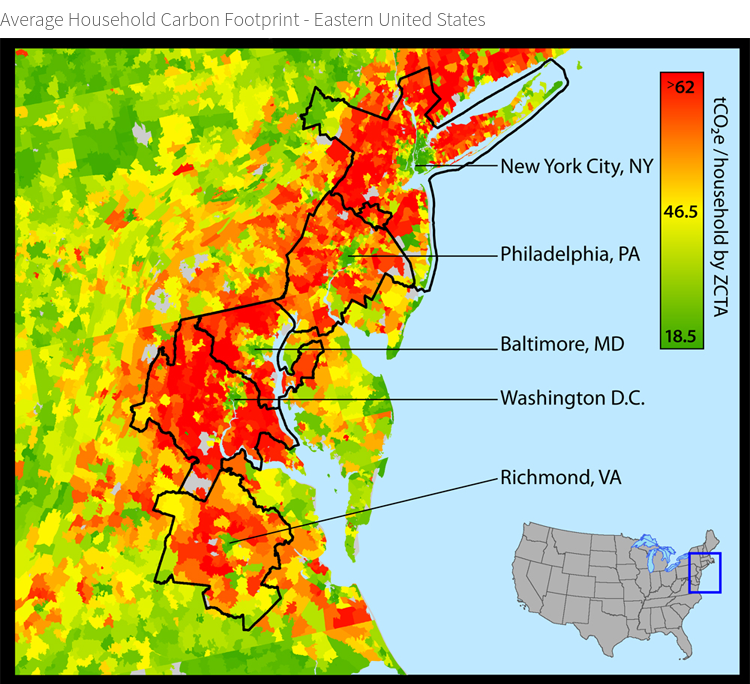
oleorun -7 points 3 years ago
Density reduces emissions
I reply to your infographic with a scientific paper that shows higher densities lead to higher CO2 emissions: https://www.mdpi.com/....
This study was done in Spain.
Another study, in Nature, also shows that lower density is better for reducing carbon emissions and climate change. https://www.nature.com/articles/s42949-021-00034-w
Sorry, but you and your infographic/sources are not supported by science.
baseless_discourse 13 points 3 years ago
Literally the frist sentence in the abstract:
More than 50% of the world’s population lives in cities. Its buildings consume more than a third of the energy and generate 40% of the emissions.
"higher densities lead to higher CO2 emissions" you say...
Nouveau_Burnswick 11 points 3 years ago
The low density/low height example in the nature article is still 5k people per Km^2. While definitions vary wildly, I usually see 1000-400 people per km^2 for suburb definitions.
Does example D look like suburbs to you? As something undefined it could be considered suburbs, but probably "streetcar suburb" in the Canadian/American context.
Critically the article also mentions a requirement for best practice greenery management to maximize carbon sequestration. I'm no botanist, but I'm guessing caretaken parks do better then monoculture lawns (assumption).
Edit: missed that the first link was a different study. That like on spanish cities has its lowest density group defined as <100 pop/hectare, if my math is right, that means <10,000 pop/km^2. Significantly denser than any suburb. This is also a region when thermal energy is spent of cooling, not heating. And while it adjusts for climate effect, it doesn't seem to adjust for the modernity/thermal effectiveness of the buildings. Such to say, a building with an air-conditioner will spend more thermal energy than one without.
Basically your two links are showing that cities can be too dense, and there is a point when they lose GHg efficiency. There is no mention of anything lower than what, as a Canadian, I would still call high density (just not super high density).
Fried_out_Kombi 10 points 3 years ago
path: 0 3171582 3171687 3171781 3171898 3172112, hotness: undefined, score: 10, children: 0
Feel free to zoom in on essentially every city in America. You can even download the raw data yourself.
Further, your Nature study you link, actually read the paper and you find this nugget:
These limiting assumptions were necessary based upon the urban scale scope of this study. Providing additional levels of detail at the building scale would greatly improve the accuracy of the analysis and can be refined in future works. Employing a cradle-to-cradle approach to consider resource reuse, the impact of retrofitting existing building stock over rebuilding; the inclusion of transportation impacts; adding a dynamic time component to investigate material inflows and outflows; and including a detailed time-related analysis of carbon sequestration potential offered by urban greeneries in the simulated environments—are all valuable and important avenues for future work to build on this study and expand its relevance while reducing its limitations. This study therefore acts as a stepping-stone to provide a strong foundation from which extensive future work can be born.
It literally doesn't even model transportation emissions. Considering this whole conversation is about sprawl causing more cars, this is kinda a glaring omission.
ForgetPrimacy -2 points 3 years ago
I'd like to come back and read over this later. The point OP is making seems pretty obvious but it is quite directly contradicted by the sources you just provided. I want to read those later
baseless_discourse 12 points 3 years ago
Housing is fine, several of my personal heros lived in rural commues far away from society, where they are mostly self-sustained. They dont live in apartments, but there is no doubt I have great respect for them and believe they live in a very responsible fashion.
The problem came when people want to live in the middle of nowhere, produces nothing for their own, pays low taxes; yet think society owes them giant road infrastructure and wasteful parking lots. So that they can terrorize the lives of pedestrians and cyclists, also our dying planet, just because only their oversized driveway princess and their ecological hellhole of a lawn can give them a little sense of achievement in their otherwise fruitless life.
bustrpoindextr 26 points 3 years ago
Ah yes, because that's how capitalism works. People would definitely stop developing the rest of the island because they don't need more housing.
bustrpoindextr 2 points 3 years ago
Your first statement is all well and good but your second statement is flat out wrong. That can only happen given a static population. But humans reproduce pretty rapidly. There will always be new customers until we hit a carrying capacity limit, but as technology improves the earths carrying capacity keeps going up, until of course we decimate resources and then it'll come crashing down.
If it's not housing, it's a golf course, or business district or something. The old "if you build it, they will come" plenty of people also don't spend their lives in the same place so moving to a newer, better facility is enticing to those that can afford it.
lemming934 9 points 3 years ago
It's common for states to institute urban growth boundaries that protect forests / farms.
DivineJustice 25 points 3 years ago
If the buildings are actual size, then those apartments must be the size of a closet
pm_me_some_serotonin 24 points 3 years ago
If you look at land use maps, you will see that the urban areas are so small compared to the agricultural and livestock area needed to support the population. This is the biggest cause of deforestation, and population density actually makes it much worse, because it centralizes consumption and requires more logistic costs to deliver the needed food, with much higher rates of wastes. If we lived in less dense areas, perhaps we could do with local, smaller-scale agriculture instead.
restingboredface 23 points 3 years ago
My concern with multi unit living is that your home is now dependent on the actions of others. You could lose everything because some dumbass next to you dropped cigarette burning on their floor, or overflowed their tub.
It also just gets messy having that many people try to manage a property together. I lived in a high rise for a year. There was constant bickering over who put the wrong thing down the trash chute or who was using the elevator to move furniture without checking it out first. Everyone had to all agree to building repairs, which was a nightmare, and getting them them done took forever. From my understanding our building was pretty well run, but it didn't feel like it. I loved the idea of high rise life when I moved in but by the time we got out house I was ready to be done with it.
WarlordSdocy 22 points 3 years ago
I mean there are genuine reasons you might want a house over an apartment. If you have a big family or the fact that you own it and don't have a land lord that can just raise rent and force you out. You gotta have a mix of types of housing that actually matches what the needs of the people are, which is still the exact problem we have now.
stevedidWHAT 22 points 3 years ago
I mean is the building owned by its tenants or one entity/person who gets to own the building and a large amount of peoples homes thusly?
BilboBargains 19 points 3 years ago
I couldn't live in a place that didn't have a workshop, that's what deters me from apartment blocks.
chiliedogg 19 points 3 years ago
I work in municipal develpment.
The thing with developers is that they build that density, but over ALL of the land. Apartments kill more trees and create more impervious cover than any other type of housing.
Our city requires parkland dedication for development. Single-family developments build public parks and preserve trees wherever possible. Apartments just pay a fee in lieu for tree mitigation and parkland dedication and improvements because they absolutely will not have a millimeter of land not dedicated to housing.
captain_aggravated 18 points 3 years ago
This isn't how this would work. You'd get 100 houses, or 100 high rises.
mycroft 18 points 3 years ago
If the people living in apartments had a say in how they were built... yeah
Nobody chooses to live in a fucking tin can hanging from suspension wires that is so poorly insulated you can hear every bird flying into the windows as though you're inside a bass drum.
The sounds of my neighbors at 3 am snoring are not a feature you can call part of the "shared experience."
The prospect of being trapped together because the elevator went out and there's a fire... oh so joyous. Not to mention all the people's pets that get left at home throughout the day and I can hear crying with desperation to be let out as though they're in the next room...
I'm quite happy not to live in a fucking modern apartment thank you very much.
Harpsist 17 points 3 years ago
Build a co-op garden around the apartment and you've got yourself a deal.
Everyone in the place gets X amount of space. More then 60% of people won't garden at all and their share can be maintained by the gardeners.
Fruit trees and berry bushes will be grown for all to use.
Colour_me_triggered 17 points 3 years ago path: 0 3177970, hotness: undefined, score: 17, children: 1
Touching_Grass 3 points 3 years ago
I swear to God if I do this again and you back out I'll be super angry
betwixthewires 17 points 3 years ago
Maybe the problem isn't the houses. Maybe it's the grass lawns.
betwixthewires 2 points 3 years ago
Nice to see you swedneck it's been a while. How you been?
The_Mixer_Dude 16 points 3 years ago
In this image I can't help but notice how much infrastructure cost there is here. Consider need for water treatment pipes run to and from each house for water and sewage as well as sewage treatment infrastructure. Keep in mind that failure rate increases with each house and by length of these runs that you are adding and fire hydrants being added every so many feet, shut off valves. Don't forget that we now have significantly bigger demand for water as we now have a lot more vegetation to manage and a higher reliance on emergency services as we are spread out over a larger area so we now have to increase ems, fire, and police spending. Then you add the costs for electrical infrastructure with your sub stations and transformers and all the costs set to maintain that especially since these are underground lines apparently and ofcourse we have increased risk of failure again per service and foot run and higher demand on those services which will require more workers which turns into money being spent outside of the community. You then add the cost of data lines and phone lines including the costs associated with maintaining and upgrading those which are also apparently underground which means your upgrades may be significantly more expensive and will take much longer to deploy. Now that we have all these houses separated we will now have a population that will be more dependent on vehicles so now we have to factor in all of our road maintenance costs and our public services will not require far more vehicles as well which means we will also need mechanics to repair and maintain these vehicles. Now with roads alone when we consider the costs involved things get rather expensive quickly. Cost to maintain roads, even roads that are seldom used, is surprisingly expensive and require a lot of workers to build and maintain as well as vehicles, machinery, and land to store, recycle, and create materials needed to repair and build the roads. On top of that there is also an often missed statistic of vehicles which is public safety as they are a leading cause for injury which is another stressor on our little community.
This is far from all the possibly missed costs of our suburban/rural neighborhood but I feel these are some of the important ones people live to overlook.
systemglitch 16 points 3 years ago
I love my own yard with privacy and a firepit where I can get drunk, loud and high as a kite without anyone bothering me.
Apartment living was hell, it's what convinced me to get a house.
Best decision ever
Poggervania 16 points 3 years ago
Might be a silly question, but would it be better if we somehow turned suburbs into being more akin to rural towns? Like the suburbs could maybe have nearby town centers that they could walk to in 10-15 minutes that would allow small businesses to operate in.
I don’t live on the mainland, so no idea how it actually works.
whoisearth 14 points 3 years ago
Have you not heard of mixed density? There should be houses, semi, townhomes, 3 story walk-ups and apartment buildings. You could probably do all that and still keep 50% of the island nature.
Rooki 14 points 3 years ago
The only thing i can see on the right bad is that many people dont like beeing cramped in with many other people. + want to have a garden Balcony can be a "garden" but not as good. I have nothing against the right, but keep in mind not everyone is the same.
Mojojojo1993 14 points 3 years ago
Sounds like a literal nightmare to me. No garden to enjoy. No vegetables. No privacy. No ability to get solar panels.
No room for improvement. Basement second levels. Changing plumbing windows etc. No ability to charge your ev.
Fuck is this some corporate bullshit
fruitycoder 14 points 3 years ago
Condos and Housing coops go a long way I think to reduce some of the pain points most people have had with apartment living. The issue now is that most people are comparing owning a home where you have a lot of control over your circumstances and price stability, vs having a landlord that is doing the minimum and raising rents every chance they can. If apartments were built for people, and not landlords would they still have cramped hallways and balconies, would they have poor insulation and sound proofing, would they have old noisy AC units, etc, etc. The thing is, even in cases where people do choose to not have an amenity, people still had the choice.
callouscomic 13 points 3 years ago
The island on the right probably isn't as hot either.
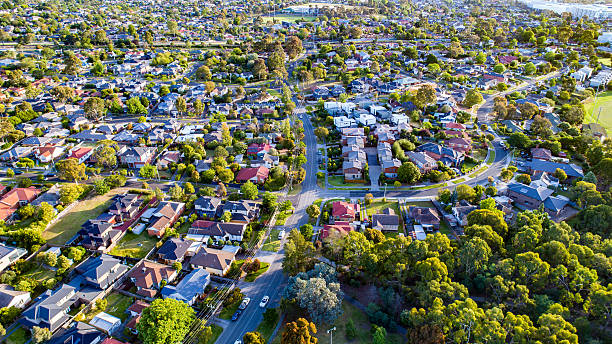

CosmicCleric 12 points 3 years ago
When I see the image what came to mind was that experiment where they had an overpopulation of rats in a cage and how all of the rats turned on each other and killed each other.
Too much human density is not good. You have to be sure to get the percentage of humans to a acre of land just right, to prevent the rats situation.
Nature is important, but Humanity moreso.
Leviathan 11 points 3 years ago
Growing upward as opposed to outward helps in numerous ways. It pollutes less, costs less in services, takes up less land and the list goes on. The issue isn't apartment buildings, the issue is badly built, uninsulated in every way and overpriced apartment buildings.
RIP_Cheems 10 points 3 years ago
Thank you for explaining why suburbs suck. Also, the mass of people flooding an area all at once is just a niceness.
NarrativeBear 9 points 3 years ago
I would think looking at this comment section most individuals on this sub hate cars, but love homes with large driveways and massive streets. To drive the cars we hate?
Mid-density apartment are a thing, maybe 4-6 floors tall.
Though north america apartment design is another issue IMO. North america apartment floor plates are unfortunately not designed for families. When was the last time you saw a 3 or 4 bedroom apartment?
Edit: I should add, when was the last time you saw a 3 or 4 bedroom apartment that cost less then a full size family home in the suburbs.
curiousaur 9 points 3 years ago
I'd rather live in my own few acres of forest with a creek running through it and a big house.
Peddlephile 8 points 3 years ago
Give me a European style apartment with high ceilings and generous space and you have yourselves a deal!
That said, I've been working in my local building industry for almost 20 years and the trend that I see is that though there are more apartments being built, the quality has tanked. We have huge issues with mould, flammable facades, exploding glass, alternatives are rampant through the roof and price gouging.
Unfortunately this has fed the idea that apartment living is no good.
boredtortoise 8 points 3 years ago
Diversity is good. Different types of homes and zoning. Mix of nature and buildings
boredtortoise 2 points 3 years ago
Yeah sure, that could also be nice. I guess I meant that even in that case, without pre-zoning, the end result should be diverse
SargPotTea 8 points 3 years ago
What if we put an apartment complex and use the rest as a race track ?
UtMan1988 7 points 3 years ago
Yeah, try living in an impoverished town, where it's the housing on the right, spread out like the housing on the left. There are, like, no jobs (none that are actually sustainable long-term for living in this economy), but they just leveled a huge area of forest for more low-income housing (AKA Projects)
peanutdust 6 points 3 years ago
Do both import 100% of the goods?
ryannathans 6 points 3 years ago
Here, buying an apartment makes you liable for any structural issues to the whole building, it's a huge risk and with how terrible build quality is these days I'd never buy an apartment
There are many highrise buildings in Australia with residents paying hundreds of thousands each for issues caused by dodgy builders. The builder simply closes the business during the warranty period and they are off the hook for claims
RinseDrizzle 6 points 3 years ago
I mean, yeah, apartments and such should be widely available. Awesome for high population areas, young folks, temporary housing situations, etc. Had a flat for years and will for at least a few more. However, as a drummer (and general loud music enthusiast) I am very ready to get out of the flat and get into a proper house with a basement, garage, patio for grilling with da boyes, etc.
A good mix of both is ideal. I sure wish we took better measures to mitigate the insane housing prices tho'. Sick of thin walls and and a single room trying to replace 4 rooms.
JigglySackles 5 points 3 years ago
I hate living in an apartment. I'd probably kill myself if that was the only living option for long enough.
MrMusAddict 5 points 3 years ago
Assuming the needs of a living space is the same across both populations, this graphic seems disingenuous. The pixel count of the apartment suggests it could fit 6½ of the homes per floor. Across 9 floors that's 58 homes worth of square footage.
I assume the homes have garages, which would not account for living space. But garages don't account for 42% of a homes' size.
MrMusAddict 6 points 3 years ago
For that to be true, you'd have a 2-car garage attached to at most 400 SqFt of living space...
Or in other words, for a home with a reasonable 1500 SqFt of living space, you'd need at least an 8 car garage...
collegefurtrader 1 point 3 years ago
Car parking isnt needed because there’s nowhere to go
MrMusAddict 3 points 3 years ago
True, but what I'm saying is that there are losses in livable square footage represented in the apartment. A home's SqFt excludes the garage, so a 1500 SqFt home is actually 1740 SqFt with a 1-car garage. I.e. a 1-car garage only takes up 14% of the area underneath a roof of a 1500 Livable-SqFt house. Yet, the represented apartment has lost 42%.
That implies that if the the houses in the picture are 1500 livable square feet, then the apartments are 1009 livable square feet; a ⅓ loss in livable area.
Apartment Complex = 58 Homes' worth of area including garage (1,740 × 58 = 100,920 SqFt)
100,920 / 100 apartments = 1,009 SqFt per apartment
where_am_i 0 points 3 years ago
Ok, double the pink block. Now what?
MrMusAddict 3 points 3 years ago
Then you'd be closer to genuine compared to what this graphic shows.
SexyTimeSasquatch 5 points 3 years ago
I would prefer a middle ground where you have town homes for more privacy and room for families. Everything is still walkable, you preserved more green space, but everyone isn't crammed into tiny pods.
speaker_hat 5 points 3 years ago
OP do you live in apartment complex?
JGrffn 3 points 3 years ago
Sorry, but fuck this idea in its entirety. This would allow for MORE apartment buildings to be built, since that is how capitalism works, which results in more damage to the surrounding wildlife. L
We need more regulations, and we need a more conscious approach to our housing in general. We should be approaching this with symbiosis in mind, cooperating with nature rather than bending it to our will.
Those houses on the left? Yeah, you could cram so many actual gardens that give you actual food and which could bring so much biodiversity, but we sticking to flat, pure grass gardens that do nothing other than be flat and look green. Fuck everything here.
Cryophilia 2 points 3 years ago
This would allow for MORE apartment buildings to be built
Only if people need housing, and if they do...what's your alternative? Not allow them housing?
JGrffn 1 point 3 years ago
Sure, let's build what we NEED to build in a conscious way, but have you seen the housing market as of late? China was printing useless buildings everywhere they could just to keep their faux market going, and any place without regulations will try to cram as many people as possible in as little space as possible, forgoing any quality of life or even safety designs in place of profitable designs.
We love to come together in big cities, and even jobs that don't need to be on-site end up being on-site, thus worsening the problem. There's a ton of land out there that could be turned into sustainable housing solutions that could benefit both the people and the environment. I'm just saying we should probably consider other alternatives to "suburban hell" and "communist hell".
Cryophilia 1 point 3 years ago
I don't think we're anywhere close to having to even think about the possibility of developers building too much housing. And yes, regulations solve the issues you bring up, we absolutely need to enforce the ones we have and many areas need more. Soundproofing should be mandatory in multifamily buildings for example.
Sensitivezombie 2 points 3 years ago
Single family homes need to be banned from cities.
thantik 2 points 3 years ago
How about apartments for people who want to live in apartments, and houses for people who want to live in houses, and proper civil engineering to limit sprawl?
Why does it always have to be black or white? There's a shade of gray here that's closer to the apartment model, but that would still allow freedom of travel. Public transportation SUCKS ASS. Cars are a central identity to Americans. They are part of our culture. Not having them just means everyone feels like another bee in the hive.
betwixthewires -13 points 3 years ago
Because this "high density housing" is code for commie block slave quarters.
There are places, and I know this is hard for you city dwellers (which translates to "bourgeois" in French FYI) to understand, where there is still nature, there are still forests, the houses are a miniscule proportion of the land area. Its like that basically everywhere else except for where you insist on living and think everyone should live. It's really pretty, but the downside is that you cannot get by with a busywork job sitting at a desk doing nothing productive all day. I know that's a deal breaker for most of you. Some of us have the life you wish you were living, or something close to it, no expecting the whole world to bend over backwards to accommodate you required.
Semi-Hemi-Demigod 3 points 3 years ago
It’s really pretty, but the downside is that you cannot get by with a busywork job sitting at a desk doing nothing productive all day.
Not true. I've lived out in the country and had a WFH job where I sat at a desk and did nothing productive. It was awesome.
thoro 1 point 3 years ago
where you insist on living and think everyone should live.
Where people want to and do live
No one is coming for your ranch/farm/cabin. If you had the life "we wished to live", you'd be in a dense community with access to local cafes, restaurants, markets, entertainment, and other neighborhoods without needing a car and with a healthy amount of green space as well. We're specifically, typically talking about population centers.
Cryophilia 0 points 3 years ago
Oof that's a lotta targets for one troll
betwixthewires 1 point 3 years ago
It's all 1 target: full of shit communists. They're so uniformly predictable its crazy. It's almost as if its a cult.
Cryophilia 1 point 3 years ago
Godspeed, you beautiful keyboard warrior
GBU_28 1 point 3 years ago
What about the psycho neighbor who questions everyone's identity every time they get off the elevator, aggressively blocking the hallway?
No, she doesn't work for the building. Yes, the cops have been involved multiple times. She is compulsively obsessed with monitoring everyone who moves through the hallway.
Anecdote of course, and the suburbia part of the meme sucks. But humans are the most dangerous thing around and I'm so happy to not be in that building any more (friend still lives there so I'm aware it's still happening). More space please! (But no monoculture, limit impact, reduce car usage whenever possible (gogo bike trails)). That's the ideal balance.
MyNameIsIgglePiggle 2 points 3 years ago
It's the neighbours that make apartment living a problem for me.
There's always some psycho with no job who has nothing better to do than make your life difficult
Fried_out_Kombi 12 points 3 years ago
Having trees != ecosystem. The mere presence of tons of roads, buildings, and infrastructure (not to mention monocultured grass lawns, pesticides, herbicides, etc.) is super disruptive to ecosystems. If our cities needlessly sprawl all over the place, we're forced to drive more, pollute more, spend more (all that infrastructure and cars are super expensive!), and our built environment disrupts much more actual ecosystems.
El_Azulito 1 point 2 years ago
Well, considering I can hear my neighbor through the wall right now, it’s hard to agree with this use of space.
beemikeoak 1 point 9 months ago
Lies, compare:

To guadalajara:

Mexico

NewYork

LA

Debbie does

What we need is less people. Simple, use a condom.
FlyingSquid 1 point 3 years ago
Yeah, but which one is sustainable inside the game?
obinice 0 points 3 years ago
Blocks of flats are awful places. No garden to put up a workshed, or greenhouse or anything at all, or play with your dog or kids (and no dog - it would be cruel to keep a dog in a flat and not have it able to roam a garden all day), they're noisy, loud neighbours can be above, below, to the left, to the right, and in front ...
You can't modify your home how you'd like, can't choose what utility companies run into your home, can't let your kid cycle up and down the street and still be able to see and hear them from the windows etc.
I see your point about density absolutely, but I HATE flats. Awful places.
I also hate how people have started trying to make them sound fancy and posh by calling them "apartments" to try to sound fancy and European/French, as if that will make them more appealing.
samus12345 9 points 3 years ago
"Apartment" is just what they're called in the US.
Cryophilia 4 points 3 years ago
Brits are hilarious when they learn other countries do things differently
Bipta 7 points 3 years ago
can’t choose what utility companies run into your home,
This is the most farcical complaint. I guess sometimes you can pay a lot to get a new utility option to your owned home, but that's usually not an option.
Semi-Hemi-Demigod 4 points 3 years ago
In a lot of apartments you have no choice of ISP regardless of whether the building has a choice, which might be what they're on about. But I've never owned a home where I could choose which utilities were available. (Except for electric choice which works in apartments, too.)
Swedneck 2 points 3 years ago
even then it's a problem we choose to have, in my apartment area we have a platform that allows us to choose between like, i think around 30? different ISPs, and switch between them freely at any time.
thanevim 3 points 3 years ago
I agree with you fully, except the last part. Which is just a regional gripe, as to say "apartments" in the States is just as degrading/non-special. So it's interesting that you find specialty in that term when my region is anything but.
GigaWerts 0 points 3 years ago
One thing I've learned in SimCity is that a higher population density means you need a corresponding concentration of utility structures as well. Employment opportunities, hospitals, businesses, and schools all need to be close by and in proportion to serve the population. Not to mention managing waste, water, and electricity. In summary, simply building apartments isn't the solution.
driving_crooner 13 points 3 years ago
SimCity developers had to take off parking of the game because they destroy cities.
mean_bean279 8 points 3 years ago
This is sort of like how I learned by playing Civ that if you bum rush to Nuclear bombs and ICBMs you can simply bombs your enemies until they don’t exist anymore. Which is great fun in a game, but doesn’t exactly equate to IRL (but damn you Montezuma).
Anyways, here’s the deal; you would have the same amount of population no matter what. So whether my population was 1 person per square mile or 100 persons per square mile makes a huge impact. If you have a suburb of 100k people and a city of 100k people you can utilize less piping, less waste water, and less electricity more often since you often have dozens of families living in the same building which can utilize electricity more efficiently.
Not to mention that of course more people means needing more jobs, healthcare and education, but that’s also why you tend to have more of those things. It’s not like suburbs exist as self sustaining parts. They rely on cities with jobs to sustain them. Building higher density living spaces is a great way to solve many problems of modern American/Canadian life. I’m saying all of this as the opposite kind of person you’d find on this group since I live in suburbia and drive a giant truck. I just don’t want other people on the roads with me that suck ass at driving so I support public transportation to get them off the damn roads, plus it’s better for the environment.
Fried_out_Kombi 3 points 3 years ago
Exactly. The key thing a lot of people conveniently ignore is how much infrastructure is needed per capita. Sure there'll be more pipes/roads/etc. per sq km in a city vs the suburbs, but there's a heck of a lot more pipes/roads/etc. per capita in the suburbs. I mean, just looking out my window, 100m of street serves hundreds of people, compared to maybe 100m of street for maybe 8 households in suburbia?
Given that there are 8 billion people on this planet, it simply consumes fewer resources to not have everyone in sprawling suburbia.
jecxjo -1 points 3 years ago
I own a townhome that i rent out. Have had good tenants for the most part but don't want to deal with the HOA anymore. So we want to sell but sadly the next door neighbor smokes in her unit so much that it smells in our unit.
In this state there is absolutely nothing we can do legally about the problem. The guy across the street destroyed the grassy area in front of his unit and a lean was placed on his unit until it was fixed or he was evicted in 90 days. But actual damage to our unit we were SOL.
This is why people don't want shared units. When your neighbor is an asshole you're usually screwed.
Wrongleverkrunk -1 points 3 years ago
Apartments suck ass
Gestrid -1 points 3 years ago
Houses. Apartments would mean I'd have to try my luck with the neighbors. A friend of mine has a neighbor upstairs that makes noise at all hours of the night. I've heard it. It sounds like his neighbor is constantly moving furniture.
My friend has asked the neighbor to quiet down, talked to the apartment complex about it, and even had to call the police to file a noise complaint one time. (My friend has young kids who might get woken up by the noise. That's the main reason he's concerned about it.)
Marcbmann -2 points 3 years ago
Nah. I'm sorry, but fuck apartments. I was spending $22k a year. Apartment complex did a crap job clearing snow in the winter. My neighbors were disgusting. I had to walk across the complex to get to my laundry room, where the machines rarely worked. The AC wall units were expensive to run, and did little to cool the apartment. The downstairs neighbor's front door slammed every time they closed it. The people next door would vacuum for an hour every night starting at 10pm. I got a $45 fine for hanging a beach towel over a chair on my balcony.
I mean shit, they decided to renovate the apartment beneath me, and turned off my heat and left for the weekend in the middle of winter. They turned off my water multiple times with no notice making me late for work. And then the construction workers stole my package before heading home.
I bought a house. Every time I pay my mortgage I build equity in my home. I have my own laundry room. I may have to clear the snow myself, but I have plenty of space to store a snow blower and shovels - something I could never do before. I can buy bulk sized non perishables too and save money, because I have plenty of space to store it. I can sleep at night without being awoken by my neighbors fucking to the sounds of Bob Marley. I can hang up a towel to dry without being fined for it. And if I need to do work, I can determine when or if the water is being turned off.
Oh, and renewing my lease would have seen me paying almost as much in rent as my mortgage payment. For what?
RememberTheApollo_ -2 points 3 years ago
Density builds no equity in the US. At least, not for the renters.
cleverusername -4 points 3 years ago
You're welcome to live up your neighbours arse; I'll keep my large leafy block and free standing home.
Fried_out_Kombi 9 points 3 years ago
path: 0 3173675 3174542, hotness: undefined, score: 9, children: 2
blazera 2 points 3 years ago
It sounds like this is about affordability...even though thats not what we're talking about when we're talking road induced demand. Im talking about public congestion, pollution, climate change. Instead of more cars on the road, its more people in the world
Fried_out_Kombi 3 points 3 years ago
I don't think there's any evidence at all that more housing increases birth rates. Japan has remarkably affordable housing, even in Tokyo, because of very good zoning codes, but they have a plummeting population. And sure, more housing in a given area means more people in that area, but if you force them out of that area, they're still going to have to live somewhere. If you force them farther away, they're more like to drive and they'll probably pollute more as they have to travel farther to access jobs and amenities.
explodicle 1 point 3 years ago path: 0 3177027 3180620, hotness: undefined, score: 1, children: 0
pinkdrunkenelephants -7 points 3 years ago path: 0 3190362, hotness: undefined, score: -7, children: 0
fuckcars
@lemmy.world
16788
3368
6537
A place to discuss problems of car centric infrastructure or how it hurts us all. Let's explore the bad world of Cars!
Rules
1. Be Civil
You may not agree on ideas, but please do not be needlessly rude or insulting to other people in this community.
2. No hate speech
Don't discriminate or disparage people on the basis of sex, gender, race, ethnicity, nationality, religion, or sexuality.
3. Don't harass people
Don't follow people you disagree with into multiple threads or into PMs to insult, disparage, or otherwise attack them. And certainly don't doxx any non-public figures.
4. Stay on topic
This community is about cars, their externalities in society, car-dependency, and solutions to these.
5. No reposts
Do not repost content that has already been posted in this community.
Moderator discretion will be used to judge reports with regard to the above rules.
Posting Guidelines
In the absence of a flair system on lemmy yet, let’s try to make it easier to scan through posts by type in here by using tags:
- [meta] for discussions/suggestions about this community itself
- [article] for news articles
- [blog] for any blog-style content
- [video] for video resources
- [academic] for academic studies and sources
- [discussion] for text post questions, rants, and/or discussions
- [meme] for memes
- [image] for any non-meme images
- [misc] for anything that doesn’t fall cleanly into any of the other categories
Recommended communities:
go to feed...
fuckcars
@lemmy.world
16788
3368
6537
A place to discuss problems of car centric infrastructure or how it hurts us all. Let's explore the bad world of Cars!
Rules
1. Be Civil
You may not agree on ideas, but please do not be needlessly rude or insulting to other people in this community.
2. No hate speech
Don't discriminate or disparage people on the basis of sex, gender, race, ethnicity, nationality, religion, or sexuality.
3. Don't harass people
Don't follow people you disagree with into multiple threads or into PMs to insult, disparage, or otherwise attack them. And certainly don't doxx any non-public figures.
4. Stay on topic
This community is about cars, their externalities in society, car-dependency, and solutions to these.
5. No reposts
Do not repost content that has already been posted in this community.
Moderator discretion will be used to judge reports with regard to the above rules.
Posting Guidelines
In the absence of a flair system on lemmy yet, let’s try to make it easier to scan through posts by type in here by using tags:
- [meta] for discussions/suggestions about this community itself
- [article] for news articles
- [blog] for any blog-style content
- [video] for video resources
- [academic] for academic studies and sources
- [discussion] for text post questions, rants, and/or discussions
- [meme] for memes
- [image] for any non-meme images
- [misc] for anything that doesn’t fall cleanly into any of the other categories
Recommended communities:
go to feed...
You can still have trees and plant life in low density housing. You don’t need green deserts everywhere.
save