
The national anthem of people who love the status quo!
Of 40 years ago.
The national anthem of people who love the status quo!
Of 40 years ago.
At least they think they would, and then it's !leopardsatemyface@lemmy.world
The worst part about the article (see comment for source) is that in a sense, the author isn't wrong. Developing skills helps with challenges, whether they are caused by a neurodivergency or not. Also, labels can limit people and people can hold themselves back because of seeing their condition as innate and not changeable (which it is, but everything around it can change). I don't doubt that her autism diagnosis was not useful for her and she feels better letting it go. And there are very toxic elements in the neurodiversity community, just like in other communities.
The problem is that none of the above actually invalidates the diagnosis. It's all context in which the life of the person with the diagnosis plays out. So she may very well still be autistic by any reasonable definition. I don't know her. And the attitude which this kind of article permits others to take can be scary.
(This doesn't get into my big issue with a large swath of the DSM, which calls a bucket of symptoms a diagnosis without any understanding of underlying causes. With other medical fields we've often found that there are multiple diseases underlying the population of patients with a cluster of symptoms (e.g. recent discovery of multiple variants of Parkinsons with different origins). I personally suspect that there are multiple distinct conditions that underpin what we currently bucket as "autism", and same with many of the other conditions in that section of the DSM. The only one we understand even reasonably well is ADHD, AFAICT. We at least have brain differences and some genetic components mapped out, but we're still learning more all the time, e.g. recent study which suggests primary mode of operation of the condition is reward, not attention, which is why stimulants work.)
The thing that got me to finally go for my ADHD diagnosis was yes, I can get by, if I absolutely exhaust myself doing things that most people find trivial.
I can develop skills and workarounds to even things out, and that's valuable. But it's going to take me three times the effort and leave me empty.
The difference between thriving and surviving and all that.
I managed to get past the paywall on the article somehow, so here's the actually important stuff:
But for a community organized around social impairment, they maintained an astonishing number of social rules. Certain language and beliefs were treated as harmful, and activists policed them aggressively. Terms like high-functioning, low-functioning, severe, and profound were condemned as “ableist.” Again and again, I watched popular accounts direct their thousands of followers to comment sections so they could scold people for using the wrong language or expressing the wrong views about autism.
AKA "muh free speech"
Activists reserved particular contempt for anyone who upheld the medical understanding of autism spectrum disorder, targeting organizations, researchers, and universities that treated autism as a disorder and supported work on its causes, treatment, or cure. They compared that work to eugenics and tried to shut it down through petitions, harassment, and public pressure. Too often, they succeeded.
"We should 'fix' autistic people, why doesn't everyone agree with me???? 😢"
when I began referring to myself with the term Asperger,
The response was fierce. Activists rejected the idea that there was any sort of hierarchy in the autism spectrum.
"Why don't people like it when I use an outdated term, removed from the DSM-5, that is often used to imply low intelligence of autistic people and want me to use the more broadly accepted inclusive term instead????"
Then, my life changed. In 2022, after working for several years as an artist, I became a journalist. The career shift was spurred by my discovering the stories of detransitioners: mainly young women who had once identified as transgender and now no longer did, and whose experiences were largely ignored by mainstream media. I could relate to them; many of them, like me, had struggled deeply as teenagers and searched for a label that seemed to explain their suffering. As I learned more about their experiences, I was forced to think more critically about how activism and media shape cultural narratives around identity and diagnosis, and how perverse social incentives can lock those narratives into place.
"I saw people detransition and that means that means autism can be a social contagion and because I see it as debilitating I want a reason to believe I'm faking it"
I soon began taking on stories that required heavy reporting. As I spoke with sources, built rapport, asked sensitive questions, and earned their trust, I realized something that should have been obvious much earlier: I do not have a social communication deficit. Not only was I competent at socializing, I was good at it, and I improved the more I did it.
"I'm good at socializing therefore I don't have autism"
Which forced me to ask: What else could have explained my social discomfort? In retrospect, the answer was more ordinary than I wanted it to be. I was a sensitive, introverted child who felt social mistakes intensely. Instead of responding to them by becoming more resilient, I chose to retreat into my interests, because they felt safer than people. Over time, that withdrawal hardened into a pattern.
"Pull yourself up by your bootstraps" but applied to emotions. If she'd just responded better to mistakes, she'd never have been diagnosted as autistic, guys!
My diagnosis unraveled further once I started questioning the other traits I had come to see as autistic. Introversion, high sensory sensitivity, intense interests, and social camouflaging are not exclusively the features of an autist; they are widely distributed across the general population. But using the female autism framework, I came to see them as a meaningful pattern.
"I have a ton of heavily correlated traits that are all often linked to autism, but if I look at them individually instead of recognizing the actual pattern, and say that non autistic people can have them too, that means I'm 'normal!'"
This happened very swiftly, partially because an autism diagnosis is not especially difficult to obtain. The process, which has no objective medical test and relies primarily on self-reported traits interpreted by individual clinicians, leaves enormous room for confirmation bias and error. My own evaluation did not consider alternative explanations for my experiences, only that they had been present since childhood.
"We can't do a DNA test for autism, therefore doctors must be just guessing and patients must be making it up"
Research shows that more and more people, especially young women, are over-identifying with psychiatric diagnoses, desperate for some sort of label to explain their struggles or abnormalities.
"More people are self-diagnosing, therefore trained medical professionals using actual diagnostic methods will also be diagnosing a ton of people with autism that don't have it"
Losing the autism label allowed me to regain something more valuable than certainty: agency. My difficulties did not disappear, but they no longer defined the limits of who I could become. There is comfort in a story that shifts responsibility away from the self. Sometimes that comfort is almost irresistible. But in the end, it is better to believe in the possibility of change than to embrace a narrative that says you never had a choice at all.
"If you think you're autistic, you'll assume you have innate limits and stop trying hard enough." AKA "Autism stops you from reaching your full potential and is a crutch"
The whole thing is disingenuous. The use of "Aspergers" is partly discontinued because of fascist associations. It shouldn't be surprising that people don't want to use a classification termed by people who wanted to sort useful autistics from the disposable (as they saw it).
I'm on the autism spectrum. I'm high-functioning, what would have been called Aspergers prior to DSM-V. What that means is that I largely function in day-to-day life, and that I don't need significant supports. The term 'Aspergers' is helpful, because people have a rough idea of what you mean when you use it. Austism spectrum disorder is more nebulous. Treating differing levels of support as being 'hierarchical' is not useful, and will--in the long run--tend to mean that everyone gets the same levels of support, rather than people with greater needs getting more support. (Would it be nice to get therapy? Sure. Do I need it as much as other people might? Probably not.)
And fuck yes, if there was a magic pill that I could take and I'd suddenly be absolutely dead-average neurotypical? Yeah, I'd take it. I'd swallow a handful. I'm probably a lot older than a bunch of other people on the spectrum here, and lemme tell you, it does not get better. If anything, the older you get, the worse it is, because the friends you had in school drift away, and you don't make new ones. I know that social lives tend to get worse as people age, but at this point, the ONLY social life I have is two hours of church (non-denom universalist unitarian; I gave up theism years ago) on Sundays.
I have a degree, I have a job that I'm good at, I own a house and land, I have a ton of cats that mostly like me, blah blah blah. But goddamn, I feel very alone. I tried for YEARS to do what I thought you were supposed to do to meet people and make friends, and shit always fell flat. And now I know that yes, it IS me, I'm the problem. I'm the one that's fucking up. (And apparently it's really really autistic to send out questionnaires to ask people where I could improve in my social skills.)
You look at the others and there’s the glass wall you can’t cross, and they tell you to come over as if it isn’t there. We just can’t fit in the narrow roles society has to offer without diminishing ourselves by masking, and that’s just suffering alone in a different way anyway.
I don't blame other people. I know that there's this idea that if people just treated autistic people like allistic people, that everything would be fine. But that completely ignores that way that allistic people make and maintain relationships. You don't really have direct control over who you like, who you don't like; insisting that allistic people can just be besties with autistic people is a pipe dream. There's no 'fault' in any of this. It just sucks, that's all.
Anyways.
There's no cure, so it's just, y'know, keep muddling along. I've got a nice house, I'm married again to someone that's very probably also on the spectrum--not that we always understand each other, but we've managed to make it work for almost a decade now--I've got a job, I've got an ungodly number of cats. I keep busy enough that I don't think about it much any more.
The last part is actually a thing that can happen after diagnosis. But pretending to not be autistic isn't the fix.
Wait, Asperger's is considered a bad term? I did not know that as someone originally diagnosed with Asperger's syndrome myself (but I did understand that it became incorporated as part of the spectrum).
Doing a bit more research, looks like it's because of its origins in WWII Nazi Germany (and therefore being linked to eugenics, white supremacy, etc., the idea that these people are better than those people). Dang, I definitely did not know that. I will try not to use it then.
I mean, I think autism could be partially a social construct, in the sense that many people who have been diagnosed with autism (though nowhere close to all) would have very few symptoms if society were geared towards them. My autism is mostly problematic because of how other people react to it or because of getting overwhelmed by things that would be greatly reduced in a world where (at least a subsection of) autism was neurotypical.
I am not trying to minimize the experience of people whose autism is a significant disability that wouldn’t be noticeably affected by societal change, to be clear.
It's absolutely a social construct in the same way Mexico is
Yeah, it's a social construct in the sense that it's just natural differences among humans, specifically differences that don't as often square with societal/social norms as the average person. If society were comprised of all autistic people, you wouldn't have the label "autism", you'd just have "people that are the way people are."
That said, unlike the article implies, autism is, of course, not just something everyone is choosing, making up, or using to justify not doing work.
I will note the article doesn't technically say "everyone with autism is faking it and it's not real", it just implies that because a lot of people self-diagnose with it now, that must mean that the real numbers are way lower than they actually are, and that people who have autism, but don't experience major social or productivity related issues from it, aren't actually autistic and are just "introverted" or some other general term that could theoretically apply.
Per the article (thanks for posting it all!):
I actually didn't post all of it! The full article was probably about 4-6 times as long as just the snippets I showed, if not more. I cut out a lot of either repetitive points, or stories that just didn't really make a point and were more there just to illustrate this specific person's life in general for emotional attachment.
It's so ironic, they spend quite some time insinuating these problems are just hurdles to get over with by getting gud, then they talk proudly about how they no longer label themselves autists and that's liberating, as if accepting yourself was a hurdle that CAN'T be jumped over so I'll just lie myself.
Oh yikes, she sounds just awful
It's all bollocks. I'm autistic. I was misdiagnosed as bipolar for 15 years including psychosis and sedated heavily for 15 years. THAT has had a major ongoing impact on my life. But there's no "wave" of people who come out about being misdiagnosed as bipolar...or borderline personality disorder - both of which are common misdiagnoses for late diagnosed autistic people.
There's a comfort in knowing who you are and being able to look after yourself and play to your strengths.
Anyone, with any diagnosis or not, can find a "reason" or "excuse" to not try or to be a shit person. That's not exclusive to literally any demographic or diagnosis. Lazy people exist, bad people exist, etc. autistic, non autistic, man, woman, young, old, mental illness, whatever isn't the thing that makes a person lazy, good, bad, etc.
Autism (neuro divergence in general really) under capitalism, is the engineering equivilent to being a sacrificial gear in a gear box. You have your purpose, you do it well when placed in the proper gear set. But you wear out faster than all the other gears, not because you are a bad gear, but because the system itself was designed to crush you rather than crush the bigger more expensive gears. It was built for their longevity and success, not yours. This is them giving the squeeky wheel or "gear" "the grease" in a fucked up way.
They are trying to gaslight different groups into thinking they are just a regular normal gear, and they need to just work harder, even if it means the gear breaks quicker as a result. We are cheaper to replace than we are to repair, and that is the logic that makes capitalism unworthy of human participation, it is inherently anti human in all spectrums.
I don't think this is a Capitalist thing explicitly.
Being significantly outside the norm in visible ways is often a problem in any human societies, mainly depending on which traits one has which are most different from the masses and the time and society one is in. I mean, a highly intelligent woman with knowledge of herbal remedies in a 12th century European village would likely be deemed a witch, in a Native American tribe would be a healer and in present day society either nobody would notice or think her as old-fashioned "with all those teas".
I expect that Neuro-divergence, being behavioural, is one of the hardest to accept as "normal" things in any human societies since humans are generally social beings. I mean, in present day in most of the West even Introversion (which is much more prevalent) is often perceived as a problem that people must overcome ("You need to go out more") rather than just another perfectly normal way of being.
As I see it the neuro-divergent are just unlucky of living in an age of cities were it's pretty hard for people to just live away from the rest most of the time and being out of the norm behaviouralliy ratther than say, in terms of body shape or having a preference for unusual foods.
PS: Now that I think about it, the whole insane "grift everything" culture of the current Late Stage Neoliberal Capitalism probably makes life way harder than it need be for people whose more variant traits negativelly affect social interaction, since in so many areas where merit in that domain was usually enough, now one must "pitch" and "network" a lot to get ahead.
My point was that we live under capitalism, therefore this is one way capitalism handles neuro divergence. We can go day and night about what we think or know about other times and systems and how they treated "others" but i was merely pointing out the propaganda that is marketing under capitalism, and how they use it to make us self regulate ourselves out of commonality and acceptance, to save money on the next quarter, at the cost of human life.
Is it just capitalism that alienates and destroys the lives of people who are different? No, absolutely not. However, this specific article is a prime example of how capitalism (today) handles neurodivergence by gaslighting us against our own existence via marketing and propaganda. Corporations hate paying for accomodations, it effects their bottom line. And thats the point i was making. This is how capitalism views us, this is how it handles us, this is how they weaponise our existence, for power and profit.
I understand your point and mostly agree. However i just dont have anecdotal experience living as a herbalist in the darkages, lol. And i dont believe whataboutism addresses the issues we face specifically from the system we live under right now in the present.
I don't think Capitalism cares about most individuals as much as that would imply and in fact one of the strengths of it (for its own survival and expansion, rather than in the sense of being a good thing) is that it adapts around the variance of people - just look at phenomenons like Greenwashing.
Human societies have long harmed and even killed people for being different, no Capitalism required.
Just because one thinks Capitalism is a bad thing doesn't mean one has to blame it for all bad things - that's just intellectually lazy and reductive.
The best way to solve a problem is to analyze to figure out what causes it, not lazily blame it on the boggy-man.
Can we agree that cigarettes cause cancer, or is that lazy and reductive as well?
Other things cause cancer, sure, but we are talking about cigarettes right now. Because there is a cigarette right in front of us, causing cancer.
Analogies aside. I am talking (again) specifically about what made this article, who perpetuated it, spread it around, and for what reason? The same reason that imperialist fascism, the final evolution of capitalism before it implodes under the illusion of its own "infinite growth and adaptability", did the exact same thing to trans people and neurodivergent people under the nazi regime in the 30's and 40's. Which, if you havent heard about, is back in style in the USA, concentration camps, and all.
This is a snapshot of propaganda with literal context in the photo that dictates exactly what im talking about. And you are out here ignoring analysis that you claim to want, and calling me lazy for pointing it out, giving further breakdown of my analogies, and giving my anecdotal experience of being neurodivergent under the capitalistic system we live in?¿
Pointing this out is not ignoring the history of human cruelty, it gives context as to how human cruelty can create a system that perpetuates it. and what that looks like. And more importantly, if we cant address the flaws of the system we currently live under, then we are doomed to repeat its agonies again, and again, until it consumes us all.
To simplify my statement, while including yours, so we can both go back to our families.
Humans can be big meanie weenies, capitalism rewards meanie weenie behaviour.
Oh, good. We're doing this now... These people always have to be on the lookout for new groups they can punch down on just so they can feel big. They sneer at others for needing help, but they are the ones who well and truly need it themselves. Why do they feel this need to belittle others? Is it because they feel small in their own lives? Do they have some hatred that stems from past trauma that needs resolved? Who knows? But instead of working on themselves, whatever form that may take, they instead spend all their time and energy trying to tear down and destroy others. It's a sad thing in the end, but the damage they do to others can not be forgiven or tolerated.
They sneer at others for needing help, but they are the ones who well and truly need it themselves
but that help seems unreachable to them; that's the problem, they see others getting the help they need , don't think can get, or feel ashamed of needing.
I disagree. You imply they admit to needing help. I think they're all in denial. They have problems and want to blame everyone but themselves, and are unwilling to take any responsibility.
This is it. It's a bunch of angry people who think "Life is supposed to be hard! Deal with it."
They think their life experiences are comparable to everyone else, which creates a logical fallacy:
Successful people don't need help, but must obviously struggle just as much as I do.
I don't have it easy, yet don't need help, so people who ask for it are just being lazy.
They internalize the "life is hard" mantra and assume it's normal to be playing life on hard mode, not realizing some people have the difficulty slider set to very easy while others are on nightmare.
This feels like another recycled playbook: take vulnerable people, create doubt, then sell it as “concern.” People deserve support, not weaponized stigma.
But how come?
Supporting people is rather easy actually. Being compassionate, caring and listening the other person and being supportive is generally rather easy and oftentimes just words are enough to encourage or console them. That stuff is so easy it can be even faked on autopilot without any effort.
But at the other hand, taking advantage of others/exploiting them just feels bad and even if it's possible to get used to it. It's kinda exhausting to constantly look over ones shoulder for the inevitable repercussions from the person being exploited and to avoid being exploited by anyone else?
Even if taken from the perspective of trying to exploit people. Helping them become better is a more profitable long term investment.
IMHO, in a way, it's the desperate, desperate, oh so desperate need of people who can't deal with the uncertainty of Probability and Statistics and thus require everything to be a clearly defined something, no variance, no deviations.
It's the same reason why some people simply can't accept the Theory Of Evolution: the idea that "countless" (not literally, but figurativelly) random variances will yield incremental changes which over time add up to major change is just beyond them, so better have a single (or a handful) of fantastical all powerful beings of unexplained (and never questioned) provenance be the designers and agents of creation of all we see.
As I see it, shit like this is mainly stupid people compensating (in the Psychology sense of the word) for their own inability to comprehend the World as is and without mentally simplify it down to a handful of little labelled boxes.
Yeah I think we all have that little voice at some point that goes what it atoms aren't real, what if things are exactly as they appear? What about germs? What about the "globe"? What about "other" ""people"" and— and then you think about it a bit and it unravels very very quickly, but it's good to be able to throw your entire mental model into doubt sometimes.
I wonder if some people aren't able to build a satisfying mental model for some reason. I don't think it's just a matter of intelligence either, but something more emotional.
i think cycles of abuse play a factor. just like who makes life the hardest for trans people are people saying shit like "DON'T YOU THINK IF I COULD JUST LIVE MY LIFE AS A MAN I WOULD" or who often is the hardest on lesbians are married women saying shit like "well when i was younger i thought maybe i was attracted to your aunt susan but then my parents sat down with me and had the talk i'm having with you. you're just cofused. you'll come around in time. but until you come around you're not leaving this house"
i think some of these awful ablist people got bullied in middle school for liking pill bugs, collecting baseball cards, or reading tolkein and now "they got through it" so they think other "weird" kids should, too. meanwhile us neurodivergent people think maybe we should try seeing if the world must truly run on blood
I think that's a big part of it. My father disowned me when I came out as a trans woman and from everything I know about him he didn't have the easiest relationship with gender. He was bullied for being small and weak as a kid because he was a very late bloomer and never really internalized that he was a large man. Like he also fits the diagnostic criteria for narcissistic personality disorder, but I do think his relationship with the punishment for failure to sufficiently perform masculinity played a role. Hell when he tried to convince me not to transition he argued from the position that gender is entirely learned, which is absolutely not the official catholic position he thought it was, but is however consistent with what I'd expect from someone who had the background I described.
So… I am unquestionably ADHD. Like diagnosed in kindergarten, “doctor sees I’m neurodivergent the instant I start talking.”
Maybe AuADHD, still figuring that out.
…But, while I am no doctor, there are almost certainly diagnoses just to get ADD meds or extra time for tests. It was quite rampant in my school.
What I’m saying is, the grain of truth they’re stretching here shouldn’t be forgotten. Misdiagnoses and “false diagnosis” for benefits is definitely a thing for ADD, and it might be one for autism at some point. And pushing back against shameless neurodivergence discrimination shouldn’t cross the threshold of pretending that doesn’t exist.
You can get Gold ADHD now?
I've already ranked up to Diamond /j
I've been hard stuck plat for 40 seasons...
It's the kind of thing that haunts you and gives you impostor syndrome for the rest of your life
I'll consider this discussion when people start discussing how often people are misdiagnosed and mis-medicated for mental illnesses and other illnesses. But whilst it's just a narrow attack on one or two diagnoses (autism and ADHD) it's not a discussion that's being had in good faith. It's one with an agenda.
Just somebody let me know when I can claim asylum in a more civilized country, as a persecuted class, where that class is 'I am Autistic'.
Till then, I'll continue not publically existing.
The US admin has already publically stated multiple times that they basically wanna holocaust us, send all the people with mental 'disorders', who use prescribed meds... to farm labor detox work camps.
Just go look for quotes from Health Minister Brainworm.
the most insulting aspect has got to be the idea that plainly bonkers people are the ones making these aspersions. RFK and Trump are nutbags.
Might want to look up your family tree. If you're related to any Canadian, at any point (think great great great grandparents), you can get a passport.
I actually did this, milked the shit out of a free ancenstry.com membership, before they charged me.
Long story short:
Traced my lineage back to the American Revolutionary War? 🇺🇲 ✅
Found out that I am apparently technically, literally an Italian by their blood right heritage laws, and the timing of when my ancestors had children vs got naturalized? 🇮🇹 ✅
(Do I speak any Italian? ❌)
Do I have any Canadian heritage? 🇨🇦 ❌❌❌
Nope. Literally none, back to ~1700 - 1800, through anyone.
So... maybe learning Italian is my future, idfk.
EDIT:
lol, welp:
tl;dr nevermind , Italy can apparently just amend its law via the judiciary, at any time, so... I am not Italian.
perfetto, angry hand gestures
If you have a highly desired skill in developed countries, like medecine, engineering, highly skilled technician etc. it's a good way to get a long term visa supported by the hiring organization. Usually those countries will advertise the professions they want next to professional visa procedures. Otherwise you can try to marry someone from there.
Just googled Christina Buttons 😬
So called “investigative” journalist who rails against what she calls pseudoscience while spewing pseudoscience
Jesus fucking christ. "I don't meet the broadest strokes possible on interpersonal relationships it couldn't possibly be meee"
I'm fucking asd and i am spectacular at client relationships. You ask anyone who has met me and they will also say "oh yeah there's a spicy meatball". These two are not exclusive, humans spin in different directions.
I thought I was autistic but turns out I have a different set of things that manifest similarly on the screeners but have totally different origins and approaches.
I don't think that's what these folks are talking about though.
The Behind the Bastards episode on autism was fascinating.
I'm not going to do it justice but the tl;dr is that parents felt like it couldn't have been their fault or their genes that made their kid this way. That it must have been vaccines or trans frogs or whatever the fuck they can blame. Because blaming something else made them feel better. And it gave them an excuse to not deal with their kid that has real difficulty.
And, to a certain extent...I get it. I don't agree with them but having a child with a disability was not what they expected.
But you raise the child you have and not the one you wish you had.
My mother grew up in a time where it was considered something a mother 'did' to cause it.
Which is why she denies and denies we're autistic.
I mean, everyone who meets the two of us together go "yeah you both are" soooooo.
I think so. It's been a while since I listened to it.
The sad thing about it is that like many conspiracy theories, they started from a well-meaning place. But the brain rot algorithm pushed them towards fringe theories because it would make people feel better.
Trans frogs is hilarious first of all. Secondly I thing even the most unhinged nutjobs only ever used trans frogs as a symptom not a cause. Trans frogs causing autism is the equivalent of such a deranged reversal of cause and effect as to be comparable to Covid causing 5G.
Anyways, I agree. I think parents want a scapegoat for why they find their kid to be “cringey” when speaking to their peers and Autism (effect) and vaccine (cause) provide pseudo medical rationales.
So what did they think it was? Because autism is linked to genetics so...
50 people with names and addresses, you say?
Sounds VERY solvable.
I have like 10 of those addresses and could get more. No I'm not going to get them for you or doxx them, there are other folk in here who have the same list in mind (associated with the same cult) because like, just having that kind of list makes you suspect for like blood crimes and I'm really more down for gay crimes and maybe a little international arms snuggling Steven call me
That might be my favorite typo yet
I'm not going to get them for you
Great, I’m not an American, not my job
or doxx them
Then you’re a coward. Doxxing them is step 1. You should be on step 5 if you give a shit about this.
Just say “I care about my own comfort more than I care about this issue.” And then don’t fucking bring it up again unless you’re willing to do something about it.
It’s very weird that your mind went immediately to “murder” without considering other possibilities.
Isn‘t autism and many other psychological conditions under and over diagnosed at the same time? A friend of mine got her diagnosis at the age of 31 (under diagnosed) and her doctor talked with her about social media bringing more people to her, which think they have autism, but don‘t (over diagnosing).
I don‘t want to talk anyone out of their diagnosis or give them doubts. As long as there are tests there will always be false negatives and positives and so if you test more it will influence the outcome.
PS: The article is probably bullshit.
What you're describing isn't really an over-diagnosis thing though, it's more that visibility has increased and the stigma has been reduced, so more people go to a professional to have it investigated.
Over-diagnosis would be people who actually get diagnosed with autism but end up not having it.
I think the criteria and diagnosis evolving as the science gets better also has an impact. The idea that only young boys have autism was the prevalent one not that long ago, but we know better now so now more people are being diagnosed with it since we understand it better.
It is exactly what I am describing. In any test you will have false positives. Then the broader you test the more false positives you get. This was also a thing during Corona in Germany. At the start of the pandemic only people with symptoms should get tested, because with low case number and even a very good test and test procedure you can easily get more false positives than true positives. This is true for every test where true positives are rare. The math is pretty simple here.
I disagree, I think the anecdote of an adult over 30 years of age being diagnosed is a fair example of under-diagnosis. And since your comment was more on the over-diagnosis side, I think it’s fair to point out. That the visibility and lowered stigma contribute to the over-diagnosing. It can’t be helped. Medical professionals are subject to the same biases of visibility that the rest of us are, even if they should know better.
Also some patients are certainly self-diagnosing based on freely available information, be it valid or not, and sharing their diagnosis as if it was a real one. When others encounter these claims, their instinct typically isn’t to argue or accuse someone of being a fake autist so they update their own mental models with a “this is what autism looks like” and the trend continues.
Oh trust me a LOT of peoples instinct is to accuse autistic people of being "fakers". It's something autistic people without an intellectual disability deal with regularly from general public and the government (various ones, I'm not even in the US) aren't helping at the moment.
I'm trans and wasn't diagnosed as a kid because i had high masking autism ("girl autism") instead of the "boy autism" they were looking for.
Well, there's two things to consider.
One is just how many folks "self diagnose". Rather than a stigma being reduced, it's often held up as a trait of superiority to the "normies", so some folks will assert it. There's a fine line to walk between unfair stigma versus unjustified glorification. The internet is full of this.
Two is that ultimately, there's room for being subjective even among professionals. See the parents of a kid that my kid was friends with. They lamented they got told by 5 psychologists that their kid was not autistic before they finally found one that "correctly" saw the kid's autism. They were so excited to have proof that their kid was one of those autistic folks that are super smart...
One is just how many folks "self diagnose".
I'm not sure this would count towards any statistics of over-diagnosis though, as a self-diagnosis isn't a diagnosis.
Two is that ultimately, there's room for being subjective even among professionals.
This is true. Ultimately it's humans judging humans and there will be errors in the process.
Good example. It‘s not only about how many people take a test, but also if the test is taken multiple times. Then you are in realm of statistics.
Probably to find the true result would be to consult those earlier doctors with the diagnosis of that last doctor. They might have missed something (or not).
Yeah, and there does seem to be an increasing number of people who self-diagnose medical conditions such as autism, and then use them as excuses for their own shitty behavior.
Or sometimes that of others. I had a relative try to excuse Elon's bullshit as autism. No, aunt Grace, autism does not make people throw out Nazi salutes.
Often it's the same people who dismiss legitimate challenges other people face due to medical conditions yet have one of their own (self-diagnosed) they use to excuse shitty behavior.
Isn‘t autism and many other psychological conditions under and over diagnosed at the same time?
Yeah, that's what happens when there's no objective, scientific criteria and the "diagnoses" are based on the subjective observation of behavior.
God, I hate looking at non-xkitted Tumblr.
Anyway, what terrible thing happened to the person who wrote the article? Were they systematically discriminated against for being autistic when that's something that should only happen to Those Other People or something?
They're just monumentally xenophobic and entitled.
Something something stock market?
"I thought I was autistic. It turns out I'm retarded."
This is my darkest fear.
But you could end up on a Netflix dating show, so that's cool.
Coming this fall. Retarded dating.
Holy shit, it actually exists. It's called "Down for Love".
It seems like nothing they wrote supports their conclusion. I mean look, if you have some challenges, and you find ways to handle them, that doesn't mean you are (or aren't) autistic... But somehow they worked hard to ignore this key point that undercuts everything they wrote.
For me it was " I don't struggle with understanding people's emotions"
Then it was pointed out to me that I have spent years watching people and learning how they work.
Turns out people are my trains.
Or any mental illness. "I don't have an anxiety disorder, I just have to work up the courage to go about my day and do this handful of specific things to ensure none of the things I'm worried about happen"
Yeh this is not doxxing if they are literally attempting to shape national policy. If you want to be left alone you should leave the fucking laws alone
They are a clear and present danger to people and must not be spared criticism and shaming for their actions.
Names and addresses.
abigail (the person below, philosophy tube on nebula & youtube). did so on her video https://www.youtube.com/watch?v=_S5w18sjYLk
so many companies/entities mentioned are headed/linked to the same bunch of people. I watched it few weeks ago, sorry couldn't specify the timestamp. but also heads up, 2 hours video.
Unpopular opinion in these circles I'm sure, but:
The US (and the west in general, but especially the US) has a genuine problem with overmedicalization, driven in no small part by for-profit pharmaceutical companies having a financial incentive to sell medication and treatments to people. Part of fixing this problem involves admitting that it also affects autism, ADHD, OCD, etc. diagnoses, and that saying this is not erasure of people affected by those conditions.
Another unpopular opinion: making a medical condition part of your identity is generally not healthy, and if you're upset about an "anti-autism diagnosis campaign", there is a chance you have made a medical condition part of your identity.
I say this as someone with a childhood Asperger's diagnosis who would no longer qualify for any kind of diagnosis.
On one hand i clearly agree with you about the overmedicalization issue, on the other hand there also was an undermedicalization going on for centuries, especially in the autism/ADHD/etc fields. It's a tough balance to get, cuz the rise of diagnoses may not indicate an overmedicalization, but rather a correction of the undermedicalization (though the risk of overmed. is real, clearly).
And on the medical condition being part of an identity, i also get your point, but it's also important to consider that making your differences part of your identity makes perfect sense, and for a lot of people their differences come from medical conditions. Conflating the two may be slightly unhealthy, but far less than repressing it as non-subject.
There's a pendulum swinging towards the middle. Under diagnosis, and then ultra trendy diagnosis, huge self-diagnosis, general personality trend to align with. Now it's going to swing back, likely towards biomarkers, as the DSM VI is trying to focus on. Can we see this on a scan? If so it exists. And then the DSM XII will be like "fuck that." Mental health has always wobbled between extremes and somehow found the truth in the middle.
Paradoxically, I think we have both overmedicalization and a lot of people going untreated who need it. We are still pretty bad at identifying issues early and our for-profit healthcare system blocks a lot of people from being treated who need it. Often having mental health challenges itself limits people's ability to access treatment.
This cuts both ways. As a person with extremely real AuDHD I actively hide that information from most people because so I don't have to have this exact fucking conversation with every person I meet. "ADHD huh, you know that's over diagnosed right?"
Thanks doctor, I'll make sure I write that information down so I can use it later.
Sometimes it's even worse, and people get actively hostile about it. "Yeah, I might have a PhD as well if I had an Adderall prescription."
It's just not helpful. Let the doctors do their thing. If we catch some false positives then so be it. You worry about you, and let other people worry about themselves.
If we catch some false positives then so be it.
I was one of those false positives as a kid. It led to me being not just unnecessarily medicated, but near criminally overmedicated. From age 7, I was put on ritalin because I couldn't focus in class (due to a combination of the fact that I had already learned most of what they were teaching me and some serious undiagnosed PTSD). At the worst, I was put on:
In the end, it turned out that I didn't have ADD, but actually had PTSD that presented as inattentiveness due to the constant flashbacks I was experiencing. A couple months' worth of EMDR treatments (which were very much a known technique when I was being medicated) got me to a place where I was able to function enough to hold down a job and take care of myself, but it took me a decade after getting off of those medications for me to be able to recognize that.
My point in all of this is that false positives aren't harmless, especially when it comes to minors. Yes, that doctor was giving me doses of medication that, today, would be considered criminal, but even being on a quarter of those doses caused significant damage to my long-term ability to function. Not to mention, I was treated as a lab rat the entire time. I was entered into trial runs of various medications against my will, and while some of them (such as clonidine) ended up being valid treatments, a significant part of me feels like the overmedication trend is just another excuse to treat children as science experiments.
That's honestly horrifying, and I'm so sorry you were subject to that. I'm glad you're doing better today though!
I had somewhat similar but my autism and ADHD were overlooked until I was an adult. I was diagnosed with bipolar, schizo affective disorder and a scattering of others. I was put on;
Efexor 400mg - still can't get off this though I am down to 225mg
Seroquel 1300mg - which is an insane dose. I was 40kg (teenager) when I started this medication, a year later I was 70kg. I am still struggling with my weight and down to 100mg. For context, they say 600-700mg is the standard for a severe schizophrenic adult. I was an underdeveloped teenager (as in underweight, "failure to thrive", lack of nutrition etc) and I was not experiencing psychosis. I had years where I could barely get from the bedroom to the lounge room because I was that sedated.
Lithium - 1000mg.
And I would be here all night to list every medication. Seroquel was the worst - it has significantly reduced my quality of life and my life expectancy and contributed to developing other health conditions.
So the issue is ANY misdiagnosis. That's the conversation to have. Mental illness and neurodivergent conditions are all extremely difficult to get right and that's an important discussion to have. But when we start targeting one or two conditions; autism and ADHD, that's not a discussion in good faith - it's a discussion with an agenda.
I have cPTSD - which I have been told is from drumroll the medical system (as well as childhood trauma). Medical trauma is a true cruelty because sadly, you can't avoid being re-traumatised because you can't avoid the medical system... especially when you have chronic conditions and disabilities. You literally have to continue engaging with the system that has traumatized you. Repeatedly. Medical trauma is another important discussion.
Let me guess: early 2000s? I had a friend back then who was on a similarly asinine dose of Seroquel, and it also gave her significant weight problems. It's only been recently that she's been able to get to a healthy weight and find some peace. I'm also genuinely surprised that that much lithium didn't flat out kill you.
I absolutely agree on targeting one or two specific conditions. Adderall was shoved down the throats of probably 10% of my middle school class, whether or not they needed it, because ADD went from a newly-discovered mental illness to a polite way for parents to say "my kid won't shut the fuck up and sit still." I don't know if they were being given doses like mine, but my parents went to a very, uh, experimental psychiatrist because they were so out of ideas.
From one misdiagnosed kid to another, my heart weeps for you, and I hope that psychiatrist has lost his license to practice.
Well no, what's happening to you is also because of the general culture of overmedication. If there were less false positives, people wouldn't distrust your diagnosis. If anything, I'd argue the current culture hurts the people who have serious issues more than the people who have been given a shoddy diagnosis in order to peddle drugs, but both sides are pretty rough.
If there were less false positives, people wouldn’t distrust your diagnosis
Did you come to this conclusion by talking to diagnosed people? Because even in the decades where it was massively under diagnosed, I don’t think there’s any time period I could point to and say ‘oh yeah, nobody questions autism diagnoses because they’re so rare!’ It just changes what they say: ‘oh, are you sure? That’s so rare, it’s probably something else!’
I have experienced both sides of this over the decades, and as far as I’m concerned I’d rather cast too wide a net than too small of one, because at least that way more people that need support get it. Being told you’re making it up sucks ass no matter which direction it’s coming from.
You hear people say the same thing about fake service dogs, but they only ever wind up harassing anyone with a service dog because they think it’s their responsibility to be a disability cop.
Also so often attempts to crack down on overdiagnosis winds up hurting those of us who definitely have it. I can't function without stimulants, I've tried, there were car crashes and kitchen fires. Every wave of "it's overdiagnosed" means now I'm stuck calling every pharmacy in town every month and struggling to find doctors willing to even consider treating adhd in my network.
So weighted blanket companies are conspiring to get doctors to diagnose autism?
I don't know about autism, but there is definitely some of that going on with ADHD for which medical treatment is much more common than for autism.
Autism patients do get prescription meds too, not for autism per se but for the various associated comorbidities (depression, anxiety, sleep meds, etc.). That's all fine and good when there's a genuine need for them; the problem is that big pharma has a business interest in making the barrier of prescription as low as possible.
Did you know water drinkers also get prescription meds too? Not for drinking water per se but for the various associated comorbidities with living....
I'm still confused how this is some indictment of autism diagnosis when it seems your issue has nothing to do with autism? Yet the campaign is specifically about autism. Not over-diagnosis of ADHD or depression or anxiety. Why does the one "mental disorder" that doesn't actually have medical interventions seem to have some of the strongest negative reactions?
This exact same phenomenon applies to almost any mental disorder. And I use the term mental disorder loosely here, as I'm one of the people who doesn't believe mild cases of autism are even worth diagnosing.
The reason it applies to autism too is that any diagnosis makes you a customer of the medical industry; the customer relationship doesn't end when you receive a diagnosis, that's when it starts. They may not be able to sell you autism medicine (yet), but they can sell you all sorts of other medicine and therapy.
Exactly. It's targeted. All medical conditions have some level of misdiagnosis. Mental illness and developmental disabilities. But people love to just zero in one diagnosis for this discussion which means it's targeted and there's an agenda behind it.
Nobody is getting an autism diagnosis to back up their comorbidities of depression and anxiety to get medication. If anything, people having a diagnosis of depression and anxiety is going to be a reason autism gets overlooked. If you want medication, you aren't going to go through an autism assessment (cost, time, stress, etc) and then be like "oh yeah you know how I'm autistic, don't you think that means I am depressed too? Pills please!" If that's your thing you'd just go for the depression.
Autism has zero benefit trying to obtain medication and actually is LESS likely to go straight for medication because if you're autistic then the first thing to do is make sure you're not overloading yourself and managing your sensory issues and such before even determining IF there's a reason to try drugs. Autisms first line of defense is environmental factors, self care, learning how to manage your energy and capacity, accommodations. The last resort is medication. Ffs I wish people would have a clue what they're talking about sometimes.
Individuals should not be making their own medical or psychological diagnoses. Correct.
Perfectly fine statement to make in a vacuum, but in the real world there are massive hurdles and downsides to getting diagnosed. I’ve interacted with more than one psych who has basically said that of those who have sought an adult diagnosis with him, they’re rarely wrong. Any image you have in your mind of hordes of neurotypical people making up that they’re autistic is based on prejudice, not reality.
There’s also not a single way to determine if someone is on the spectrum; a psych can run a test wrong or make wrong judgements, and a person doesn’t need a degree to know they have sensory meltdowns or can’t keep up socially to save their life. The idea that doctors are the only ones with insight into health (ESPECIALLY mental health) is something best left in the first half of the 20th century.
I also feel that making me self-diagnose with a disorder would be very useful for keeping me small and powerless. If the specific way my mind works doesn't please late stage capitalism, late stage capitalism and its 'helpful' disgnoses can fuck right off while I go take a nap as nature intended.
I also feel that making me self-diagnose with a disorder would be very useful for keeping me small and powerless
That’s a valid way to feel, but for many people on the spectrum it’s the exact opposite. A diagnosis is an answer for why in NT spaces we often feel constantly misunderstood and out of place, and reassurance that we aren’t the only people like ourselves in the world. It’s also an amazing way to connect with others for tips on how to manage symptoms or other issues; if I wasn’t connected to other autistic people I never would have discovered there are tools to reduce my sensory problems, or found the ability to advocate for myself and what I need rather than shutting up and feeling inadequate for needing help.
Yes to all those. It helped me immensely to understand that I am wired different. But lately I have come to believe it's dangerous to find these common traits in the context of a mental illness diagnosis. Neurodiverse? Hell yeah. Suffering from 'Can't work an 8 hour job' disorder? No thanks. It's not a disorder, it's my body and mind protesting against bad conditions. We don't have to set up society in such a way that a significant percentage of the population cannot keep up with life tasks. I demand change not as charitable accommodation for a problem I have.
My issue here is not the grouping of people under certain traits, but calling these traits a 'syndrome' or 'disorder' because a person with these traits is less valuable as human resource within the capitalist work logic. I'm not disordered, the system is.
Yeah particularly with ADHD I feel like many diagnoses are really "incompatible with wageslaving for 40 hours a week" rather than a condition that would, in a vacuum, affect the patient's quality of life.
Of course many ADHD patients do have real issues with their quality of life even outside of societal obligations (read: work, studies) in the form of e.g. not getting chores done, but as a former "problem child" who nearly had this forced on him back in the day, I firmly believe that there's a lot of pressure from the school system to get kids on meds just so they'll sit pretty in class even though the real problem lies in the system.
What's the source on significant over diagnoses?
I don't believe I said the words "significant over diagnoses". However, for example for ADHD there was a pretty good article in the New York Times last year (scroll down, the page has a bunch of whitespace at the top): https://web.archive.org/...
Also, how can sacountry workout universal healthcare have such excessive diagnoses when so many aren't even getting the healthcare at all?
These conditions are often diagnosed during childhood and youth, where most Americans are AFAIK covered by national programs as well as their parents' insurance.
For adult diagnoses, there's a selection bias towards people who have self-diagnosed and seek confirmation, which will logically lead to a diagnosis rate among patients that exceeds the true incidence of the condition in the general population (due to the selection bias), as well as a slightly or somewhat increased apparent incidence of the condition in the general population (due to people who self-diagnosed without actually qualifying for a diagnosis, but read enough about the condition to effectively lie their way to a diagnosis).
I don’t really see how it affects autism. I guess maybe ABA? I don’t know of any current treatments for it. If anyone’s making real money off of autism, it’s probably fidget toy and earplug manufacturers, and maybe some influencers. If there were serious money to be made then some big companies would likely be pushing back against a lot of the BS lately, but mostly it’s governments + news media (generally right wing) vs independent or small voices.
Lol it's not healthy to have an anti autism diagnosis campaign to begin with. The issue is that EVERY diagnosis will have people who find out later they were misdiagnosed. So it is targeted to just be discussing one or two diagnoses.
Nobody's diagnosing/seeking a diagnosis of autism to get meds. There are no meds specifically for autism. That doesn't make sense
Same playbook, different target. People deserve support and self-understanding, not campaigns trying to shame them out of their own lived experience.
Given the same people are targeting both groups and the amount of overlap in the groups, it might not even be "different target." Could just be another way to try to convince people to not believe their own experiences and instead assume everything they know about themselves is actually a lie by society to trick them into believing they're autistic and trans.
Are they saying this is all part of an anti-trans campaign?
Nope. People are "leaving the autistic lifestyle" just like they "left the transs lifestyle" and earlier still "left the gay lifestyle "
They have one fucking move and it's "you're choosing to be a weirdo"
Can you choose to stop being a bigoted freak too?
I think this is the subject of a very good Onion article or mockumentary, if someone were to put in the effort.
Nah, I think the gist of it is more like there's a philosophy out there that has low empathy and pushes low comprehension victim-blaming type of logic, and encourages harassment and starting shit that actively makes the world worse for all kinds of people, but mostly punching down in insidious ways to make people disenfranchise themselves and others in order to justify their own being pieces of shit or something.
Everything that isn't a perfect little Christian is a sickness or a lie.
No. Basically the folks who have been pushing the anti-trans shit (about 50 or so people) have now started to move onto autists. Probably because your average autist is just as unobservant to their insipid power structures as your average trans, probably also due to the overlap between both groups.
Probably part of the larger end goal of wiping out basically all social progress made over the last 100 years or so, it's just that they are going after what they see as the weakest links. Because these people are a bunch of sub-human fascists, and I mean human in that in a Niezsche sense not a Nazi sense.
I originally found and read this article on my RSS feed, and it actually pissed me off by how badly written it is and how many times it pretty much says “noooo, you don’t need a diagnosis, you’re just acting weird!”
Context?
This article: https://www.thefp.com/... Since it's behind the paywall, a PDF copy should be available here.
It's literally all right there
as a bi trans nonmonogamous audhder, fuck these people. all they really want is to kill us, and when they realize they can't do it by turning us into someone else they will reach for the camps and gas chambers. then they will destroy themselves because the great tragedy is that so many of them are neurodivergent too. rigid black and white thinking is one of the major pitfalls of humanity, and sadly is one far too many neurodivergent people fall into.
Im following here, I am getting that there islikely overlap in anti-lgbt and antivaxxers but what has one to do with the other in terms or people living their lives?
One is a diagnosis, the other is definitively not
Because trans people's brains are literally wired to be the gender they transition into, not the body they're born in.
Every transgender person I know, including the one I'm married to, knew from a very young age their brain didn't match their body.
Finding out and accepting you're trans is the diagnosis.
The comparison they are making is that there was a stage where all of a sudden a bunch of people were claiming to de-transition and people believe it was a kind of co-ordinated thing to "prove" that transgender was just some kind of fad. OL is saying now that they are doing a similar thing with autistic people going back on their diagnosis and that the strings are being pulled by those who want to "prove" that autism is being over-diagnosed.
Essentially, it's the "strategy" being used that's comparable. It's designed with an agenda.
I am getting that there islikely overlap in anti-lgbt
Not to mention the OP is literally referring to autism diagnosis.
I say we sick these cunts on the antivaxxer idiots and let them claw each other's eyes out over which logical fallacy is the true one lol
Let them gaslight each other to death as society slowly moves forward without them.
The diagnosis was just a formality for me.
"Science" under capitalism is not just political. It's literally fascist.
To be fair though, that’s just how large populations work.
If we there are lots of true positive diagnoses, then there is bound to be some false positives as well.
Sorry media campaign, I just checked and I did get vaccinated.
The modern human only exists because we kept changing the status quo
Autism has been trending lately. A similar trend occurred with bipolar disorder; nearly 100% of people in rehabilitation clinics have this diagnosis. The most likely reason for this trend is insurance fraud. An insurance company will pay more to treat a suicidal bipolar autist then they will to treat an addict with a transient anxiety disorder.
Another factor is patient expectations. When a parent or patient pays for a psychiatrist, they expect a diagnosis. They don't want to be told that they are normal and fine.
Or... Orrrrrr... They stopped throwing people that needed help into torture asylums and instead took time to understand and diagnose more than just the most obvious cases.
It's possible, but the psychiatrist has a strong financial incentive to give a profitable diagnosis. Since there isn't any consequences, why wouldn't they? What do they care if their patient ties their identity to a lie or becomes addicted to amphetamine?
In what world is ADHD profitable? Those amphetamines are heavily and artificially limited so that a significant portion of patients that need it can't get them. That's not even mentioning the people who are taking them as a diet pill or using or as study aids. Wouldn't those be far more profitable?
You spoke about autism and bipolar. You don't get amphetamines for either.
Have you actually been a parent paying for a psychiatrist? Because I have. This would be laughable if it weren't so infuriating. You have no idea what you're talking about, and I pity any children you might have.
While I don't agree with the previous commenter's views, really at all, Mad in America does great reporting. They also have lots of personal stories that you can read.
I invite you to expand your awareness beyond your personal experience with psychiatry and come back and tell me if you still don't think there is abuse, negligence, and fraud in psychiatry:
And yes, every field has bad actors. Anecdotes are not evidence of widespread corruption and profiteering. I definitely don't agree with everything that is posted there, but nonetheless there is still a treasure trove of information there to digest.
Do me a favor though, and let the personal stories, blogs, etc. paint a picture. Read until you can't read anymore. Read from the various accredited people (e.g. psychiatrists) who write on or contribute to Mad in America. Hear what they have to say. Really dig deep into the documented systemic abuse that is written about in detail throughout that website. See the face of activism in psychiatry and mental health. Understand the horrors of forced medication, polypharmacy, involuntary commitment, misdiagnosis, potentially permanent and relatively common side effects (iatrogenic illness) no doctor is able to help with properly (like tardive dyskinesia or akathisia - look at videos of the two conditions, it's heart-wrenching), and also the rampant sexual/other types of abuse in mental health institutions.
Psychiatry is in dire need of complete reform.
Psychiatry is in need of reform. But people need to stop targeting autism as the condition that gets over-diagnosed or misdiagnosed. All conditions are getting misdiagnosed and mistreated in certain cases. Focusing on just autism (and ADHD) is ignoring a huge part of the problem - which to your last point is that PSYCHIATRY needs reform - on all levels for all diagnoses and all the things you mention because there are so many issues.
It's just "easy" to reduce it to autism and ADHD are being over-diagnosed because big pharma. It's ignorant AF and peddling out the easy targeted rhetoric and misinformation only contributes to the issues that the whole health system has. It's not a 2D picture, you got to look at every side to get any inkling of the full picture.
A lesson I learned recently is acceptance. Not everybody has the will or ability to see the full picture by themselves, and I certainly don't believe I have the full picture as an outsider looking into to the system - with no medical training or formal education/experience working in mental health.
I believe that we have to all be compassionate and patient for the best outcome to emerge. Every moment can be a teaching moment for ourselves and others.
Of course, I recognize the harm in misinformation and the amount of effort it can take to challenge it. When we speak about topics we don't know head from tail about, it does have the real potential to drown out the signal. I believe it has across our discussion forums and discourse as a whole.
It's important to recognize that we live in a society though, and if more people calmly, succinctly (and with the best intentions) identified misinformation and gently corrected it - there would likely be a less chaos and confusion in our discourse. People have the potential to learn from our example and put the lessons we have learned into practice for themselves. This can scale up. Not everybody has to be 100% correct to be speaking to their truth or some truth. The commenter you are responding to is likely reacting to something and I believe it's helpful to acknowledge their concern and direct it the best we can so they aren't so confused.
I understand your frustration - I really, truly, do. Your feelings are valid. And to your other points, I am in agreement. Diagnosis is a complicated subject. There is a TON of nuance to explore in that topic. I'm a neurodiversity advocate and I am somebody who strongly believes in the benefits of diagnosis to those who willfully seek help and support.
I believe mental healthcare is a limited approach in the form that it is currently taking. It's disconnected from society at large, it is disconnected from our communities, it has the potential to disconnect those treated from themselves. It is extremely costly to access in most cases - I don't believe it's healthy for society to put people in debt for wanting to heal and improve - to relieve their crisis. We need to approach it differently. We need to call upon those working in the field to acknowledge the collective trauma that very clearly exists in themselves, which most certainly affects the standard of care.
As I mentioned to another commenter who responded; please check out the Soteria House paradigm. They have done incredible work and I believe there are many lessons that we all can learn from that model of mental healthcare.
Thanks for engaging! I hope I was of service.
Couldn't have said it better myself. Thank you.
You're very welcome! There have been many times that I have wished I was in the field transforming it from the inside, but since that doesn't seem to be my path, I'm just doing my best to encourage others to see the truth for themselves. I'm raising my voice for those that suffer inside oppressive and tyrannical systems, while many willfully turn a blind eye - dismissing their voices and the voices of those that advocate for them.
I really want us as a society and global community to start looking at the iatrogenic damage that is a result of current and past prescribing practices. To see the mechanisms of damage, and truly help these individuals heal. I have read about the incredible struggles and healing journeys some individuals embark on to heal from this sort of damage - most times completely by themselves... I don't believe that it's healthy for society that individuals struggle so much to heal damage that was likely in conflict with the Hippocratic Oath from the very beginning.
If you haven't already, check out the Soteria House model of mental health care! I feel that many of the answers we seek in regards to reform have already been discovered and proven. It just takes a willingness for us to admit the problem and work together to manifest the solution.
No. It's actually really well documented why there's been an increase.
Previously women were seen as less likely to be autistic and often considered for other diagnoses without considering autism. This was also the case for POC.
Secondly, until 2014 ADHD and autism were exclusive diagnoses - if you had one you couldn't have the other. Now they have realized that they actually occur together naturally diagnoses for both have increased.
Asperger's is no longer diagnosed in a lot of places (only since around 2015, depending on location) therefore these diagnoses are now joining autism diagnosis numbers.
Access to healthcare, more education, more research than ever before and an ever increasing understanding that autism can occur with or without a low IQ.
Naught to do with insurance and everything to do with fantastic people who have done a lot of research to deepen the understanding of autism and include previously excluded people in a diagnosis that has no exclusions (any colour, any gender, any IQ level, any culture, any age).
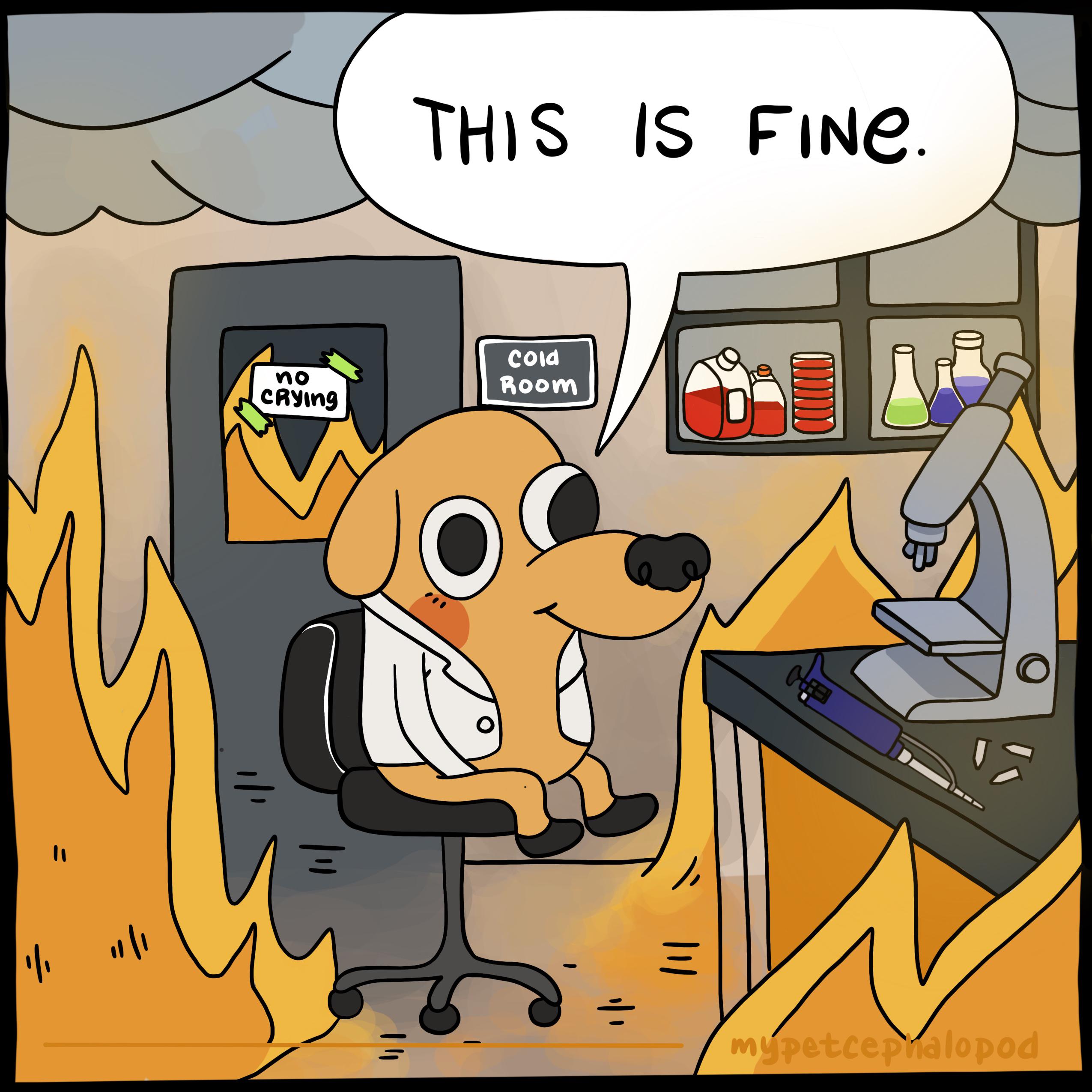
@mander.xyz
A place for majestic STEMLORD peacocking, as well as memes about the realities of working in a lab.
Rules
go to feed...
@mander.xyz
A place for majestic STEMLORD peacocking, as well as memes about the realities of working in a lab.
Rules
go to feed...
The national anthem of people who love the status quo!
save